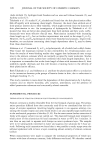
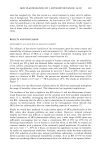
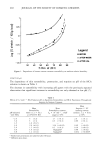
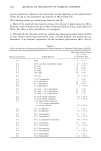
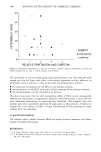
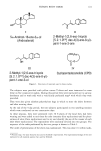
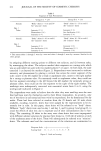
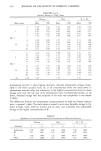
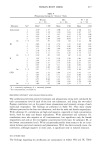
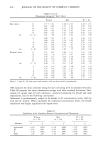
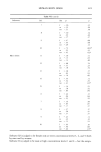
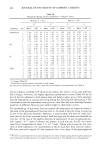
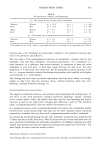
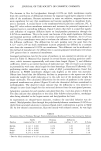
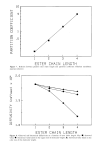
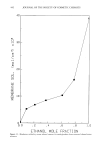
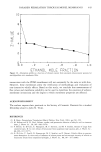
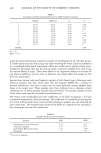
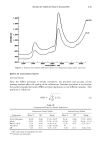
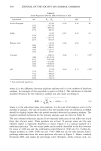
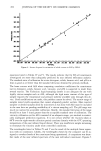
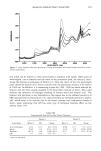
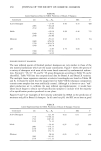
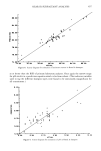
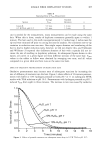
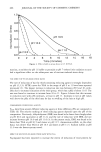
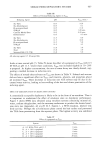
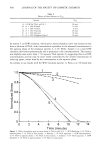
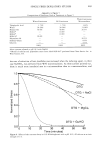
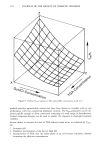
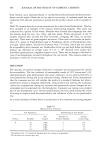
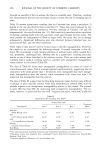
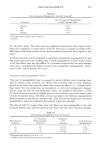
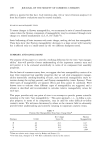
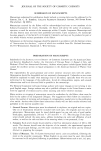
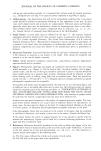
438 JOURNAL OF THE SOCIETY OF COSMETIC CHEMISTS The decrease in flux for butylparaben through 0.0254-cm thick membranes results from the contribution of diffusional resistance by stagnant liquid layers adjacent to both sides of the membrane. Because resistances in series are additive, stagnant layers are more significant for very thin membranes and become negligible as membrane thick- ness is increased. A second factor is the membrane/vehicle partition coefficient, PC. A large PC value reduces membrane resistance and increases the potential importance of stagnant layers in controlling diffusion. Figure 6 shows that there is a small but signifi- cant influence of stagnant diffusion layers on butylparaben permeation through the 0. 0254-cm membrane. This is the worst case because of the small membrane thickness and maximal partition coefficient for the series of permeants. Therefore, the 0. 127-cm and 0.219-cm membranes were used to evaluate the influence of ester chain length'on the diffusion coefficient. The diffusivities for each paraben were the same from the 0. 127- and 0.219-cm thick membranes (custom prepared) but differed by a constant ratio from the commercial 0.0254-cm membranes. This difference can be attributed to the method of manufacture the diffusi•aities in custom-prepared membranes were about 20% greater than in commercial membranes. Averaged permeation data for the series of parabens in non-interactive solvents are col- lected in Table II. Maximal flux depends on several factors including partition coeffi- cient, which increases exponentially with ester chain length (Figure 7), and diffusion coefficient, which is an inverse function of molecular size. The net result is an increase in permeability with ester chain length for these homologs. Flynn and Yalkowsky (13), performing similar experiments using a series of alkyl p-aminobenzoates, found that diffusivity in PDMS membranes changed only slightly as the series was ascended. Others have found that the diffusivity declines in proportion to the square root of the molecular weight for small molecules or to the cube root of the molecular weight for larger molecules. The calculated diffusivities for the series of parabens in the custom- prepared membranes are plotted (Figure 8) with the theoretical declines normalized to methylparaben. The observed values indicate that the diffusivity is very sensitive to changes in ester chain length for this series and deviates from the anticipated patterns. Adsorptive constants for each paraben calculated from Eq. 4 are also given in Table II. The data indicate that adsorption to the silica filler follows solute polarity, methylpar- aben being adsorbed to the largest extent and butylparaben the least. In experiments on ethanol-water mixtures, evidence for non-ideal behavior was ob- tained. Methylparaben flux through the polydimethylsiloxane membranes (0.0254-cm thick) from saturated solutions in various ethanol-water combinations is given in Table III. At low ethanol concentrations, flux rose linearly with ethanol content. At very high Table II Permeation Data for Parabens Through Polydimethylsiloxane Membranes • From Non-Interactive Solvents FLUX Partition Diffusivity Paraben (moles/cm2/hr X 106) Coefficient (cm2/sec X 106) Z-Value Methyl- 0. 142 + 0.006 0.156 1.83 8.85 Ethyl- 0.130 q- 0.003 0.426 1.69 8.01 Propyl- 0.156 q- 0.006 1.54 1.45 7.02 Butyl- 0.274 q- 0.018 4.89 1.18 5.18 Data for filled membranes of 0. 127-cm thickness.

10 z i, LL I,I U Z .5 I I I I 1 2 :3 4 ESTER oeHA•N LENGTH Figure 7. Relation between paraben ester chain length and partition coefficient (fillerless membrane: aqueous solution). • 2.0 o •J o 1.5 1.!3 • I I I 1 2 :3 4 ESTER IZHA]•N LENGTH Figure 8. Observed and theoretical diffusivities as a function of ester chain length. Key: •, observed value •, theoretical value based on the square root of molecular weight &, theoretical value based on the cube root of the molecular weight.
Purchased for the exclusive use of nofirst nolast (unknown)
From: SCC Media Library & Resource Center (library.scconline.org)