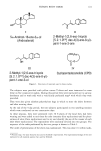
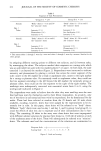
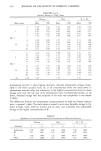
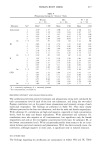
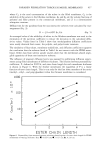
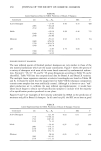
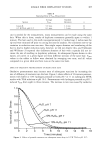
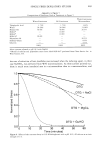
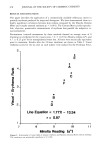
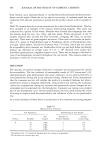
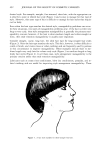
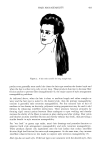
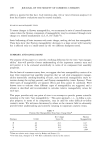
HAIR MANAGEABILITY 493 Figure 2. A hair style suitable for long straight hair. products are generally more useful the closer the hair type matches the desired style and when the hair is either very curly or very long. These products function to decrease fiber friction and/or to prevent fiber entanglements (4), the major causes of style arrangement manageability problems. As indicated above, when the hair is short to medium length and either straight or wavy and the hair type is suited to the desired style, then the primary manageability concern is generally style retention manageability. For fine textured hair or hair of medium to low density on the scalp, polymeric setting preparations may be used to add fullness by enhancing interfiber interactions. These products function primarily by forming rigid contact points between fibers analogous to spot welding and thereby increase the ability of the fibers to remain in place during and after styling. Hair colors and bleaches increase interfiber friction and thereby enhance hair body, thus providing a similar benefit in style retention manageability. For "wet look" or greasy type styles, men's hair dressings and pomades function to improve both style arrangement manageability and style retention manageability. These products deposit oily ingredients onto the hair surface that reduce interfiber friction (high load friction) for easier style arrangement. At the same time, they increase interfiber cohesive forces (at low loads) to improve style retention manageability (5). Hair type does not match style. If the hair type is not consistent with the desired style, then

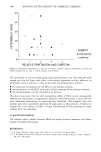
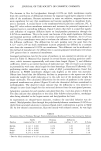
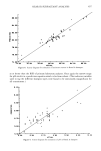
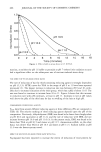
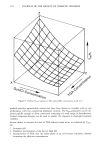
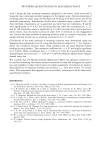
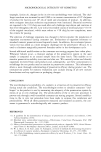
494 JOURNAL OF THE SOCIETY OF COSMETIC CHEMISTS Figure 3. A hair style suitable for short-curly hair. manageability problems are generally associated with keeping the hair in place (style retention manageability). For example, a person with thin-fine hair generally has diffi- culty wearing a style that requires fullness or body. Other examples of suboptimal compatibility between hair type and style include straight hair where a wavy to curly style is desired and curly/kinky hair for straight to wavy hair styles. People with curly hair, however, generally experience fewer style retention problems than people with straight hair because of increased fiber-fiber interactions. Curly/kinky/hair, however, is difficult to arrange in place. For most cases with straight to wavy hair, style retention manageability problems are more prevalent and generally more serious than style arrangement manageability. Treatments such as body waves, curly permanents, or hair relaxers are therefore used to increase style retention manageability in addition to improving style retention. These products function by changing the fiber curvature to make the hair type more consistent with the desired style. Flyaway hair. Another manageability problem sometimes noted by both people whose hair type matches or does not match the desired style is flyaway hair. Flyaway is the condition during combing or brushing where fibers of an assembly separate due to the repulsive forces of static charge. Flyaway is climate-dependent and most distressing at low relative humidities (6). With regard to hair type, flyaway is of less concern for very curly to kinky hair (7) and of greatest concern for medium length, straight, fine hair.
Purchased for the exclusive use of nofirst nolast (unknown)
From: SCC Media Library & Resource Center (library.scconline.org)