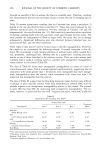
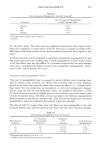
HAIR MANAGEABILITY 491 definition of manageability to have relevance to consumers' perception, flyaway must be considered. HAIR TYPE, HAIR STYLE AND MANAGEABILITY Since manageability is concerned with styling hair, the desired hair style is critical to its assessment. Of equal importance is "hair type" and its relationship to the desired hair style. The following parameters are associated with hair type and have been adapted from a discussion of hair body by Hough, Huey, and Tolgyesi (3): ß hair curvature or configuration (kinky/wavy/straight) ß hair texture (coarse/medium/fine) ß hair density on scalp (thick/medium/thin) ß fiber stiffness ß fiber-fiber interactions (friction/adhesion) ß fiber length: average length (long/medium/short) variation in length ß oiliness/dryness ß fiber chargeability during combing/brushing Hair styles may also be described by parameters related to several of the above hair type parameters, including: ß degree of curliness ß fullness ß hair length ß type of cut Curvature of a hair type is obviously associated with the degree of curliness of a hair style and is perhaps the most important of these parameters. The degree of curliness of a hair style helps to govern the type and extent of fiber contacts. Hair curvature, texture, hair density on the scalp, fiber interactions, and fiber stiffness all contribute to fullness of the assembly, or hair body (3). Fiber length is related to both hair length and the type of cut. Average fiber length corresponds to hair length and fiber length variation to the type of cut, e.g., layered cut vs one length, etc. Since these latter parameters, fiber length, hair length variation, and type of cut are not controlled by cosmetic treatments, they will not be discussed further. Because of individual consumers' desires there is no completely objective means to de- termine the type of manageability most desirable for each individual. We believe, how- ever, that the following scheme provides a relatively reliable means to relate manage- ability to hair type and style. If one considers the ease of managing hair in terms of the type of hair and the desired sty]e, three situations arise: ß hair type matches or relates to style, ß hair type does not match style, and ß flyaway hair. Hair type matches style. In general, manageability problems are minimized when all hair type attributes are consistent with the desired style, i.e., if the curvature, texture, hair density on the scalp, fiber interactions, stiffness, and length are consistent with the

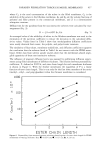
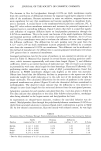
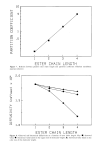
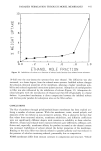
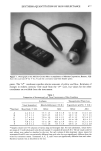
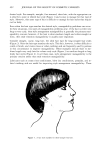
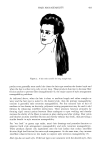
492 JOURNAL OF THE SOCIETY OF COSMETIC CHEMISTS desired style. For example, straight, fine-textured, short hair, with the appropriate cut is ideal for a pixie or related hair style (Figure 1) and is easy to manage for that type of style. However, this same type of hair is difficult to manage for hair styles that require curl or body. Even when the hair type matches the desired style, manageability problems can occur. In these situations, two types of manageability problems arise. If the hair is either very long or very curly, then style arrangement manageability is generally the primary man- ageability concern however, if the hair is short-medium length and either straight or wavy, then style retention manageability is usually more important. Consider straight, coarse, long hair, the ideal hair type for long straight hair styles (Figure 2). Here the hair type matches the style. This hair, however, is often difficult to comb or brush, and creme rinses or other combing aids are frequently used by persons in this circumstance to improve manageability. Other examples include short to me- dium length very curly hair for a short-curly style (Figure 3) or medium length to long kinky hair styles (Figure 4). In all these cases, style arrangement manageability is the primary concern rather than style retention manageability. Lubricants such as creme rinse conditioners, blow dry conditioners, pomades, and re- lated combing aids are useful for improving style arrangement manageability. These Figure 1. A hair style suitable for short-straight fine hair.
Purchased for the exclusive use of nofirst nolast (unknown)
From: SCC Media Library & Resource Center (library.scconline.org)