430 JOURNAL OF THE SOCIETY OF COSMETIC CHEMISTS Bottari et al. (3) determined diffusion coefficients and vehicle solubilities for aqueous gel suspensions from release experiments employing PDMS membranes. They devel- oped a vehicle-membrane diffusion model valid when the amount of drug in the vehicle did not greatly exceed its solubility. Di Colo eta/. (4) investigated the effect on solu- bility and viscosity of benzocaine gels with the addition of high percentages of low molecular weight polyols. The systems studied were under vehicle-membrane control. The membranes were inert with respect to the solvents used and were used to determine the effect of added excipients on the release rate from the vehicle. Yalkowsky and Flynn (5) found that binary mixtures of p-aminoacetophenone at satura- tion yielded a constant permeation rate through PDMS membranes. Flux from these solutions was dependent upon the thermodynamic activity in the vehicle. Flux was under boundary layer control when very thin (0.005 mm) membranes and a very non- polar solute (hexyl p-aminobenzoate) were evaluated. Flux was found to be proportional to donor solute solubility. Tanaka eta/. (6) determined the effect of evaporation of volatile vehicle components on the release of hydrocortisone butyrate propionate from a cream and several gels. Differ- ences in release into silicone rubber receptor slabs were attributed to changes in solute activity in the vehicle. As the volatile component evaporated, the solubility in the remaining base increased causing a reduction in solute activity. The release patterns for the open systems correlated with in vivo vasoconstrictor assays. Behl eta/. (7) used PDMS membranes to assess concentration effects of methanol-phenol solutions. Hairless mouse skin exhibited enhancement in permeation of methanol as the phenol concentration was increased. At high concentrations, phenol (6%) accelerated its own permeability through the mouse skin. These effects were not observed with the synthetic membrane, eliminating the possibility of enhancement via a complexation mechanism. It was concluded that phenol reduces the barrier properties of the stratum corneum. Zatz and Dalvi (8) examined the effect of propylene glycol and polyethylene glycol 400 on benzocaine permeation through hairless mouse skin. Permeation experiments using an inert polypropylene membrane allowed the separation of vehicle-solute effects which do not involve the membrane (non-interactive effects) from vehicle-skin (interactive) effects. The objectives of this study were to determine the permeability of a series of parabens through polydimethylsiloxane membranes using a wide selection of solvents and solvent combinations to evaluate any effect of solvents on these membranes to characterize the behavior on the basis of partitioning, binding, and diffusivity and to employ a model to describe experimental results. EXPERIMENTAL MATERIALS The solutes utilized were methylparaben (methyl-p-hydroxybenzoate, Fisher Scientific Company, Fairlawn, NJ), ethylparaben (ethyl-p-hydroxybenzoate, Aldrich Chemical Company, Milwaukee, WI), propylparaben (propyl-p-hydroxybenzoate), and butylpar- aben (butyl-p-hydroxybenzoate, Eastman Kodak Company, Rochester, NY). The par-

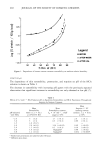
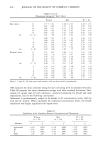
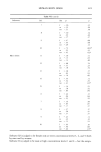
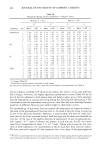
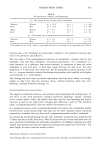
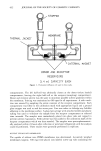
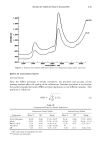
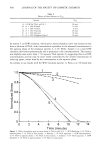
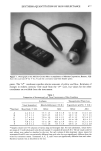
PARABEN PERMEATION THROUGH MODEL MEMBRANES 431 abens were examined to verify identity and establish purity. Each paraben exhibited characteristic UV scans (Coleman 571 Spectrophotometer, Perkin Elmer, Oak Brook, IL), melting points, and HPLC (Zorbax ODS-3 column, Dupont, Wilmington, DE mobile phase consisted of methanol:water 40:60 v/v retention times with only single peaks detected. The solvents utilized were purified water, polyethylene glycol 400 (PEG 400), propylene glycol, and glycerin (Fisher Scientific). Non-reinforcing polydimethylsiloxane sheeting (Silastic ©, Dow Corning Corporation, Midland, MI) was used as the diffusive barrier. Commercial grade material containing silica filler (0. 0254-cm thick, 23.4% w/w filler) and custom-made sheeting (0. 127-cm thick, 0% and 23.4% w/w filler 0.219-cm thick with 23.4% w/w filler) were utilized. VEHICLE SOLUBILITIES The saturation concentration of each paraben in the selected solvents was determined. Aqueous mixtures were prepared on a w/w basis. Excess solute was added to each sol- vent and allowed to equilibrate for at least one week at 37 --- 0.2øC with periodic vortexing. An aliquot of the solution was removed via a glass luer syringe and quickly filtered (Millipore Corporation, 0.45 btm) into a constant temperature flask. The samples were then spectrophotometrically analyzed at 254 nm for solute content after appropriate dilution with methanol. Absorbance values were converted to corre- sponding concentrations by interpolation from the linear portion of a standard calibra- tion curve for the solute. A minimum number of four replicates for each system were measured. MEMBRANE SOLUBILITIES Polymer/solvent partition coefficients for the parabens were determined. Custom-made membranes containing 0% and 23.4% w/w filler were presoaked in methanol for about 24 hours to extract interfering species. The membranes were then allowed to air dry. Accurately weighed samples of membrane (approx. 200 rag) were placed into saturated solutions of each paraben for selected solvents. The determinations were performed in triplicate. The samples were periodically vortexed and maintained at 37 - 0.2øC by immersion in a heated water bath. After equilibration for at least two weeks, the mem- branes were removed from the saturated solution and carefully rinsed with a methanol- water mixture to remove adhering solute. They were then placed into individual screw- cap test tubes containing exactly twenty milliliters of methanol and sealed. At least one week was allowed for complete extraction of the paraben from the membrane, which was carried out at room temperature with periodic shaking. An UV analysis of the methanol solute extracts yielded the total amount of solute present in the membrane. The partition coefficient was defined as the ratio of the equilibrium concentration of solute in the membrane to that in the solvent. PERMEATION STUDIES Calibrated horizontal diffusion cells (Figure 1), maintained at 37 - O. IøC, were used to perform the permeation studies. Polydimethylsiloxane membranes were carefully mounted between two half-cells to assure a tight seal with the formation of two separate
Purchased for the exclusive use of nofirst nolast (unknown)
From: SCC Media Library & Resource Center (library.scconline.org)