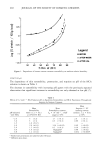
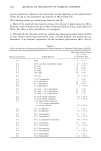
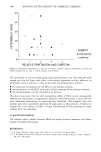
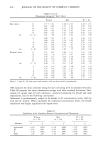
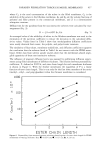
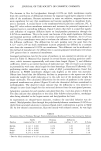
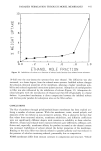
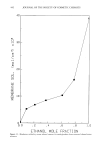
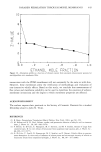
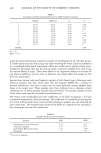
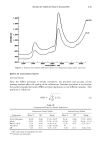
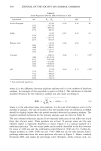
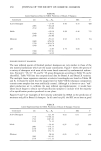
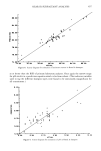
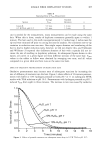
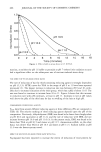
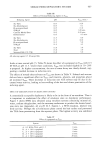
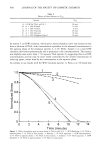
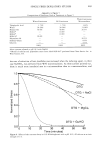
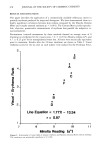
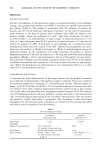
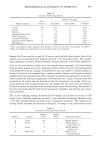
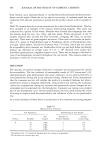
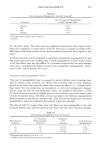
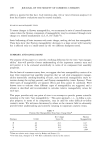
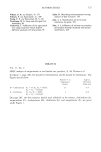
440 JOURNAL OF THE SOCIETY OF COSMETIC CHEMISTS Table III Permeation of Methylparaben Through Polydimethylsiloxane Membranes a From Hydroalcoholic Solutions Solvent Vehicle Flux Diffusion Solubility (mole/cm2/hr Partition Coefficient (mg/ml) x 106) Coefficient (cm2/sec x 106) Non-Interactive Ethanol 20% w/w 23.6 Ethanol 40% w/w 197. Ethanol 60% w/w 361. Ethanol 80% w/w 426. Ethanol 90% w/w 408. Ethanol 100% 382. 0.596 + 0.028 1.52 1.10 + 0.01 0.0337 1.94 1.47 + 0.16 0.00525 1.99 1.83 - 0.04 0.00355 2.00 2.67 --- 0.09 0.00368 2.39 4.15 + 0.14 0.00600 2.37 11.3 -+ 0.8 0.0155 2.68 Data for commercial membranes of 0.0254-cm thickness. ethanol values (mole fractions of 0.8 and above), there was a much steeper rise in flux (Figure 9). The flux from neat ethanol was close to twenty times greater than flux from non-interactive systems. This enhancement in flux was not directly related to the par- aben solubility. Solvent uptake measurements using ethanol-water mixtures revealed that imbibition of solvent into the membrane occurs (Figure 10). Imbibition became more pronounced as the ethanol activity within the solvent system was increased. Membrane solubility was found to rise in a similar fashion as flux from the ethanol- water mixtures (Figure 11). The polymer solubility of methylparaben was increased [ ! • I , I I I 0.0 .2 .4 .6 .8 1.0 ETHANOL MOLE FRACTION Figure 9. Effect of ethanol content on steady-state methylparaben flux from saturated ethanol-water systems.

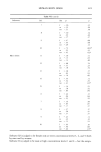
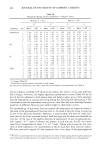
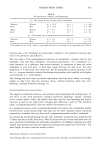
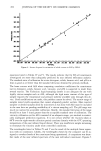
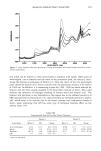
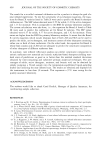
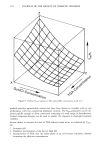
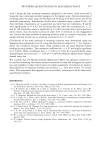
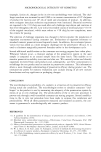
PARABEN PERMEATION THROUGH MODEL MEMBRANES 441 lO 0 I • I i I , 0.0 .2 .4 .6 .8 1.0 ETHANOL MOLE FRoeT ION Figure 10. Imbibition of solvent as a function of ethanol mole fraction from ethanol-water mixtures. 10-fold over the non-interactive systems from neat ethanol. The diffusivity was also increased, to a lesser degree, from the ethanol-water systems. Imbibed solvent changes the physical-chemical properties of the membrane, allowing a higher membrane solu- bility and reduced segmental interactions (plasticization). Adsorption of methylparaben to filler was also influenced by the imbibition of solvent (Figure 12). Adsorption de- clined abruptly with the introduction of ethanol and then fell off gradually in a linear fashion. A postulated mechanism is direct competition between the imbibed solvent and the less polar paraben for adsorption sites on the filler surface. CONCLUSIONS The flux of parabens through polydimethylsiloxane membranes has been studied uti- lizing a number of solvent systems. With this membrane, water, several polyols, and mixtures of the two behave as non-interactive solvents. This is shown by the fact that flux values from saturated solution, membrane solubilities, and diffusion coefficients were not significantly different despite wide variation in solubility in these vehicles. However, ethanol and ethanol-water mixtures behaved quite differently diffusion coef- ficient and, especially, membrane affinity for paraben increased as the ethanol content was increased. Imbibition of solvent altered the barrier properties of the membrane. Binding to the silica filler was directly related to paraben polarity and was reduced in the presence of vehicles containing ethanol, presumably due to competition. PDMS membranes differ from stratum corneum in composition and structure. Vehicle
Purchased for the exclusive use of nofirst nolast (unknown)
From: SCC Media Library & Resource Center (library.scconline.org)