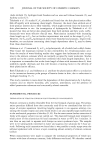
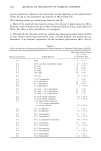
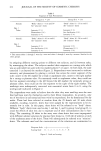
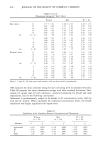
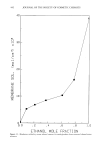
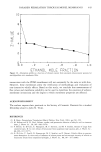
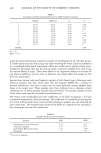
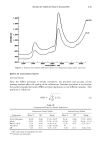
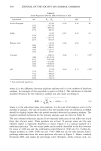
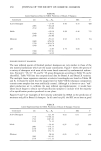
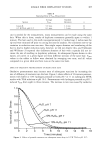
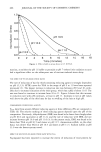
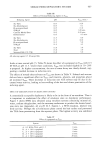
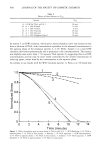
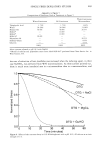
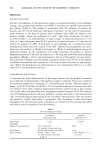
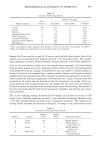
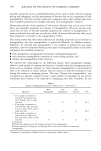
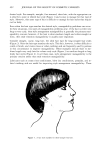
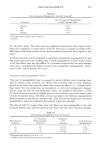
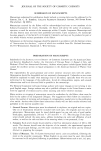
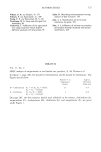
450 JOURNAL OF THE SOCIETY OF COSMETIC CHEMISTS Table IV Linear Regression Data for NlRA Prediction of ALS Constituent nm Ko.. Kn r SEC F Active Detergent 323.05 0.90 0.30 96 1722 -637.60 2083 - 1084.12 2139 460.34 Solids Benzoic Acid Viscosity 93.05 0.87 0.42 83 2130 583.94 2230 - 1323.70 2270 581.39 - 20.26 0.86 0.02 51 1600 - 182.61 1668 280.41 1344 -237.77 1356 150.97 - 1286.12 0.66 4.7 20* 1580 -56315.59 2332 15451.09 2456 -3312.81 2300 - 9048.39 1596 56052.38 pH 127.50 0.60 0.11 20' 1710 564.37 1722 -480.97 2139 109.29 2250 -329.76 Not statistically significant. where di is the difference between duplicate analyses and n is the number of duplicate analyses. An example of this procedure is given in Table I. The calculation of residual standard deviation for five repetitive analyses was also made according to: RSD = (x i -- •)2/(n -- l) (3) where x i is the individual value of an analysis, i is the sum of all analyses, and n is the number of analyses. The rule of thumb is that the standard error of calibration in NlRA should be slightly higher than the pooled standard deviation by primary analyses. The targeted standard deviations for the primary analyses used are listed in Table II. The near infrared reflectance spectra of raw material surfactants do not differ very much from that of pure water. These products are at least 70 percent water and the near infrared region is especially absorbent to water. Figure 2 is a typical example of a surfactant spectrum. The two major peaks can be readily identified as the first overtone for water at 1440 nm and the combination stretch/bend at 1940 nm (11). Carbon-hy- drogen doublets at 2300-2400 nm and 1700-1800 nm are the only features distin- guishing surfactants from the water spectrum also seen in Figure 2. Means, standard deviations (SD), and ranges for percentage active detergent, solids, benzoic acid, vis-

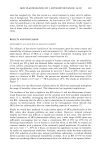
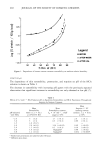
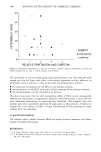
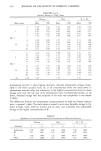
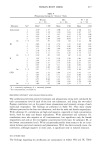
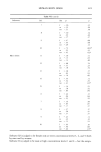
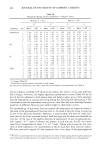
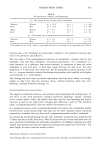
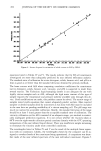
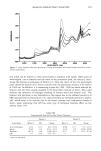
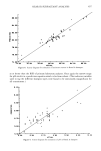
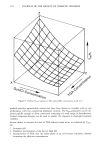
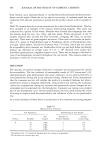
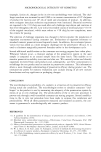
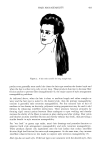
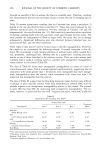
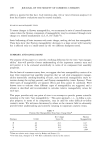
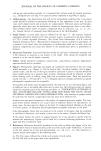
NEAR IR SURFACTANT ANALYSIS 451 Table V Linear Regression Data for NlRA Prediction of SLS Constituent nm Ko .. Kn r SEC F Active Detergent 197.70 0.95 0.29 164 1100 1715.24 1646 -2756.03 222O 8O9.O4 Solids - 269.35 0.99 0.17 1465 1184 1162.66 1450 - 110.73 Benzoic Acid - 33.18 0.90 0.03 61 1366 -75.38 1632 -538.22 1674 561.68 2248 58.68 pH 175.60 0.87 0.09 46 1366 73O.34 1394 - 2O4.18 1842 -748.45 1912 67.31 cosity, and pH for the ammonium lauryl sulfate and sodium lauryl sulfate samples (2 replications per sample) used in this study are found in Table III. The multiple linear regression statistics at selected wavelengths are listed in Tables IV and V. Figures 3 and 4 are examples of the linearity achievable by NIRA in constituent predic- tion versus the actual or primary analyses values as calculated using the multiple linear 30.00' 29.50' 29.00' i,-i m 28.50' 28.00- + 4. 4. + 4. 4. 4. + 4. 4. 4. 4. 4. 4. 4. •, + + ,I,+ 4. 27.50- 27.00 27.00 27.50 28.00 28.50 29.00 29.50 ACTUAL Figure 3. Scatter diagram •restimation ofactive detergentcontentin ALS by NIRA. :30. O0
Purchased for the exclusive use of nofirst nolast (unknown)
From: SCC Media Library & Resource Center (library.scconline.org)