j. Soc. Cosmet. Chem., 37, 481-488 (November/December 1986) Validating the microbiological integrity of cosmetic products through consumer-use testing SUSAN M. LINDSTROM and JOYCE D. HAWTHORNE, Avon Products, Inc., Suffern, NY 10901. Received March 20, 1986. Presented at the Society of Cosmetic Chemists Annual Meeting, December I985, New York. Synopsis To ensure the development of microbiologically safe cosmetics, an in vitro microbial challenge test was developed which accurately predicts the preservative efficacy of a product after consumer use. Over the past five years, 143 products which had met the in vitro challenge test criteria were subjected to consumer testing. These products included mascaras, creams, lotions, liquid makeup, eyeshadows, eyeliners, and bath and hair preparations. Criteria for formula acceptability after use were: recovery of organisms at less than 100 cfu/g upon initial test or no recovery upon retest of the product and no recovery of Pseudomonas species, Escherichia coli, or Staphylococcus aureus. Over 99% of the products tested met these requirements, while only nine out of more than 4300 samples tested did not meet these test criteria. As a result of these failures, the products were reformulated with increased preservative concentrations before release for sale. Further steps were taken to increase the predictability of the in vitro challenge test by including a higher concentration of challenge organisms, a greater number of preservative-resistant product isolates, and more stringent inoculum reduction requirements. These procedures have resulted in an in vitro test which accu- rately predicts preservative efficacy of a cosmetic product after consumer use. INTRODUCTION Cosmetic products should be proven safe and effective before market sale. In order to accomplish this goal, each company performs numerous evaluations of product integrity including a microbiological assessment. Several in vitro preservative adequacy tests are available (1-6). These challenge tests should be predictive of preservative effectiveness under ordinary consumer use. However, these procedures are proven valid only when the microbiological integrity of the product after consumer use is confirmed. This paper will review the results of 143 products which represent over 4300 samples tested using in vitro challenge testing followed by consumer-use testing during the period of 1980 to early 1985. The strong correlation of in vitro and in vivo test results will become evident. Over the course of testing, the in vitro test has evolved into a more predictive test through several procedural modifications which will also be discussed. These modifications include higher inoculum concentrations, more stringent microbial reduction requirements, development of the accelerated preservation test (7), and addi- tional test parameters in the consumer-use test itself such as preservative analysis. As the cumulative history was acquired, new directions in preservative philosophies devel- oped. 481

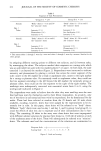
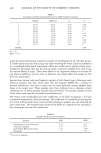
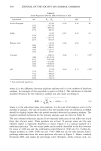
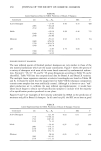
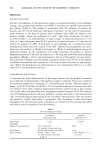
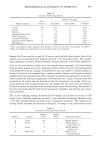
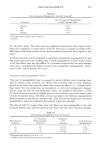
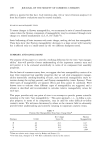
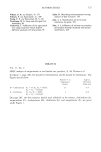
482 JOURNAL OF THE SOCIETY OF COSMETIC CHEMISTS METHODS PRE-TEST EVALUATION Initially, the adequacy of the preservative system is evaluated through in vitro challenge testing. An accelerated preservation test (APT) is conducted to rapidly assess preserva- tive efficacy (Table I). The product is inoculated with 106 cfu/gram of product for bacteria and 105 cfu of mold and yeast/gram of product. At the time of inoculation, extra nutrients in the form of glucose and a minimal salts buffer are added to the product sample. Assays are performed at 2 and 7 days after inoculation. If mold is recovered at Day 7, an additional Day 12 assay is made. A reduction of bacteria to 10 cfu/g in 7 days and greater than 99.9% reduction of mold and yeast in 12 days are the criteria for passing the APT. A long-term in vitro challenge test is initiated on those formulations which meet the criteria of the APT. Selected microorganisms are inocu- lated into the product at Week 0 and again at Week 2 microbiological assays are performed weekly. At the completion of 8 weeks of testing, the product is deemed adequately preserved if bacteria are reduced to 10 cfu/g one week after each challenge inoculation (Weeks 1 and 3) and maintained at that level throughout the test period. The reduction of fungal recoveries should initially be greater than 99.9% of the original inoculum concentration and continue to 10 cfu/g of mold and yeast by test comple- tion. When the formulation has demonstrated in vitro preservation efficacy, it is then tested for in vivo preservation efficacy. CONSUMER-USE TEST REGIMEN A consumer-use panel representative of the target audience for the product's intended use is selected. A dermatologist will supervise studies as required. Panel size is selected for statistical significance, averaging 15-30 panelists per product. Mascara panels are larger, with 40-60 people per product. The test panels designed for mascara and other eye products have more stringent requirements because concern exists in the industry over ocular infections associated with improperly preserved mascara (8,9). The associa- tion of Pseudomonas-induced infection leading to corneal ulceration is also documented (10). A microbiological prescreening of the microflora type and level in the area around the panelist's eyelids and lashes is performed. The microflora is then monitored throughout the test and after panel completion as a measure of the potential microbial load which may be introduced into the product. Table I In Vitro Challenge Testing Accelerated Standard Preservation Test Challenge Test Test Length 7 days 8 weeks Challenges 1 2 Organism Concentration 10 6 cfu/g bacteria Same 10 5 spores/g of mold and yeast Nutrification Glucose and minimal salt buffers None Assay Intervals 0 time, 2 days, 7 days 0 time, Weeks, 1, 2, 3, (12 days if mold is recovered 4, and 8 at Day 7)
Purchased for the exclusive use of nofirst nolast (unknown)
From: SCC Media Library & Resource Center (library.scconline.org)