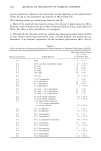
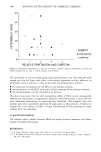
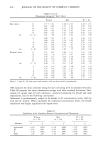
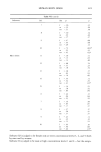
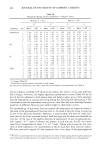
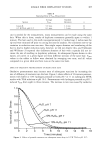
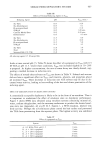
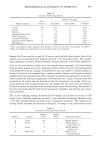
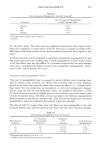
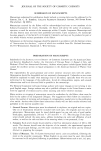
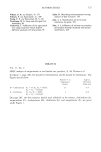
HAIR MANAGEABILITY 497 Table III Style Arrangement Manageability Froin Dry Combing # Treatments Style Arrangement Manageability Control/Treatment Ratio Bleached 0.56 SLS 1.00' SAC 1.10 Pomade 2.38 # Calculated from combing data of Table lI. * Control. for "dry look" styles. The tester must use judgement to determine what types of treat- ments are comparable. In some cases it would be ludicrous to compare a pomade with a SAC-based conditioner because of the aforementioned limitations with regard to hair styles. A similar procedure may be employed to assess style arrangement manageability for wet hair using quantitative wet combing data. Usually manageability is more closely related to dry hair effects than wet hair effects. If a treatment improves dry hair style arrange- ment ease, it will generally improve wet hair style arrangement manageability. Excep- tions to this "rule of thumb" will occur. STYLE RETENTION MANAGEABILITY TESTS This type of manageability may be assessed by several different tests including those used to evaluate style retention (12). When style retention tests are used, emphasis should be on short time intervals rather than long-term effects, i.e., minutes rather than hours. For this comparison we recommend, as with style arrangement manage- ability, using the ratio of control/treatment values. An example is illustrated in Table IV. Style retention is greater for higher percent curl retentions, and we are using a ratio of control/treatment values. Therefore, we have calculated style retention manageability from reciprocals of percent set retention data. This will provide higher style retention manageability values for treatments that provide higher set retention. The data of Table IV suggest that coarse hair fibers are more manageable in the style retention process than medium diameter hair fibers and that style retention manage- Table IV Style Retention Manageability From Set Retention % Set Retention Reciprocal Fiber Diameter With Comb-Out of Set Style Retention in Microns (20 Min.)# Retention Manageability # 89 82 0.0122 1.04 76 79 0.0127 1.00' 65 59 0.0169 0.75 # Estimated from graph by Yin et al. (13). * 76-Micron fiber was arbitrarily chosen as the control.

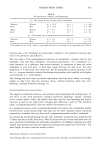
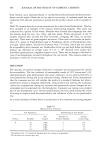
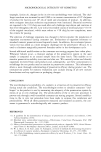
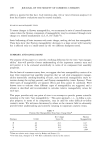
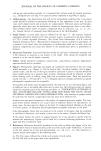
498 JOURNAL OF THE SOCIETY OF COSMETIC CHEMISTS ability is poorest for fine hair. Curl retention data (14) or twist retention analysis (14) from hair fixative evaluations may be treated similarly. FLYAWAY MANAGEABILITY TESTS To assess changes in flyaway manageability, we recommend a ratio of control/treatment values where the flyaway component of manageability may be estimated through static charge or a related measurement (2,6,15,16) (Table V). Static ballooning of hairs increases with static charge, making the hair less manageable. These data show that flyaway manageability decreases to a large extent with humidity but is affected only to a small extent by the two different shampoos tested. SUMMARY AND CONCLUSIONS The purpose of this paper is to provide a working definition for the term "hair manage- ability" that will provide a better understanding of this important cosmetic term and will permit it to be evaluated scientifically in terms of its component hair assembly properties. On the basis of consumer survey data, we suggest that hair manageability consists of at least three important hair assembly properties that we call style arrangement manage- ability (essentially combing/brushing of hair), style retention manageability (style re- tention during the styling process), and flyaway manageability (static flyaway). These three types of manageability are separate effects and they cannot be combined. Well known tests to evaluate these different types of manageability are suggested and a scheme is described and recommended to calculate relative manageability values for each type. This paper provides only one point of view in an attempt to provide greater scientific meaning to the term "hair manageability." This same approach, i.e., to define a com- plex property in terms of its components, may be used for other difficult-to-define cosmetic terms. We welcome discussions by others in the cosmetic field to ultimately provide better understanding and scientific meaning to important cosmetic terms. Table V Flyaway Hair Manageability From Static Charge Data # Rel. Charge Flyaway Shampoo % RH Units (X) Manageability B 40 20.3 0.47 C 40 19.4 0.50 B 70 10.2 0.94 C 70 9.6 1.00 • Data are relative static charge units by Barber and Posner (15). For these data, shampoo C at 70% RH is arbitrarily selected as the control.
Purchased for the exclusive use of nofirst nolast (unknown)
From: SCC Media Library & Resource Center (library.scconline.org)