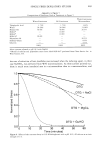
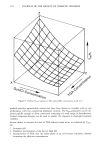
j. Soc. Cosmet. Chem., 37, 461-473 (November/December 1986) Single-fiber stress decay studies of hair reduction and depilation R. RANDALL WICKETT and ROBERT MERMELSTEIN, Procter and Gamble Miami Valley Laboratories, P.O. Box 39175, Cincinnati, OH 45247. Received May 16, 1986. Presented to the Ohio Valley Chapter of The Sodety of Cosmetic Chemists, October 15, 1985. Synopsis A single-fiber method of investigating reduction kinetics in hair has been applied to the study of hair depilation. The time required to reduce the tensile stress supported by a hair by 95%, (T95%), has been shown to correlate to in vivo hair removal by two commercial depilatory products. The reaction of hair with thioglycolic acid (TGA) under depilating conditions was enhanced by increasing pH, by adding guanidine salts, and by oxidative pretreatment. Reduction with TGA was slowed by the addition of n-propranol, triacetin, glycerin, and propylene glycol. Emulsion state also affected reduction rate with TGA. Illustrative of varying pH effects with different reactants, sodium dihydrolipoate was found to react faster than TGA at pH 10.5 but was slower than TGA at pH 11.5, while ammonium sulfide was slower than TGA at 10.5 and faster at pH 11.5. A central composite design experiment was used to calculate a response surface for the effects of TGA concentration, pH, and guanidine hydrochloride concentration on hair reduction rate. An equation with good fit to the data was developed for prediction of responses to changes in the variables over the ranges studied. INTRODUCTION Depilatories function by extensively reducing the disulfide bonds in hair and weakening it to the extent that it is easily removed from the skin. Previously published methods for laboratory evaluation of depilatory performance include measurement of hair swelling rate (1) and measurement of the time required to break multiple hairs under a moderate, repeated load, using a specially constructed instrument (2). We have adapted the single-fiber tensile kinetics (SFTK) method (3) to the study of depilatory performance. This method relies on measurement of stress decay caused by disulfide bond reduction and thus only reflects the changes in bonds that support tensile stress. Reduction of disulfide bonds that do not support any of the tensile stress is not monitored. We believe that this apparent limitation of the method is, in fact, an ad- vantage because stress-supporting bonds are precisely those that must be altered for permanent waving or depilation to occur. In this work, the time required to produce a 95% reduction in the tensile force has been found to be a reproducible means of as- sessing depilatory efficacy and to correlate with in vivo performance of two commercial R. Randall Wickett's current address is S.C. Johnson and Sons, Inc., 1525 Howe St., Racine, WI 53403. 461

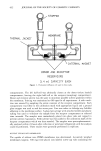
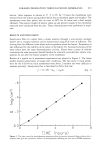
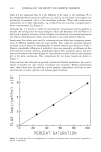
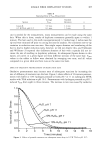
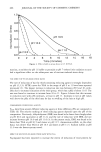
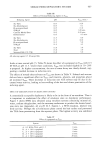
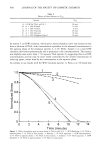
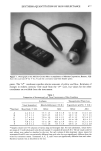
462 JOURNAL OF THE SOCIETY OF COSMETIC CHEMISTS depilatory preparations. Advantages of this method are that it is reproducible and rapid to perform, and could probably be run on most commercially available tensile testing devices. Solutions, lotions, or creams may be tested with equal facility. We have chosen T95 % as a convenient parameter to evaluate the relative performance of reducing systems in a depilatory context. We have found most systems likely to be of interest, as depilatories will produce 95% tensile weakening within a reasonable time. The exact percent chosen is not critical, as examination of our raw data indicates that any percentage between 85% and 97% would have led to all of the systems evaluated in this report being ranked in exactly the same order as they were by T95 •. MATERIALS AND EQUIPMENT Our studies were conducted chiefly with human scalp hair for the sake of availability plus the ability to run more than one experiment from a single strand. For most experi- ments, the hair was from a single donor who had never subjected her hair to chemical treatment. The hair was given a double lathering with Prell © shampoo and rinsed thorougly prior to use. Tensile measurements were made on an Instron © tensile tester. Measurements of hair diameter were made on an optical diameter gauging system made by the Diffracto Corporation, Windsor, Ontario. Wetting force measurements were made on a Perkin Elmer AD-2Z electrobalance. THE SFTK METHOD The single fiber tensile kinetics method is based on stress relaxation caused by the breakage of disulfide bonds. The hair is first extended to 2% strain in a buffer solution and rapidly stress relaxed to a final extension of 1.5% strain by the following procedure: After 20 seconds of stress relaxation at 2%, the strain is reduced to -1.0% for 20 seconds, increased to --1.8% for 20 seconds, reduced to --1.2% for 20 seconds, in- creased to --1.7% for 20 seconds, and then reduced to the final value of 1.5%. A constant level of stress is reached within less than two minutes at 1.5% strain. The buffer is then replaced by the reducing agent of interest and reaction is followed by loss of tensile stress. Data may be analyzed by either of two kinetic models (3) or by com- paring the time required to reach a given level of force reduction (4). Data can be displayed graphically as the normalized stress versus time. Normalized stress is defined as the tensile stress at time t, divided by the equilibrium stress reached before addition of reducing agent. RESULTS AND DISCUSSION REDUCTION AND DIAMETRICAL SWELLING Reduction of disulfide bonds in hair leads to tensile weakening and increased swelling in water (1,5). We have followed swelling in the wet state by a modification of the wettability measurement described by Kamath eta/. (6). The hair is placed in surfactant solution and the receding wetting force, F, is measured. By assuming that the receding hair liquid-contact angle, {), is zero, the wet perimeter, P, can be calculated from: F = y P cos {)
Purchased for the exclusive use of nofirst nolast (unknown)
From: SCC Media Library & Resource Center (library.scconline.org)