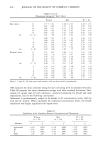
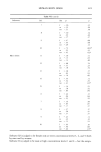
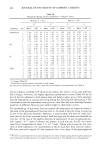
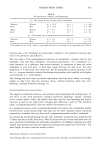
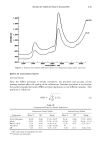
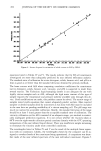
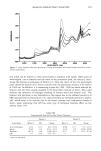
j. Soc. Cosmet. Chem., 37, 445-459 (November/December 1986) Application of near infrared reflectance spectroscopy to the quality assurance of surfactants PRISCILLA LABONVILLE WALLING and JACQUELYN M. DABNEY, Helene Curtis Inc., North Ave., Chicago, IL 60639. Received June 3 o, 1986. Synopsis The suitability of near infrared reflectance analysis spectroscopy for the quality assurance of raw material detergents and batch process shampoos has been investigated. The artionic surfactants, ammonium lauryl sulfate and sodium lauryl sulfate, were analyzed by primary analytical techniques for active detergent, solids, moisture, benzoic acid, pH, and viscosity. Two brands of shampoo were analyzed for active deter- gent, solids and moisture. All were scanned in the near infrared from 1100 nm to 2500 nm to develop prediction equations. The results indicate that all of the chemical constituents investigated can be predicted by near infrared. The advantages of this procedure over wet chemical or st.andard instrumental methods include no sample preparation and analysis time of less then one minute. INTRODUCTION Near infrared reflectance analysis (NIRA) is a simple non-destructive technique for predicting the percentage composition of constituents in a mixture. The near infrared region of the electromagnetic spectrum extends from 800 nm to 2500 nm. The strongest absorptions in this region are due to combinations and overtones of vibrational stretching fundamentals related to O- H, N-H, and C- H bonds. Just as chemical structure and bond strength shift vibrational fundamentals, so do they shift the corre- sponding overtones and combinations. More importantly, bands are shifted and broad- ened by matrix effects and physical properties which influence hydrogen bonding. As a consequence, spectra consist of broad, overlapping, unresolved, weakly absorbing, and highly reflective bands. Because the reflectance/absorbance ratio is high, the near in- frared region is linearly correlated with concentration. With the advent of the micro- computer, the problem of finding wavelengths in this region for a good Beer's Law/Ku- belka-Munk standard concentration curve has been solved. Using multiple linear re- gression, wavelengths are selected such that the absorbance statistically correlates with the percentage composition determined by primary analyses, automatically correcting for background effects. Slopes and an intercept are calculated to fit a prediction equa- tion of the form: %Concn = K o + K•log(1/R•) + K21og(1/R 2) .... (1) where K represents the intercept and slope constants and R, the reflectance at the chosen wavelengths. 445

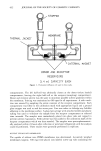
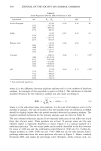
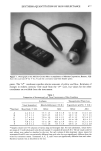
446 JOURNAL OF THE SOCIETY OF COSMETIC CHEMISTS The greatest commercial application of NIRA spectroscopy to date has been in the agricultural industry (1,2). Recently applications have been developed for the dairy, meat, and textile industries (3,5). Two cosmetic applications have appeared: the suit- ability of applying NlRA for the measurement of ethyl alcohol, water, and essence in perfume (6) and the potential use of NlRA for quantitative analysis of detergents (7). The purpose of this study was to investigate the feasibility of applying NlRA to the quantitation of raw material surfactants and different types of finished product shampoos in order to reduce quality assurance time and cost. MATERIALS AND METHODS SAMPLES With the help of our quality assurance laboratory, plant samples of raw material deter- gents and shampoos were collected over an eight-month period. The raw material set included fifty ammonium lauryl sulfate (ALS) samples and fifty sodium lauryl sulfate (SLS) samples. These sets contained rejected and non-conformance samples as well as samples within specification. Microwave drying of the surfactant was used on twelve SLS samples. No ALS samples were altered because they were initially too viscous for the near infrared liquid cell. Shampoo samples consisted of 35 Brand A, a shampoo with ALS base, and 165 of Brand X, a shampoo with ALS/SLS base with various colors and fragrances. Non-production artificial samples of SLS and the shampoo sets were created in order to broaden the range. Cold-compounded shampoos were spiked with surfactant or diluted with water to obtain a range of constituents larger than that expected in normal plant production. SPECTRAL ANALYSIS Reflectance spectra were obtained over a range of 1100 nm to 2500 nm using a Tech- nicon IA/500 coupled with a Hewlett Packard 1000 microcomputer. Initially 50 milli- liters of sample was injected into the liquid drawer with a disposable plastic syringe. Due to the high viscosity of the samples, especially ALS, this method proved to be physically difficult. Subsequently all viscous samples were pumped via a peristaltic pump. The Technicon liquid transflectance drawer was maintained at 45øC. It con- sisted of a ceramic reflector and a quartz window separated by a constant cell thickness. All samples were preheated in a 40øC waterbath before being pumped into the liquid drawer. Optical data in the form of absorbance (log i/reflectance) were collected in 4-nm increments and stored on a hard disc. PRIMARY ANALYSIS The raw material surfactants were analyzed for active anionic detergent, solids, mois- ture, benzoic acid, viscosity, and pH. The.shampoos were analyzed for active anionic detergent, solids, moisture, and pH. Anionic surfactant was measured by potentiomet- ric titration with Hyamine 1622 (diisobutylphenoxyethoxyethyl-dimethyl-benzyl-am- monium chloride monohydrate) (Fluka AG) using either a nitrate electrode (9) or a surfactant electrode (10) and a Fisher autotitrator. Solids were measured using a CEM
Purchased for the exclusive use of nofirst nolast (unknown)
From: SCC Media Library & Resource Center (library.scconline.org)