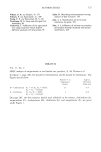
NEAR IR SURFACTANT ANALYSIS 459 (9) Potentiometric Determination of Anion-Active and/or Cation-Active Detergents Wtth Ion-Specific Electrodes (Metrohm Application Bulletin, 1982) No. 138e. (10) A.D. White, Applications ofpotentiometric titration for the determination of anionic-active matter, Soap/Cosmetics/Chemical Specialties, 49 - 52 (Novera ber 1983). (11) L. G. Weyer, Near infrared spectroscopy of organic substances, Applied Spectroscopy Reviews, 21(1&2), 1-43 (1985). (12) I. Ben-Gera and K. H. Norris, Direct spectrophotometric determination off at and moisture in meat products, •/. Food Sci., 33, 64-67 (1968). (13) N. Alpert, W. Keiser, and H. Szymanski, Theory and Practice of lnfraredSpectroscopy (Plenum: New York, 1970), p. 299. (14) L. J. Bellamy, Advances in Infrared Groazp Frequencies (Methuen, Great Britain, 1968), p. 242.

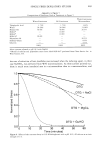
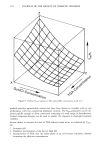
j. Soc. Cosmet. Chem., 37, 461-473 (November/December 1986) Single-fiber stress decay studies of hair reduction and depilation R. RANDALL WICKETT and ROBERT MERMELSTEIN, Procter and Gamble Miami Valley Laboratories, P.O. Box 39175, Cincinnati, OH 45247. Received May 16, 1986. Presented to the Ohio Valley Chapter of The Sodety of Cosmetic Chemists, October 15, 1985. Synopsis A single-fiber method of investigating reduction kinetics in hair has been applied to the study of hair depilation. The time required to reduce the tensile stress supported by a hair by 95%, (T95%), has been shown to correlate to in vivo hair removal by two commercial depilatory products. The reaction of hair with thioglycolic acid (TGA) under depilating conditions was enhanced by increasing pH, by adding guanidine salts, and by oxidative pretreatment. Reduction with TGA was slowed by the addition of n-propranol, triacetin, glycerin, and propylene glycol. Emulsion state also affected reduction rate with TGA. Illustrative of varying pH effects with different reactants, sodium dihydrolipoate was found to react faster than TGA at pH 10.5 but was slower than TGA at pH 11.5, while ammonium sulfide was slower than TGA at 10.5 and faster at pH 11.5. A central composite design experiment was used to calculate a response surface for the effects of TGA concentration, pH, and guanidine hydrochloride concentration on hair reduction rate. An equation with good fit to the data was developed for prediction of responses to changes in the variables over the ranges studied. INTRODUCTION Depilatories function by extensively reducing the disulfide bonds in hair and weakening it to the extent that it is easily removed from the skin. Previously published methods for laboratory evaluation of depilatory performance include measurement of hair swelling rate (1) and measurement of the time required to break multiple hairs under a moderate, repeated load, using a specially constructed instrument (2). We have adapted the single-fiber tensile kinetics (SFTK) method (3) to the study of depilatory performance. This method relies on measurement of stress decay caused by disulfide bond reduction and thus only reflects the changes in bonds that support tensile stress. Reduction of disulfide bonds that do not support any of the tensile stress is not monitored. We believe that this apparent limitation of the method is, in fact, an ad- vantage because stress-supporting bonds are precisely those that must be altered for permanent waving or depilation to occur. In this work, the time required to produce a 95% reduction in the tensile force has been found to be a reproducible means of as- sessing depilatory efficacy and to correlate with in vivo performance of two commercial R. Randall Wickett's current address is S.C. Johnson and Sons, Inc., 1525 Howe St., Racine, WI 53403. 461
Purchased for the exclusive use of nofirst nolast (unknown)
From: SCC Media Library & Resource Center (library.scconline.org)