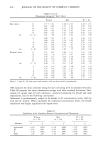
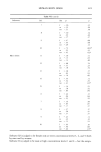
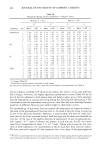
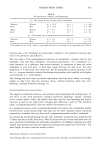
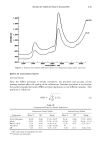
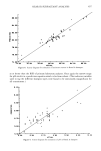
j. Soc. Cosmet. Chem., 37, 475-479 (November/December 1986) Quantitation of erythema in a soap chamber test using the Minolta Chroma (Reflectance) Meter: Comparison of instrumental results with visual assessments STEPHEN W. BABULAK, LINDA D. RHEIN, DIANA D. SCALA, F. ANTHONY SIMION, and GARY L. GROVE, Colgate-Palmolive Company, 909 River Road, Piscataway, NJ 08854 (S.B., L.D.R., D.S., F.A.S.), and Skin Study Center, 340I Market Street, Philadelphia, PA 19104 (G.L.G.). Received June 9, I986. Synopsis Current methods for quantifying erythema in clinical irritation tests rely on subjective, visual scoring by trained evaluators. We demonstrate herein the usefulness and reliability of a commercially available reflec- tance meter for objectively quantifying this parameter in a clinical test using soaps and detergent products. This portable reflectance instrument, called the Minolta Chroma Meter, was used to quantify erythema on the forearms in a soap chamber patch test situation. The instrumental readings for six bar products were compared with two other assessments--visual scores of erythema and transepidermal water loss. The rela- tive irritancy of six soap/detergent bars was determined. All three assessments lead to the same conclusion that two of the bars were significantly milder than four others. The correlation coefficient for visually scored erythema compared with Minolta redness readings was r = 0.97, thus confirming the sensitivity and reliability of the technique for this class of compounds. This instrument is small and contains a flexible probe which conveniently permits reading of multiple sites. Results show this reflectance instrument provides a reliable, noninvasive tool for objective assessment of erythema in patch tests. BACKGROUND Erythema in skin is produced when exposure to irritants such as detergent products, allergens, or UV light elicits infiltration of blood cells close to the skin surface. Oxy- haemoglobin gives the skin this red color. This is a major factor used in the assessment of a detergent product's irritation potential. Traditionally, erythema has been assessed visually by trained observers using predetermined arbitrary scales. However, these mea- surements are highly subjective and can be influenced by the background color of the subject's skin. Additionally, the visual assessments may not be consistent between studies. Skin color can be instrumentally measured using reflectance techniques which will de- fine color by using the standardized tristimulus system recommended by CIE (1) or by determining a reflectance spectrum. Analysis on the basis of skin color has been dis- cussed in detail by others (2,3). Instrumental measurements of erythema would result in more objective, reproducible, and quantitative data than visual scoring. However, 475

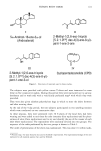
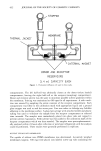
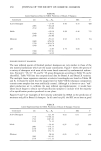
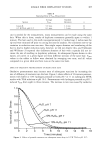
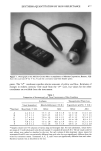
476 JOURNAL OF THE SOCIETY OF COSMETIC CHEMISTS many reflectance meters are immobile and cumbersome to use for measurements on subjects' forearms or backs. Recently Diffey and coworkers (4,5) quantified UV-light induced erythema using a small reflectance meter that records an erythema index. How- ever, this meter is a custom built apparatus. This paper describes the use of the Minolta Chroma Meter, a commercially available reflectance meter, to rapidly and accurately measure erythema caused by soap and detergent bars. The Chroma Meter is small, portable, and commercially available (cost $2,500). It contains a flexible probe that enables the subject to remain stationary while multiple sites are measured. We herein validate the use of this instrument for monitoring er- ythema levels in a soap chamber patch test situation by comparing instrumental readings with visual assessments. METHODS The relative irritancy of six cleaning bar products, four bar soaps (samples A, C, E, and F) and two detergent bars (samples B and D), was determined in a modified soap chamber test (6). Five percent solutions (w/w) of each were prepared in tap water (with gentle warming) and each sample was applied to a separate site on the volar forearm in a Duhring Chamber. Three sites on each of two forearms were treated for a given subject and 21 subjects participated (each signed an informed consent form). The study was run at KGL, Inc. (Philadelphia, PA) and was medically monitored at this facility. The chambers were removed after 24 hours, and the forearms were rinsed with warm tap water. After 3 hours, visual erythema scores were obtained by a trained evaluator, and instrumental assessments (Minolta Chroma Meter and evaporimeter) were obtained by a technician. The subjects were equilibrated for 1 hour at 68øF, 40-50% RH, prior to taking evaporimetry readings. The study was done double blind. The irritation caused by the six different treatments with soap and detergent bar solu- tions applied to human volar forearms was assessed by three measures: (i) visual scoring of erythema produced by the different samples using an arbitrary scale (6), (ii) Minolta Chroma Meter measurements of redness, and (iii) transepidermal water loss (Evapo- rimeter, Servo Med, Inc., Montpellier, VT ref. 7). The six sites were also assessed by the three methods prior to treatment (control measurements). The Minolta Chroma Meter model CR-100 (Registered Trademark, The Minolta Com- pany, Minolta Corp. Ramsey, NJ) was used in this study (Figure 1). This instrument has a flexible, hand-held probe which can be moved from site to site on the subject's arm with ease. The aperture of the probe (8 mm diameter) is rested lightly on the skin. All readings were taken by the same technician so that approximately the same amount of pressure was applied to each site. Readings can be taken in 15 seconds or less. Blanching does not affect our results because the pressure of the probe on the skin is small and is the same for all sites. That the Chroma Meter readings closely correlate with visual scores (where no pressure is exerted on the test sites) supports this conclu- sion. The Chroma Meter is small (1-2 lbs) and also has the advantage of being battery powered if desired both facilitate easy transport of the equipment. The Minolta Chroma (Reflectance) Meter reads color in a three-dimensional format where the color system is that recommended by CIE, and the coordinates are L ½, a ½ and b • (1). The L • signifies levels of brightness between black and white. Coordinate "a •" signifies the balance between red and green with 100 being red only and - 100 being
Purchased for the exclusive use of nofirst nolast (unknown)
From: SCC Media Library & Resource Center (library.scconline.org)