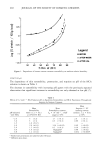
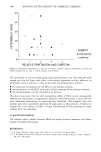
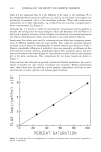
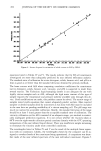
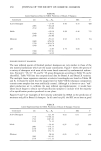
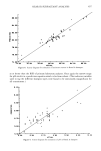
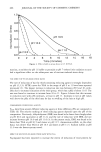
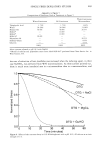
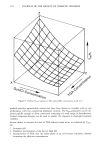
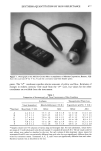
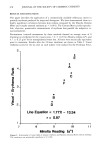
ERYTHEMA QUANTITATION BY SKIN REFLECTANCE 479 with 1 being the least irritating treatment (assigned to the lowest visual score) and 6 being the most irritating treatment (assigned to the highest score). Statistical analysis of resulting ranks was done using the Friedman test (8) along with the Conover test (8) for multiple comparisons. Instrumental results were compared using a paired T-test. All three methods of assessment are in agreement and show that two treatments, B and D, were significantly (p • 0.01) less irritating than the other four treatments (A, C, E, and F). All treatments caused a significant (p • 0.001) increase from control (pretreat- ment) values thus all products produced some level of irritation in this exaggerated test. Each of the three methods of assessing irritation leads to a similar conclusion, that products B and D were not as irritating as products A, C, E, and F. Correlations of the three methods of assessing irritation were determined using the Spearman (non-parametric) test (9), using the data from all subjects (n = 21). Figure 2 shows the correlation between mean visual erythema and the mean Minolta redness readings for each product. The correlation coefficient of r = 0.97 was highly significant (p • 0.003). Other correlations were r = 0.86 (p • 0.03) for visual erythema versus transepidermal water loss and r = 0.96 (p • 0.004) for Minolta redness versus transepi- dermal water loss. We conclude that the Minolta Chroma (Reflectance) Meter has adequate sensitivity to be used for estimating the relative irritation potential of soaps and detergents in a patch test and probably in other clinical protocols where assessments of erythema are desired. Reproducibility of duplicate readings was excellent, i.e., they were within 1% of each other. This instrument thus appears to be an excellent, noninvasive tool for objectively quantifying erythema. REFERENCES (1) G. Wyszecki and W. S. Stilles, Color Science: Concepts and Methods, Quantitative Data and Formula, 2nd ed. (John Wiley and Sons, New York, 1982) pp 165-168. (2) J. B. Dawson, D.J. Barker, D.J. Ellis, E. Grassam, J. A. Cotterill, G. N. Fisher, and J. W. Feather, A theoretical and experimental study of light absorption and scattering by in vivo skin, Phys. Med. Biol., 25, 695-709 (1986). (3) L. L. Hantman, Methods for studying the skin surface, J. Soc. Cosmet. Chem., 34, 407-418 (1983). (4) B. L. Diffey, R. J. Oliver, and P. M. Farr. A portable instrument for quantifying erythema induced by ultraviolet radiation, Brit. J. of Dermat., 111, 663-672 (1984). (5) P.M. Farr and B. L. Diffey, Quantitative studies on cutaneous erythema induced by ultraviolet radiation, Brit. J. ofDermat., 111, 673-682 (1984). (6) P. J. Frosch and A.M. Kligman, The soap chamber test. A new method for assessing the irritancy of soaps,J. Am. Acad. Dermat., 1, 35-41, (1979). (7) P. G. M. van der Valk, J.P. Nater, and E. Bleumink, Skin irritancy or surfactants as assessed by water vapor loss measurements,J. Invest. Dermat., 82, 291-294 (1984). (8) W. J. Conover, Practical Norparametric Statistics, 2nd ed. (John Wiley and Sons, New York, 1980), pp 299-300. (9) R. Langley, Practical Statistics Simply Explained (Dover Publications, Inc., New York, 1970), pp 199-211.

j. Soc. Cosmet. Chem., 37, 481-488 (November/December 1986) Validating the microbiological integrity of cosmetic products through consumer-use testing SUSAN M. LINDSTROM and JOYCE D. HAWTHORNE, Avon Products, Inc., Suffern, NY 10901. Received March 20, 1986. Presented at the Society of Cosmetic Chemists Annual Meeting, December I985, New York. Synopsis To ensure the development of microbiologically safe cosmetics, an in vitro microbial challenge test was developed which accurately predicts the preservative efficacy of a product after consumer use. Over the past five years, 143 products which had met the in vitro challenge test criteria were subjected to consumer testing. These products included mascaras, creams, lotions, liquid makeup, eyeshadows, eyeliners, and bath and hair preparations. Criteria for formula acceptability after use were: recovery of organisms at less than 100 cfu/g upon initial test or no recovery upon retest of the product and no recovery of Pseudomonas species, Escherichia coli, or Staphylococcus aureus. Over 99% of the products tested met these requirements, while only nine out of more than 4300 samples tested did not meet these test criteria. As a result of these failures, the products were reformulated with increased preservative concentrations before release for sale. Further steps were taken to increase the predictability of the in vitro challenge test by including a higher concentration of challenge organisms, a greater number of preservative-resistant product isolates, and more stringent inoculum reduction requirements. These procedures have resulted in an in vitro test which accu- rately predicts preservative efficacy of a cosmetic product after consumer use. INTRODUCTION Cosmetic products should be proven safe and effective before market sale. In order to accomplish this goal, each company performs numerous evaluations of product integrity including a microbiological assessment. Several in vitro preservative adequacy tests are available (1-6). These challenge tests should be predictive of preservative effectiveness under ordinary consumer use. However, these procedures are proven valid only when the microbiological integrity of the product after consumer use is confirmed. This paper will review the results of 143 products which represent over 4300 samples tested using in vitro challenge testing followed by consumer-use testing during the period of 1980 to early 1985. The strong correlation of in vitro and in vivo test results will become evident. Over the course of testing, the in vitro test has evolved into a more predictive test through several procedural modifications which will also be discussed. These modifications include higher inoculum concentrations, more stringent microbial reduction requirements, development of the accelerated preservation test (7), and addi- tional test parameters in the consumer-use test itself such as preservative analysis. As the cumulative history was acquired, new directions in preservative philosophies devel- oped. 481
Purchased for the exclusive use of nofirst nolast (unknown)
From: SCC Media Library & Resource Center (library.scconline.org)