J. Cosmet. Sci., 52, 281-295 (September/October 2001) Dynamic hairspray analysis. II. Effect of polymer, hair type, and solvent composition j. JACHOWICZ and K. YAO, International Specialty Products, Wayne, NJ 07470. Accepted for publication May 31, 2001. Synopsis A texture analyzer was employed to study the properties of hairspray resins by measuring a number of mechanical parameters of hair modified by them. Hairset stiffness, stiffness retention at high humidity, and duration and magnitude of polymer film tackiness during drying were the properties employed to charac- terize fixative-treated hair. They were investigated for formulations containing ethyl ester of PVM/MA copolymer, butyl ester of PVM/MA copolymer, vinyl caprolactam/PVP/dimethylaminoethyl methacrylate copolymer, VA/butyl maleate/isobornyl acrylate copolymer, and polymer blends such as poly(methylvi- nylether) (PMVE) - ethyl ester of PVM/MA copolymer. It was demonstrated that the properties of hair treated with a fixative are affected by the concentration and molecular weight of a polymer, low-molecular- weight additives that can modify the mechanical, surface, or interfacial properties of a polymer film, and the presence of water in the formulation. It was also shown, that the type of hair employed, such as virgin, untreated hair or hair damaged by bleaching, can also have an effect on the performance of a given hairspray formulation. For compositions based on blends of PMVE and ethyl ester of PVM/MA copolymer, the employed method demonstrated the sensitivity of the properties of polymer blends to the presence of a hydrophilic component such as PMVE. INTRODUCTION It has been shown in previous studies that hairsprays, and hair fixatives in general, can be analyzed in terms of several measurable parameters to characterize their consumer- perceptible attributes. Dynamic hairspray analysis, which employs a texture analyzer for mechanical measurements, was recently used to collect data on hairset stiffness, stiffness retention at high humidity, and duration and magnitude of polymer film tackiness during drying (1). It was suggested that these parameters can be affected by (a) the concentration and molecular characteristics of a principal polymeric component of a fixative system, (b) the properties of an interface between a polymer and the hair surface, (c) the low-molecular-weight additives that can modify the mechanical, surface, or interfacial properties of a polymer film (for example, plasticizers), and (d) the type and/or composition of a solvent. For a system containing a single resin, the key parameters are the molecular weight of a polymer and its concentration in the formulation. In a two-component polymer system, frequently employed in commercial formulations, com- position is an important parameter since it determines the polymer blend properties. 281

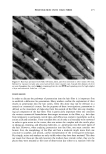
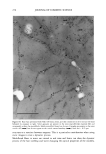
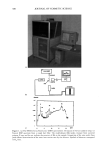
282 JOURNAL OF COSMETIC SCIENCE Another factor affecting the mechanical performance of a fixative is an adhesion between a polymer and the hair. It can be influenced by the presence of solvents, which can strongly interact with fibers by swelling them or by altering the ionic equilibrium of carboxyl or amine groups in the keratin protein. This paper explores the effect of the above-mentioned factors on the performance char- acteristics of several hairspray systems employing commercially available or experimen- tal polymers. The procedures of dynamic hairspray analysis, which utilize a texture analyzer to measure several mechanical properties, were employed to derive parameters sensitive to the physical or chemical characteristics of the investigated systems. EXPERIMENTAL INSTRUMENT The instrumentation and experimental procedures were similar to those employed in previous work (1). Hair treatment was by application by an Eppendorf pipette of a hairspray solution to hair shaped into omega loops. A typical deposited amount (0.15 g or 0.07 g of a hairspray solution per 0.2 g of hair sample for stiffness and tackiness studies, respectively) was uniformly distributed over the tress surface, thoroughly satu- rating the fibers between the plastic tabs. In order to preserve the circular shape of omega loops for stiffness measurements, the drying of wet loops was carried out by using teflon-coated, cylindrical rods inserted into the loops immediately after treatment. The hair samples prepared in such a way were dried and conditioned overnight in a 50% RH and 70øF atmosphere prior to measurements by the texture analyzer (Model TA-XT2, Texture Technologies Corporation). For tackiness measurements, low intermittent de- formations were applied to an omega-shaped hair tress, and both negative and positive forces characterizing the adhesive and stiffness forces were recorded during drying, following the application of a hairspray solution on the hair. The humidity resistance measurements were carried out at 90% RH by following the variation of a maximum force in each deformation cycle as a function of time for 80 minutes. Most of the experiments described in this paper were carried out in the elastic region of the polymer-modified omega loops, i.e., in the deformation range from 0% to 6.25% (which corresponds to 1 mm strain). We also performed measurements in the non-elastic range by subjecting omega loops to 4-mm deformations equal to 25% strain. From these measurements we could determine the maximum force in the first deformation, F•, and flexibility parameters F•o/F•, E•o/E•, H•o/H • as described in previous papers (2,3). HAIR SAMPLES Commercially blended, caucasian, virgin brown hair, fine hair, blended oriental hair, and triple-bleached hair, were all purchased from DeMeo Brothers, New York. The fibers were washed with 3% ALS solution prior to measurements. The diameters of the hair fibers, estimated from SEM micrographs, were 100 pm, 70 pm, and 50 Inm for oriental, caucasian, and fine caucasian hair, respectively.
Purchased for the exclusive use of nofirst nolast (unknown)
From: SCC Media Library & Resource Center (library.scconline.org)