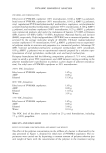
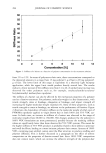
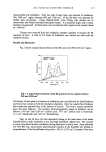
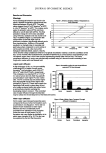
DYNAMIC HAIRSPRAY ANALYSIS 283 POLYMERS AND FORMULATIONS Ethyl ester of PVM/MA copolymer (10% neutralization, 0.046 g AMP/1 g polymer), butyl ester of PVM/MA copolymer (10% neutralization, 0.041 g AMP/1 g polymer), vinyl caprolactam/PVP/dimethylaminoethyl methacrylate copolymer, octylacrylamide/ acrylates/butylaminoethyl methacrylate copolymer (95% neutralization, 0.168 g AMP/1 g polymer), and acrylates copolymer (100% neutralization, 0.25 g AMP/1 g polymer) were commercial products sold under the tradenames of Gantrez 225 (ISP) or Omnirez (ISP), Gantrez 425 (ISP), Gaffix 713 (ISP), Amphomer (National Starch), and Luvimer (BASF), respectively. Poly(vinylpyrrolidone) (PYP K60) was a commercial product char- acterized by the average molecular weight of 400,000, VA/butyl maleate/isobornyl acrylate copolymer (15% neutralization, 0.047 g AMP/1 g polymer) was an experimen- tal polymer similar in structure and properties to a commercial product, Advantage CP (ISP). Co(vinyl pyrrolidone-methacrylic acid-lauryl methacrylate) (20% neutralized, 0.05 g AMP/1 g polymer) was an experimental material prepared by a solution copo- lymerization of vinyl pyrrolidone, methacrylic acid, and lauryl methacrylate. Hairspray formulations had the following composition: polymer (5.71% w/w), ethanol/ water to satisfy a given VOC requirement, and AMP (amount varying according to the polymer manufacturer's specification to produce a given degree of polymer neutraliza- tion). For ethyl ester of PVM/MA copolymer at 20% neutralization: 100% VOC formulation Ethyl ester of PVM/MA copolymer: 1.85 g AMP: 0.09 g Ethanol: 15.56 g 80% VOC formulation Ethyl ester of PVM/MA copolymer: 1.85 g AMP: 0.09 g Ethanol: 11.65 g Water: 3.91 g 55% VOC formulation Ethyl ester of PVM/MA copolymer: 1.85 g AMP: 0.09 g Ethanol: 5.40 g Water: 10.16 g The VOC level of the above systems is based on 25 g total formulations, including 7.5 g (30%) propellent. RESULTS AND DISCUSSION EFFECT OF POLYMER CONCENTRATION AND MOLECULAR WEIGHT The effect of the polymer concentration on the stiffness of a hairset is illustrated by the data presented in Figure 1, obtained for ethyl ester of PVM/MA copolymer. The ex- periments were carried out by depositing a constant amount of polymer solution (per unit weight of hair), with the concentration of the polymer in the treatment varying

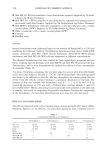
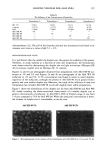
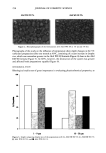
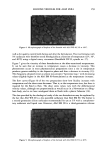
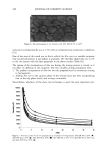
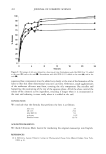
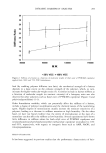
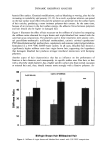
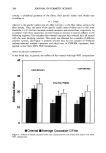
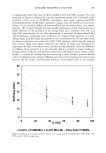
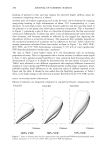
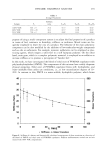
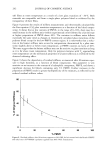
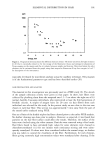
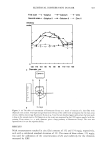
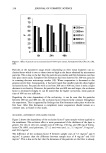
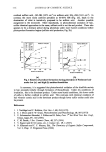
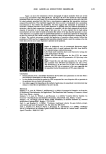
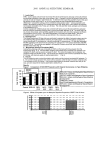
284 JOURNAL OF COSMETIC SCIENCE 6O 55 5O o 45 • 40 • 35 • 3o • 25 2o 15 0 2 4 6 8 10 12 14 Concentration [%] Figure 1. Stiffness of a hairset as a function of polymer concentration in the treatment solution. from 2% to 12%. In terms of polymer-to-hair ratio, these concentrations correspond to the deposited amounts in a range from 15 mg polymer/1 g of hair to 90 mg polymer/1 g of hair. The lower limit of this range is equivalent to a relatively light hairspray application, while the upper limit would produce heavily treated hair. The results indicate a linear increase of the stiffness ratio from 14 to 46. A similar linear increase was observed for other polymers such as, for example, octylacrylamide/acrylates/ butylaminoethyl methacrylate copolymer. The stiffness of a hairset can also be affected by the mechanical properties of a polymer used as a fixative treatment. For polymers, molecular weight is a key characteristic, with tensile strength, stress at breakage, elongation at breakage, and impact strength all increasing for higher-molecular-weight materials (4). Some of these properties, such as tensile strength or stress at breakage, are relevant to the performance of fixatives. Figure 2 illustrates the dependence of hairset stiffness on the molecular weight of ethyl ester of PVM/MA copolymer applied to virgin brown hair in both 100% and 55% VOC sys- tems. In both cases, an increase in stiffness of a hairset was observed in the range of molecular weights from 60,000 to 180,000. The changes produced by the polymer in 100% VOC formulation are more pronounced, possibly because the resulting stiffness values are significantly lower than those observed for 55 % VOC systems. The reason for the higher stiffness of 55% VOC products is probably related to their ability to penetrate and swell the fibers, leading to a more intimate polymer-hair contact. Systems of 100% VOC, containing pure alcohol, cannot enter the fiber structure to produce swelling and polymer diffusion. This is further discussed in a paragraph on the effect of solvent composition on the properties of fixative-treated hair. Since 100% VOC composition does not contain water, which can increase the adhesive strength of the polymer-hair
Purchased for the exclusive use of nofirst nolast (unknown)
From: SCC Media Library & Resource Center (library.scconline.org)