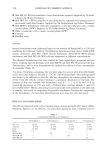
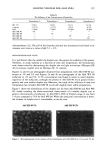
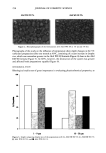
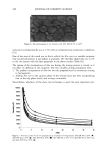
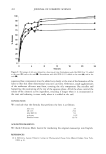
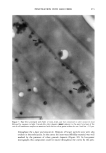
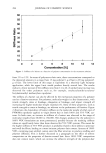
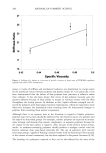
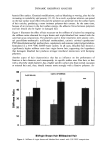
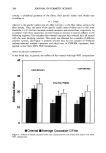
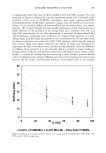
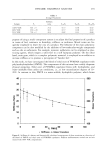
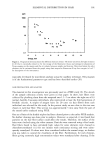
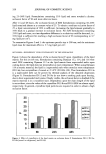
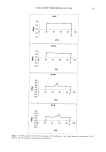
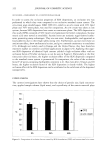
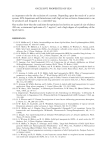
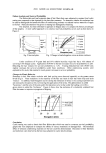
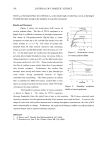
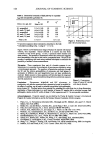
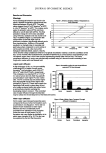
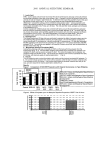
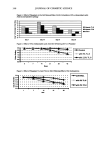
DYNAMIC HAIRSPRAY ANALYSIS 285 3O 28 26 24 22 20 18 16 14 12 10 50000 90000 130000 170000 M.W. * 55% VOC ß 100% VOC Figure 2. Stiffness of a hairset as a function of molecular weight of ethyl ester of PVM/MA copolymer applied from 100% and 55% VOC formulations. link (by enabling polymer diffusion into hair), the mechanical strength of a hairset depends to a large extent on the cohesive strength of the polymer, which, in turn, increases for higher-molecular-weight resins (5). A similar increase in hairset stiffness as a function of molecular weight (or intrinsic viscosity) of a hairspray resin was also observed for other polymers such as butyl ester of PVM/MA copolymer (Figure 3) and poly(vinylpyrrolidone) (1-3). Other formulation variables, which can potentially affect the stiffness of a hairset, include a degree of polymer neutralization and the chemical nature of the neutralizing agent. Higher degrees of neutralization usually increase the moisture sensitivity of a polymer, leading to a decrease in stiffness retention at high humidity. On the other hand, we have not found evidence that the extent of neutralization or the type of a neutralizer can also affect the stiffness at low humidity. Several experiments have shown little difference in stiffness values for both ethyl ester of PVM/MA copolymer and octylacrylamide/acrylates/butylaminoethyl methacrylate copolymer neutralized to 10% and 95%, respectively, with organic or inorganic bases such as AMP, NaOH, and triisopropanolamine. EFFECT OF HAIR TYPE It has been suggested in previous studies that the performance characteristics of hair-

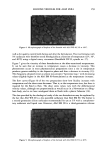
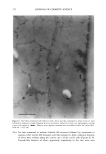
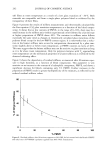
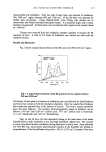
286 JOURNAL OF COSMETIC SCIENCE 25 0 23 • •o 21 • 19• 15 • ................... -•- ................................... •- 0.42 0.44 0.46 0.48 0.5 Specific Viscosity Figure 3. Stiffness of a hairset as a function of specific viscosity of butyl ester of PVM/MA copolymer applied from 100% VOC formulations. sprays, in terms of stiffness and mechanical resilience, are determined to a large extent by the interfacial contact between polymer and keratin surface (6,7). In particular, it has been demonstrated that the failure of hair-polymer-hair junctions is adhesive rather than cohesive. It has also been shown that resins of low-solution viscosity give the greatest adhesion because of their ability to remain in intimate contact with the fiber throughout the drying process. In addition to this, higher adhesive strength was ob- served for polymers with lower glass transition temperatures, which are expected to more effectively dissipate the mechanical stress resulting from the dimensional changes in polymer films resulting from solvent evaporation. Although there is no rigorous data in the literature in regard to fixative polymers, polymer-hair interactions should be influenced by the chemical nature of a polymer and the type of its functional groups. For example, cationic polymers are expected to interact more strongly with keratin than anionic, amphoteric, or nonionic polymers because the net charge on the hair surface is negative. Also, because of the protein nature of hair, amide- or urethane-containing polymers should produce a stronger contact with the keratin substrate than ester-based materials (8). The use of polymers with reactive functional groups, capable of forming covalent bonds with the keratinous fibers (mainly in the context of wool treatments), has also been explored in the patent literature (9,10). The bonding of a polymeric material to hair can be also affected by the state of the
Purchased for the exclusive use of nofirst nolast (unknown)
From: SCC Media Library & Resource Center (library.scconline.org)