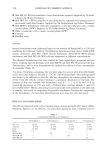
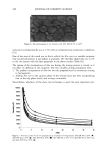
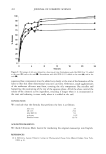
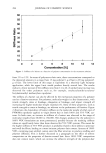
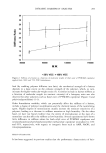
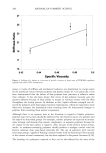
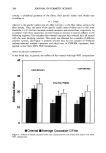
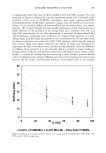
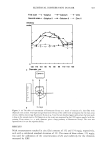
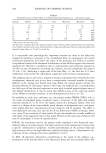
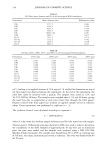
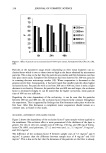
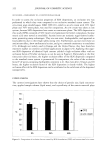
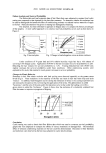
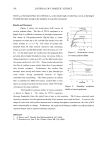
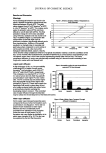
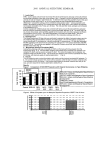
346 JOURNAL OF COSMETIC SCIENCE DELIVERY OF ACTIVE INGREDIENTS IN AND THROUGHOUT THE STRATUM CORNEUM VIA POLYMERIC ESTER TECHNOLOGY Diana L. Smith, Robert Siegfried, Danika Johnson and Paul Ching lnolex Chemical Company, Philadelphia, PA 19148 Introduction The most desirable method to improve the performance of an active ingredient in a cosmetic formulation is by incorporating an appropriate delivery system. There are many strategic advantages of utilizing a topical delivery system. By making actives more bio-available in the target tissue, the performance attributed by the active can be maximized. The coupling of this enhanced rate of delivery to the target tissue, along with a lowered irritation potential, results in an increased therapeutic index. The research reported in this presentation is directed at investigating the relationship between the structure of a class of cosmetic polymeric liquid reservoir technologies, and their respective ability to enhance the effectiveness of cosmetic actives. This technology is based on a partitioning mechanism, whereby actives are released by controlled diffusion into the epidermis. The chemistry and design of such topical delivery systems are essential for effective delivery. By incorporating these compositions into topical formulations, the efficacy of cosmetic actives can be optimized, the subject of which will be recapped in our applications research studies conducted with select cosmetic actives. Materials and Methods Although skin has a high degree of resistance to chemical penetration, it is known that many actives that target the stratum corneum (SC) are able to penetrate beyond it to deeper, viable layers of skin, and even to the systemic circulation. One of the most efficient means of focusing delivery of actives to the SC is with a polymeric topical delivery system (TDS). With the appropriate TDS, the active will partition into the polymer and be distributed and maintained in an active form in the targeted compartment of skin •. The Personal Care Applications Research Group at Inolex Chemical Co. has investigated the ability of polymeric esters to effectively control the diffusion of a broad range of active ingredients into and throughout the SC. Various clinical studies were performed to test the capability of a specially designed polyesters to potentially improve the performance of both hydrophilic and lipophilic actives for delivery of actives requiring distribution on and within the upper layers of the SC and those requiring distribution to lower layers of the SC respectively. Among these actives were DEET (mosquito repellent), dihydroxyacetone (sunless tanning agent), and several skin whitening agents, including hydroquinone, lactic acid, magnesium ascorbyl phosphate, and arbutin. Evaluating Polymeric Ester TDS with Lipophilic Actives Requiring Distribution on and within the upper SC: 1. Organic Sunscreens To evaluate the impact of polyesters upon the skin penetration of organic sunscreen active ingredients, a series of tape-stripping experiments were conducted on human skin in,vivo 2'3'4 . In these experiments, solutions of organic sunscreen actives (oxybenzone and octyl methoxycinnamate) were applied, with and without various polyesters, to forearm sites of subjects. Structural variations such as glycol monorner constituent, cross-linking rs. linear, end-termination and molecular weight were evaluated. Following a sample residence time of 2 hours, the outer SC was removed via repeated tape stripping 2'5 (Fig. 1). 2. DEET- Diethyltoluamide The active ingredient DEET, a well-known insect repellent, was evaluated with the best performing polyester from the tape-stripping study conducted with sunscreens (DEGX-5.0), since it had optimized the mitigation of sunscreen penetration. The clinical in-vivo testing was conducted in Indonesia with the conventional Mosquito Repellency Test utilized. Human subjects apply the test products (formulation with DEET alone - control, and DEET with DEGX-5.0) to their arms, followed by placement of their arms chambers containing mosquitoes for a period of 20-minutes each hour during a 6-hour period. The total number ol = mosquito bites occurring on the arms of subjects is compared after completion of the 6-hour test (Fig. 2). Evaluating Polymeric Ester TDS with Hydrophilic Actives Requiring Distribution to lower layers of the SC: The discovery of the polyester's ability to mitigate skin penetration of sunscreen actives led to the evaluation of polyesters as delivery systems for hydrophilic actives 6. The first hydrophilic active investigated was the alpha hydroxy acid, lactic acid.

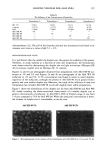
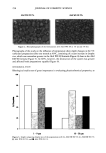
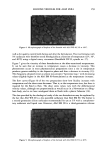
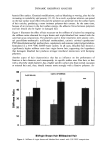
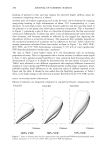
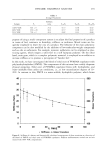
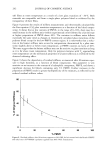
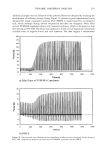
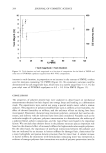
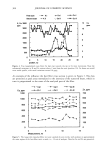
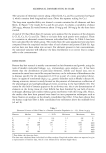
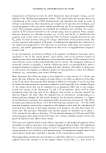
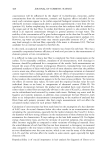
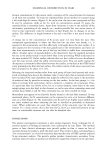
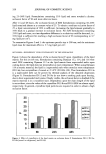
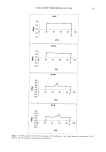
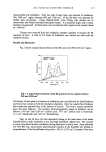
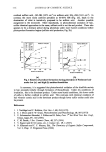
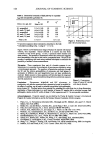
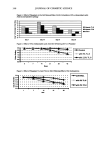
2001 ANNUAL SCIENTIFIC SEMINAR 347 1. Lactic Acid AHA's such as lactic acid are known to increase the rate of cell renewal by reducing corneocyte adhesion that promotes exfoliation of the cells on the surface of skin. Changes in the size of squamous cells can be used as an index of change in cell renewal rate. To determine the impact that polyester structure has upon the delivery of lactic acid to the SC, an in-vivo human panel test was conducted that focused upon differences in comparative cytology, which correlated to desquamation rates 7. Various polyesters were tested in formulations containing 10% undissociatad lactic acid, along with a control without the polyester. Cell biopsies were taken every 7 days up to 28 days. The cells were then sized, averaged, and compared to the baselines (Fig. 3). Another separate skin whitening study was conducted with lactic acid and the best performing polyester from the previous comparative cytology study hydroxyl terminated, 800 MW (TL-8). This study was a 42- day human clinical study, where panelists applied test formulations with and without polyester at different concentrations (5.0 and 2.5%). The relative pigmentation of the sites was rated weekly. The same formulations were used for this study as were utilized in the comparative cytology study (Fig. 4). 2. Hydroquinone This clinical human panel 28-day study was conducted to examine the effect of polymeric esters upon the skin whitening effect of formulations containing 2% hydroquinone. The test formulations consisted of a control formula with 2% hydroquinone, a formula containing 2% hydroquinone + 5% fatty alkyl terminated, 800 MW polyester (TC-8) and a formula containing 2% hydroquinone + 5% hydroxyl terminated, 800 MW polyester (TL-8). The products were applied to the panelists' forearms once daily, and the pigmentation of the sites rated weekly (Fig. 5). 3. Magnesium Ascorbyl Phosphate (MAP) Another skin whitening study was conducted with MAP and the best performing polyester from the hydroquinone study, TL-8. Two formulation variations were tested which contained 2.5% polyester one contained 5% MAP, and the second contained 3% MAP. The control formulation had no polyester, but contained a high level of MAP at 10%. Test products were applied to the forearms of panelists twice daily for 28 days, and observed weekly for relative pigmentation (Fig. 6). 4. Arbutin This skin whitening study involved formulations with arbutin and the hydroxyl terminated 800 polyester, TL- 8. The control formula contained 10% arbutin without polyester, while the test formulation contained 2.5% TL-8 polyester and only 5% arbutin. Test products were applied to panelists' forearms twice daily for 28 days, and were observed for relative pigmentation weekly (Fig.7). Results Figure 1. Comparison of 5000 MW Polyesters with Organic Sunscreens via Tape Stripping ,J l 5 ß aoo I I []Oxybenzone I •, • • IDEG-C5.0: AdipicAcid/Diethylene Glycol/Coconut • 80 • HFattyAcid Copolymer I • • • • lJ DEo-5.0:AdipicAcid/Diethyleneolycølcøpølymer •) 60• • • • • r]_DEO_X5.0: Adipic Acid/Diethylene Olycol/Olyceri n a:: 40• • • • • I-• Crøsspølymer -• I/ / I/ I/ I/ I/ I FMPD-X5'0: Adip ic O• 20• • • • • ]-]Acid/Trim ethylpentanediol/Glycerin Crosspolymer NPG-X5.0: Adipic Acid/Neop•ntyt Glycol/Glycerin • 0 rosspolymer Control DEG-5.0 DEG- NPG- TMPD- DEG- C5.0 X5.0 X5.0 X5.0 Figure 2. Effect of Polyester upon the Mosquito Repellent Properties of DEET Over 6 Hours 400 350 • 250 200 100 50 :8•
Purchased for the exclusive use of nofirst nolast (unknown)
From: SCC Media Library & Resource Center (library.scconline.org)