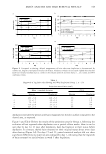
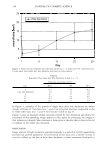
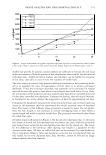
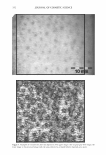
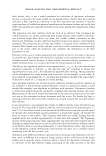
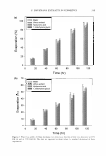
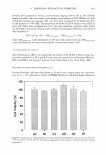
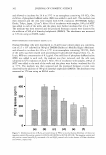
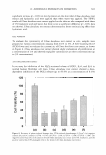
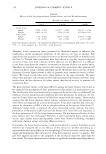
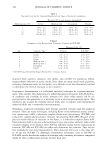
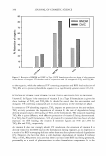
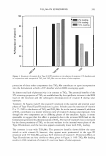
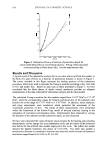
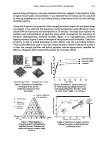
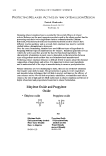
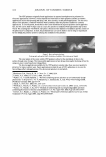
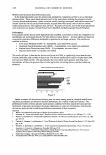
362 JOURNAL OF COSMETIC SCIENCE and allowed to incubate for 24 h at 37°C in an atmosphere containing 5% CO2• One milliliter of phosphate-buffered saline (PBS) was added to each well. The medium was then removed and the cells were treated with UV A irradiation (F30T8BLB, Sankyo Denki, Tokyo, Japan, 3 J/cm2 ). After 24 h of incubation with samples, 100 µl of MTT was added to each of the wells, and the plates were further incubated for 4 h at 3 7°C. The medium was then removed and the produced formazan crystals were dissolved by the addition of 500 µl of dimethyl sulphoxide (DMSO). The absorbance was measured at 5 70 nm using an ELISA reader. PHOTO-INDUCED CYTOTOXICITY ASSAY (13,14) Human fibroblast cells were distributed to 24-well tissue culture plates at a concentra tion of 2.5 x 10⁵ cells/well in 500 µl of DMEM (Dulbecco's Modified Eagle's Medium) and allowed to incubate for 24 h at 37°C in an atmosphere containing 5% CO 2 • Each of the wells was then treated with promethazine hydrochloride (Sigma Chem. Co., St. Louis, MO) at a concentration of 0.5 µg/ml. One milliliter of phosphate-buffered saline (PBS) was added to each well, the medium was then removed, and the cells were subjected to UV irradiation (3 J/cm2). After 24 h of incubation with samples, 100 µl of MTT was added to the each of the wells and the plates were further incubated for 4 h at 37 ° C. The medium was then removed and the produced formazan crystals were dissolved by the addition of 500 µI of dimethyl sulphoxide (DMSO). The absorbance was measured at 570 nm using an ELISA reader. 500 - 400 -- 300 Q) Q) Q) 200 L.. N UJ C) a.. 100 0 (a) (b) (c) (d) (e) (f) Figure 5. Inhibitory activity of H2O2-activated release of PEG2 in normal human fibroblast cell lines: (a) negative control (b) positive control (c) 0.01 % (d) 0.025% (e) 0.05% (f) 0.1 %. The negative control and the positive control were H2Oruntreated cells and H 2 O2-treated cells in the absence of U Imus davidiana root extract, respectively.

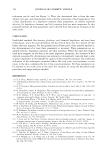
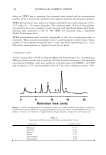
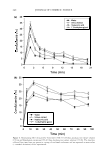
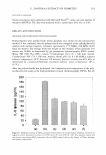
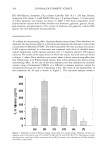
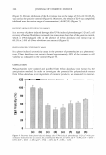
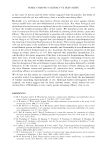
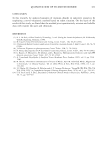
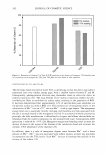
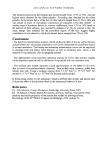
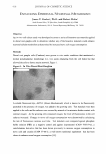
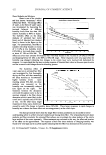
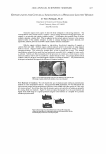
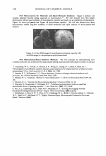
U. DA VIDIANA EXTRACTS IN COSMETICS 363 STATISTICAL ANALYSIS Statistical analyses were performed with Microsoft Excel™, using one-way analysis of variance (ANOV A). The data were analyzed with a significance level of p 0.05. RES UL TS AND DISCUSSION ISOLATION AND PURIFICATION OF POLYSACCHARIDE Polysaccharides were purified from U !mus davidiana root extract by the precipitation method. It was confirmed that the polysaccharide was composed of the carbohydrates by analysis with nuclear magnetic resonance spectrometry ( 13 C NMR, 100 MHz, D20) (data not shown). The average molecular weight of the obtained Ulmus davidiana root extract was 20,000, as determined by gel permeation chromatography (GPC system: Water TM 150C Plus GPC column: Ultrahydrogel 250 (7 .8 x 300 mm, waters), Ultrahydrogel 500 (7 .8 x 300 mm, waters) eluent: pH 4.0, 0.1 M NaNO3 aqueous solution temperature: 30°C flow rate: 0.9 ml/min). Intrinsic viscosity was 89.3 dl/g, as determined by a Cannon-Ubbelohde viscometer (solvent: water temperature: 20° ± 0.2°C). After the polysaccharide was hydrolyzed, the components and composition of the poly saccharides were analyzed by high-performance liquid chromatography (HPLC, Bio-LC 200 180 .-.. 160 E 140 ....... 120 ._, Q) 100 80 Q) co 60 40 20 0 (a) (b) (c) (d) (e) (f) Figure 6. Inhibitory activity of H2O2-activated release of 11-6 in normal human fibroblast cell Jines: (a) negative control (b) positive control (c) 0.05% (d) 0.1 % (e) 0.25% (f) 1.0%. The negative control and the positive control were H2O2-untreated cells and H2O2-treated cells in the absence of U Imus davidiana root extract, respectively.
Purchased for the exclusive use of nofirst nolast (unknown)
From: SCC Media Library & Resource Center (library.scconline.org)