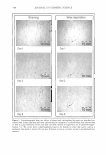
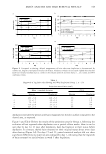
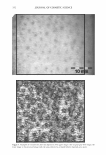
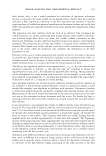
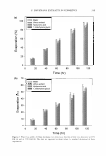
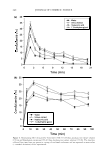
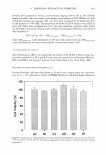
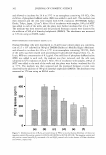
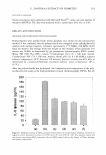
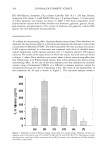
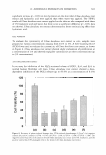
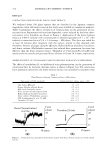
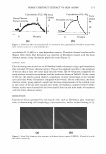
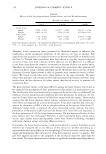
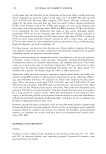
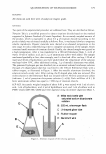
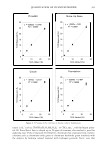
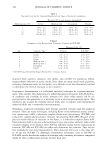
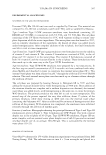
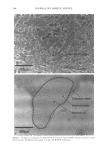
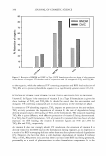
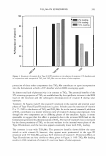
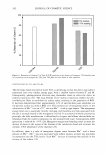
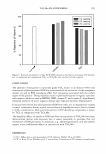
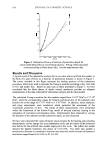
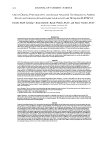
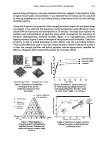
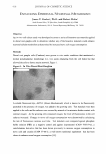
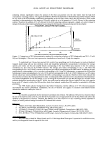
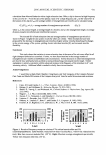
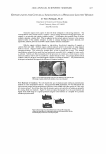
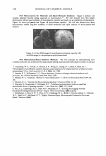
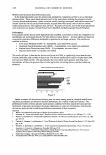
HORSE CHESTNUT EXTRACT VS SKIN AGING Cytochalasin D (2 µ M Force Horse Chesnut ! (dyne) Extract (0.001 %) I 0 0 ! _--11lllllll',..,.,,. 5 0 30 (min) (a) Cytochalasin D (2 µ M) Thrombin (2U/ml l 0 30 (min) (b) 373 Force (dyne) 40 20 0 Figure 2. Inhibitory effect of cytochalasin D on contraction force generated by fibroblasts treated with horse chesnut extract (a) or with thrombin (b). cytochalasin D (2 µM) in a time-dependent manner. Thrombin showed similar results (Figure 2(6)). Stress fiber formation was observed in fibroblasts treated with the horse chestnut extract using rhodamine phalloidin stain (Figure 3 ). CLINICAL TESTS Clinical testing was carried out on 40 healthy female volunteers using a gel formulation that included 3% horse chestnut extract. The gel was applied topically to the periphery of the eye skin at least two times daily for nine weeks. All 40 volunteers completed the study without irritation or erythema, and the results are shown in Table II. At the corner of the eye, the placebo group showed a significant increase (worsening) in the wrinkle score after nine weeks of treatment compared with O weeks. On the other hand, the horse chestnut extract group showed a significant decrease (improvement) of the wrinkle score at the corner of the eye after six and nine weeks of treatment compared with O weeks. Similar results were obtained for the lower eyelid after six and nine weeks of treatment with the horse chestnut extract. DISCUSSION Contraction forces generated by non-muscle cells, such as fibroblasts, play important roles in determining cell morphology, vasoconstriction, and/or wound healing (1-3). (a) (b) Figure 3. Stress fiber formation after treatment with horse chesnut extract (0.0003%, 10 min) (a) or with the vehicle control (b).

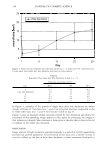
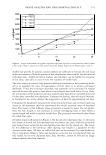
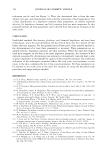
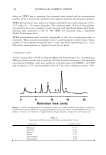
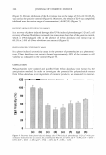
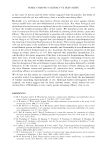
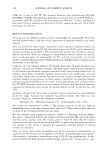
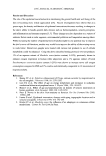
374 JOURNAL OF COSMETIC SCIENCE Table II Efficacy of Gels, Including the Horse Chestnut Extract, on Facial-Wrinkle Smoothing Wrinkle score (mean ± SE) 0 week 6 weeks 9 weeks Corner of eye Sample 0.766 ± 0.104 0.597** ± 0.082 0.613** ± 0.100 Placebo 0.895 ± 0.139 0.956 ± 0.120 0.975## ± 0.121 Lower eyelid Sample 1.20 ± 0.083 1.03** ± 0.089 0.95*** ± 0.089 Placebo 1.24 ± 0.094 1.25 ± 0.102 1.19# ± 0.089 Each value represents the mean ± SE. Significantly different from corresponding 0-week values: **p 0.01, ***p p 0.001 (sample) #p 0.05, ##p 0.001 (placebo). Therefore, active contraction forces generated by fibroblasts appear to influence the morphology and/or mechanical properties of the skin in one way or another. Few ingredients that generate cell contraction forces are known except LP A or thrombin and the like (1). Though these ingredients have been shown to regulate various biological activities in vitro, very little is known of these effects in vivo (6). Moreover, it is difficult to use those ingredients for cosmetic or external use because of their cost and/or safety. Therefore, we searched among various plant extracts for ingredients that generate cell contraction forces using a dermal equivalent model. We found that an extract of horse chestnuts (Aesculus hippocastanum) is able to generate such contraction forces in fibro blasts. We found several other active plant extracts in the same screening. No plant extract that generates cell contraction force had been reported previously therefore, these results show the first discovery of a plant extract that has the activity to generate cell contraction force. The horse chestnut extract is the most effective among the plant extracts tested, and so we examined the mechanism of force generation by this extract as a representative case. The involvement of actin polymerization is suggested by the fact that cytochalasin D (an inhibitor of actin polymerization) inhibited the force generation. In addition, the for mation of stress fibers was observed in fibroblasts treated with this extract. These results suggest that the horse chestnut extract induces contraction force by the formation of stress fibers accompanied by actin polymerization. It has been reported that force gen eration by thrombin or LP A is due to phosphorylation of the myosin light chain (7). Although further study is required, the above-mentioned results indicate that phos phorylation of the myosin light chain and the formation of stress fibers are important in the force generation of cells by horse chestnut extract. The mechanisms of action of other plant extracts were not investigated. However, it can be speculated that a similar action occurs, since similar force/time-dependent curves were observed following treatment with horse chestnut extract and other effective extracts. Fortunately, the horse chestnut extract is safe and suitable for cosmetic formulation, and therefore we evaluated the in vivo efficacy of this extract on wrinkle smoothing as a representative anti-aging effect on skin morphology. Clinical tests were carried out using simple gel formulations that included 3% of the horse chestnut extract or a placebo. The gels were applied topically to the periphery of the eye skin at least two times daily for nine weeks. The horse chestnut extract showed a significant wrinkle-smoothing efficacy
Purchased for the exclusive use of nofirst nolast (unknown)
From: SCC Media Library & Resource Center (library.scconline.org)