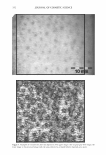
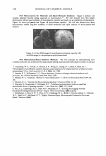
432 JOURNAL OF COSMETIC SCIENCE STRUCTUREAND RHEOLOGY OF VISCOELASTIC MI CELLAR f LUIDS USEFUL IN SHAMPOO FORMULATIONS Srinivasa R. Raghavan, Ph.D. Department of Chemical Engineering University of Maryland, College Park, MD 20742 sraghava@eng.umd.edu Abstract: Shampoo formulations are viscoelastic fluids, typically containing a mixture of long-tailed surfactants. This talk will focus on the self assembled nanostructures responsible for the viscoelasticity of these fluids. In particular, the structures of interest are "wormlike micelles", i.e., long, flexible cylindrical chains that can become entangled in solution, much like polymers. Over the past decade or so, a variety of experimental techniques such as rheology, neutron scattering, and cryo-microscopy have been used to shed light on the properties of wormlike micelles. Key results from these studies will be reviewed, and underlying structure-property relationships will be highlighted. Two practical aspects of particular focus will be: (a) the role of salt in modulating the properties of ionic surfactant solutions and (b) the synergistic enhancement of viscoelastic properties in mixtures of surfactants.

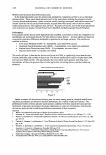
2006 ANNUAL SCIENTIFIC SEMINAR 433 GREEN CHEMISTRY AND SUSTAINABLE MATERIALS DESIGN John C. Warner, Ph.D. Center for Green Chemistry) University of Massachusetts Lowell) 1 University Avenue) Lowell, MA 01854 john_warner@uml.edu Recent developments in materials design have demonstrated that environmentally benign synthetic alternatives are not on(v possible, but economically advantageous. This presentation will illustrate how the principles of green chemistry can be incorporated into the innovative process across the spectrum of Research, Development and Manufacturing worlds. Examples that demonstrate the benefits of interdisciplinary collaborations in pursuit of sustainable materials will be presented. Green Chemistry is: "The design of design products and processes that reduce and/or eliminate the use and/or generation of hazardous materials". The twelve principles of green chemistry were developed as a guide for individuals engaged in research and development. The Principles of Green Chemistry: 1. Prevention: It is better to prevent waste than to treat or clean up waste after it is formed. 2. Atom Economy: Synthetic methods should be designed to maximize the incorporation of all materials used in the process into the final product. 3. Less Hazardous Chemical Synthesis: Whenever practicable, synthetic methodologies should be designed to use and generate substances that possess little or no toxicity to human health and the environment. 4. Designing Safer Chemicals: Chemical products should be designed to preserve efficacy of the function while reducing toxicity. 5. Safer Solvents and Auxiliaries: The use of auxiliaries substances (solvents, separation agents, etc.) should be made unnecessary whenever possible and when used, innocuous. 6. Design for Energy Efficiency: Energy requirements should be recognized for their environmental and economic impacts and should be minimized. Synthetic methods should be conducted at ambient temperature and pressure. 7. Use of Renewable Feedstocks: A raw material of feedstock should be renewable rather than depleting whenever technically and economically practical. 8. Reduce Derivatives: Unnecessary derivatization (blocking groups, protection/deprotection, temporary modification of physical/chemical processes) should be avoided whenever possible. 9. Catalysis: Catalytic reagents (as selective as possible) are superior to stoichiometric reagents. 10. Design for Degradation: Chemical products should be designed so that at the end of their function they do not persist in the environment and instead break down into innocuous degradation products. 11. Real-time Analysis for Pollution Prevention: Analytical methodologies need to be further developed to allow for real-time in-process monitoring and control prior to the formation of hazardous substances. 12. Inherently Safer Chemistry for Accident Prevention: Substances and the form of a substance used in a chemical process should be chosen to minimize the potential for chemical accidents, including releases, explosions and fires.
Purchased for the exclusive use of nofirst nolast (unknown)
From: SCC Media Library & Resource Center (library.scconline.org)