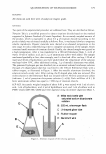
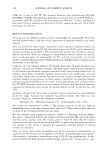
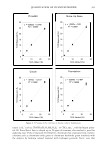
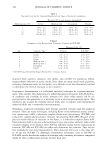
434 JOURNAL OF COSMETIC SCIENCE A successful green chemistry technology must satisfy three criteria: • It must be more environmentally sound than a competitive technology. • It must perform as well, if not better than a competitive technology. • It must be as economical as or less expensive than a competitive technology. This places an enormous additional burden on the design chemist. But some individuals in industry and academia have risen to the challenge and have demonstrated that it is not impossible. When one considers the "hidden" costs related to using hazardous materials, it becomes immediately obvious why it is beneficial to seek non-toxic and environmentally benign alternatives. The hidden costs of using hazardous materials appear in a variety of ways: • Storage coats are greater for hazardous materials • Transportation costs are greater for hazardous materials. • The Treatment and Disposal costs are greater for hazardous materials. • The Regulatory Costs are greater for hazardous materials and processes. • The cost of Liability insurance is greater when using hazardous materials and processes. • Worker Health and Safety costs for an organization are greater. • The Corporate Reputation is greatly affected by the use and associated risks of using hazardous materials. • The development or breakdown of Community Relations can hinge on the risks associated with using hazardous materials. • New Employee Recruitment is impacted by a corporation's reputation. The best and brightest students are seeking employers with ethical reputations. Our current academic chemistry and materials science programs are not sufficiently training future scientists with the skills and knowledge required to design safer materials. Green chemistry will be successful as a partnership between industry, academia and government. "Real world" strategies must be studied and taught that promote the development of environmentally benign products and processes that are not only in compliance with existing environmental regulations, but anticipate future regulations as well.

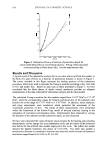
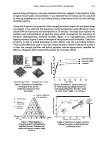
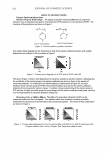
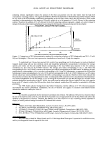
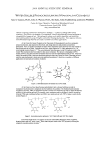
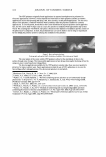
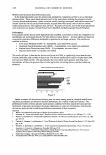
2006 ANNUAL SCIENTIFIC SEMINAR 435 WATER SOLUBLE PHOTOCROSSLINKING MATERIALS IN COSMETICS Amy S. Cannon, Ph.D., John C. Warner, Ph.D., Kei Saito, Sofia Trakhtenberg and Justin Whitfield Center for Green Chemistry, University of Massachusetts Lowell, 1 University Avenue, Lowell, MA 01854 amy_cannon@uml.edu Thymine containing polymers have been shown to undergo 2 + 2 photocross/inking under various conditions. This process is an example of"bioinspiration" where a physiologically relevant mechanism is extrapolated for commercial use. These polymeric systems can be used to immobilize and insolubilize watersoluble polymers by using UV light to control their rheological properties. These aqueou� non-toxic, environmentally benign materials are useful in a number of cosmetics applications. At the Center for Green Chemistry at the University of Massachusetts Lowell we extrapolate natural mechanisms, take inspiration from them, and design materials and products around these phenomena. There are plenty of examples in nature where inspiration can be derived. One such example is that of base pairs in our DNA Thymine in our DNA, when exposed to UV light, undergoes a 21t + 21t cross-linking reaction (Figure 1). 1 '2 The cross-linking of these base pairs in our DNA places a kink in the strand. This mechanism has been linked to skin cancer in humans. This process is damaging in DNA strands however, the photoreactivity of thymine has been used to benefit human health as well. It has been used in the medical field to treat the skin disease psoriasis and at the Center for Green Chemistry we have used the same mechanism to create non-toxic photoactive polymers, 3 which have a number of different applications in materials and cosmetic chemistry. 3i o�)---' )jt H3C;c-� ! o=f--o- � o=_,,,)-_,)::\ H, = �� � .. Figure 1. Photodimerization of thymine in a DNA strand. At the Center we have taken thymine and attached it into a styrene backbone in order to incorporate the photoreactive component into the backbone of a polymer. The thymine-based monomer (vinylbenzyl thymine, VBT) is copolymerized with a variety of co-monomers in order to obtain the desired solubility of the resulting polymer. For example, ionic monomers such as vinylbenzyl triethyl ammonium chloride (fEQ) and vinylphenylsulfonic acid (SSA) are copolymerized with VBT to make a water soluble system (Figure 2). Figure 2. Ionic photoreactive polymers. VBT:TEQ (left) and VBT:SSA (right) It has been found that E. Coli contains an enzyme called DNA photolyase which recognizes thymine dimers and will "unzip" them. 4 These same enzymes work in our VBT polymers, allowing for completely reusable polymer systems. 5 • 6
Purchased for the exclusive use of nofirst nolast (unknown)
From: SCC Media Library & Resource Center (library.scconline.org)