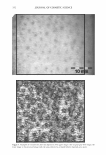
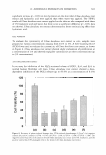
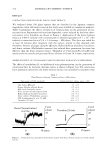
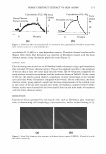
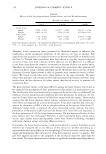
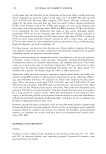
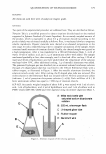
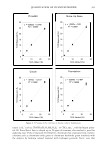
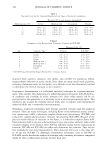
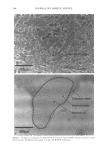
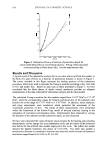
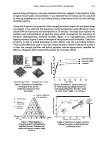
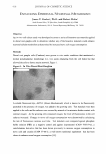
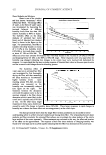
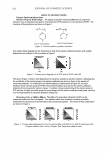
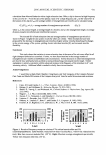
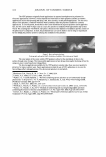
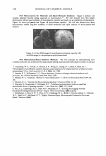
438 JOURNAL OF COSMETIC SCIENCE New Microreacton for Materials and Small Molecule Synthesis: Figure 2 portrays ow recently reported flexible tubing approach to microreactors. 1 · 7 We will describe how this simple microreactor allows rapid synthesis of monodisperse capsules and beads via an interfacial polymerization. Figure 3A shows polyamide and Figw-e 38 polysiloxane capsules. We will also discuss how these microreactors enable clog-free synthesis of small molecules and rapid creation of micro-packed-bed reactors. Figure 3. (A) An SEM image of monodisperse polyamide capsules. (8) An SEM image of a monodisperse polysiloxane bead. New Multicatalyst-Based Synthetic Methods: We will conclude by demonstrating how complex molecules are synthesized by using simple starting materials and multi-catalyst systems in one-pot. 1. Greenberg, W. A Varvak, A Hanson, S. R. Wong, K. Huang, H.J. Chen, P. Burk, M. J., "Development of an efficient, scalable, aldolase-catalyzed process for enantioselective synthesis of statin intermediates." Proc. Natl. Acad. Sci. U.S. A. 2004, 101, 5788. 2. Anastas, P. T. Williamson, T. C., Green chemistry :frontiers in benign chemical synthesis and processes. ed. Oxford University Press: New York, 1998. 3. Sheldon, R. A, "Catalysis: The key to waste minimization." J. Chem. Technol. Biotechnol. 1997, 68, 381. 4. Sheldon, R. A, "Consider the Environmental Quotient." Chemtech 1994, 24, 38. 5. Quevedo, E. Steinbacher, J. McQuade, D. T., "Interfacial polymerization within a simplified microfluidic device: Capturing capsules." J. Am. Chem. Soc. 2005, 127, 10498. 6. Poe, S. L. Cwnmings, M. A Haaf, M. P. McQuade, D. T., "Solving the Clogging Problem: Precipitate-Forming Reactions in Flow." Angew. Chem. Int. Ed. Eng. 2006, in press. 7. Steinbacher, J. Moy, R. W. Y. Price, K. E. Cwnmings, M.A. Buffy, J. Roychowdhury, C. Olbricht, W. L. Haaf, M. P. McQuade, D. T., "Highly Structured Spiny Microcapsules Produced in Flow and Batch." Submitted 2006.

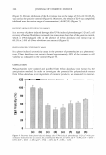
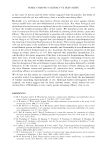
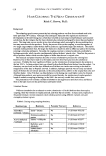
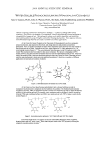
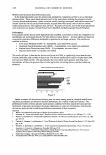
2006 ANNUAL SCIENTIFIC SEMINAR 439 HIGH PERFORMANCE PRODUCTS FROM RENEWABLE RESOURCES Doreen Howard1, Martin Scott Cardinali1, Bret Schweid1, Tomohiro Hashimoto2 and Anja Gestmann3 1 National Starch and Chemical, Bridgewater, NJ 2 Nippon-NSC, Osaka, Japan 3 National Starch and Chemical, Sempach Station, Switzerland Consumers of cosmetics are increasingly expressing a preference for products that contain naturally derived ingredients because these products better reflect their personal values. These consumers value high quality products that are environmentally friendly, but are not willing to sacrifice product performance. Environmentally friendly products use renewable resources, defined as "any natural resource that can replenish itself naturally over time, as wood or solar energy,"' as starting materials. Starch, a polysaccharide found widely in nature in such grains as corn, wheat, and rice, in such tubers and roots as potatoes and tapioca, and even in the pith of sago palms, is one such renewable resource. The starch starting material can be modified to deliver high performance, naturally derived personal care ingredients that meet the demands of these consumers. Background Starch is a generic term applied to a combination of two glucose-based polymers, amylose and amylopectin (Figure 1). Amylose is a substantially linear polymer with a molecular weight of approximately I x 105• Amylopectin is a highly branched polymer with very high molecular weight, on the order of I x 107• 2 The starch polymers are packaged by nature in the form of granules. Through hydrogen bonding, the amylose and amylopectin polymers form highly ordered crystalline bundles. These starch granules are insoluble in water at ambient temperatures. However, as the water temperature is raised, the granules swell and rupture as the hydrogen bonds are broken, causing the "cooked" starch polymers to escape the granule lo form a colloidal dispersion. Continued heat treatment and shear will eventually cause the starch polymers Lo fragment (Figure 2). �-.... IIO.. I .. �-•ISlll}" OIi � ��-·�- It - .. _.,_ Figure I Figure 2 Starch Modifications Native starches can offer some benefits to cosmetic products however, because of their composition, unmodified starches can have poor performance with respect to such attributes as aesthetics, stability, and functionality. As a result, native starches are frequently modified to optimize performance in commercial applications. Breeding can be used to alter the relative ratios of the amylose to amylopectin polymers in the starch which can influence solution behavior and film properties of dispersed starches. 2 A number of chemical and physical modifications, including hydroxypropylation and agglomeration, can be made to the starch starting material to modify its behavior in both the granular and dispersed stale. Modified starches are of greatest interest for personal care applications because they are naturally derived and provide high performance in a broad range of formulations. Starches in Personal Care Granular starches, because of their size, shape, and structure, can be used to provide a number of aesthetic benefits to personal care products during different stages of use. The reported benefits include delivery of a soft, silky feel, oil absorption and a reduction in gre;isiness, and reduced caking on the skin and in the package. 3 Examples of granular starches used in personal care products include Corn Starch
Purchased for the exclusive use of nofirst nolast (unknown)
From: SCC Media Library & Resource Center (library.scconline.org)