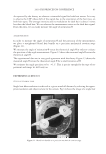
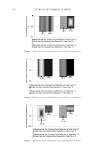
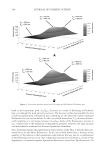
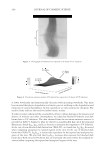
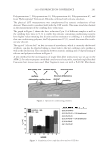
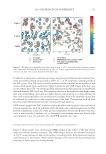
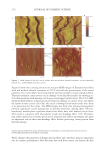
JOURNAL OF COSMETIC SCIENCE 192 literature (5,6), while thermal degradation has been studied signifi cantly less (7-9). Nev- ertheless, exposure of hair to either one of these insults results in internal protein damage (cortical) as well as detrimental effects to the outer cuticular components. There are many biochemical techniques available, which allow for specifi c protein deter- minations, thereby permitting one to monitor the quantity of protein present in hair so that comparisons can be made among population samples. Unfortunately, these tech- niques require the destruction of the hair fi ber and subsequent, time-consuming proce- dures and analyses. Measuring the fl uorescence of biological tissues with an external fi ber optic probe is frequently utilized due to its non-invasive nature and ease of use. Typically, Trp is monitored due to its intrinsic fl uorescence and because it serves as an indicator of overall protein damage. Such studies were carried out to monitor Trp fl uorescence and to investigate the presence of other fl uorophores in hair (7,10–12). In the current study, we monitor the damaging effects of environmental and chemical insults to hair by employ- ing steady-state fl uorescence to generate excitation-emission matrices. The matrices pro- vide full fl uorophore characterization of the biological substrate under investigation. EXPERIMENTAL MATERIALS In order to observe differences in hair damage resulting from hair pigmentation, studies were carried out with European dark brown (International Hair Importers & Products, Glendale, NY) and Piedmont hair (DeMeo Brothers, Passaic, NJ). Hair tresses were pre- pared by gluing 2 g of fi bers to a 1.5-in. × 1.5-in. plexiglass tab with Duco Cement. The resulting dimensions of all hair tresses were 6.5 inches in length and 1.25 inches in width. Hair tresses were precleaned with a 3% ammonium lauryl sulfate solution and rinsed thoroughly prior to use in the experiments. Hair relaxer treatments were carried out using Revlon Realistic Creme Relaxer (Colamer U.S.A., Inc., Dist. New York, NY), which contains: water, petrolatum, parrafi num liq- uidum, cetearyl alcohol, propylene glycol, sodium hydroxide, polysorbate 60, cetyl alco- hol, leneth-15, PEG-60 lanolin, potassium cocoyl hydrolyzed collagen, PEG-150 stearate, steareth-20, and fragrance. Hair was bleached using Clairol Professional BW 2 (Clairol, Stamford, CT) bleaching powder containing potassium persulfate, ammonium persulfate, sodium metasilicate, so- dium stearate, silica, hydrated silica, hydroxypropyl methylcellulose, aluminum distear- ate, sodium lauryl sulfate, disodium EDTA, and sorbitol. The bleaching powder (120 g) was mixed with 147 mL of Clairoxide 20 volume (Clairol, Stamford, CT) developer ac- cording to the manufacturers instructions. The developer contained water, H2O2, and phosphoric acid. INSTRUMENTATION Fluorescence measurements were carried out on a steady-state spectrofl uorometer (FluoroMax-4) manufactured by Horiba Jobin Yvon (Edison, NJ) equipped with a bifur- cated fi ber optic probe. The fast and accurate scanning capability of the instrument (80 nm/s)

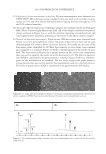
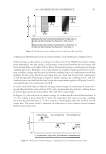
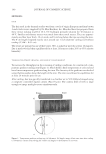
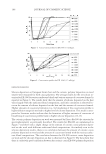
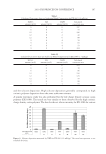
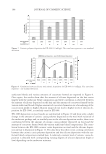
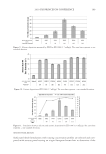
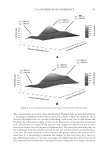
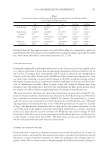
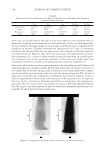
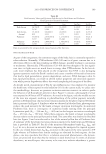
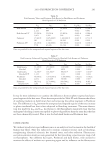
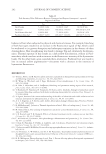
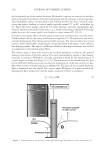
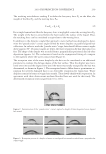
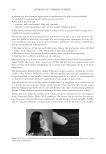
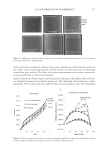
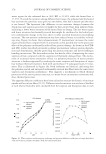
2010 TRI/PRINCETON CONFERENCE 193 allows for collection of numerous spectra for one sample position. Excitation-emission spec- tra are constructed by measuring fl uorescence emission at various excitation wavelengths— from 270 nm to 450 nm in increments of 2 nm. Emission spectra were collected starting 15 nm higher than the excitation wavelength to generate a total emission scan of 200 nm. Therefore, if the excitation wavelength was set at 270 nm, the emission spectrum would be collected from 285–485 nm. Average values represent measurements from two hair tresses in which case readings were obtained 1 in. from the top of the tress. In some cases, such as photo- and thermal degradation studies, readings were obtained 1 in. from the top of the tress (unexposed area) and 2 in. further down the tress in the exposed region. Thermal exposure was conducted for 1 min. of continuous treatment in the middle of the tress using a Big Chi (Model GF1533D) fl at iron marketed and sold by Farouk Systems Group (Houston, TX). It is a variable temperature controlled iron capable of reaching a temperature of 200 °C. Hair was exposed to UV radiation in a Q-Sun weathering chamber (Q-Sun Xenon Test Chamber Model Xe-1-B Q-Panel Lab Products, Cleveland, OH) containing a full spec- trum 1800 xenon arc lamp with irradiance set at 0.35 W/m2 at 340 nm. The total expo- sure time was 96 hours at a temperature of 40 °C. Hair was mounted in frames constructed of black cardboard shielding the top and bottom portions of the hair tress and leaving only the middle portion exposed to UV light. RESULTS AND DISCUSSION Previous studies of the intrinsic fl uorescence of hair yielded information about the effects of chromophores on the fl uorescent behavior of Trp and its metabolic/degradation products: Kynurenenine, N-formylkynurenine, and 3-hydroxykynurenine (12). The effects of mela- nin on the fl uorescence of these molecules can be monitored by comparison of highly pig- mented dark brown hair with non-pigmented Piedmont hair or white hair. In the current investigation we utilized Piedmont hair, which contains higher levels of yellow pigmenta- tion than pure white hair. Gray hair may also contain yellowish coloration, presumably present due to exposure to UV radiation, which is believed to be attributed to higher levels of 3-hydroxykynurenine (11). In general, hair containing greater quantities of melanin has much lower emission characteristics, most likely because more light absorbed by melanin will result in less light available to interact with Trp and other fl uorophores. Further, Trp fl uorescence was found to be highly dependent on the moisture content of hair, with greater Trp fl uorescence occuring at higher levels of hydration (12). Trp fl uorescence is known to be extremely sensitive to its immediate environment, and may increase or decrease depending on the mobility of the Trp residues. One may even observe an increase in Trp fl uorescence when hair is subjected to damaging treatments such as permanent waving due to the cleav- age of disulfi de bonds. Although one may expect less Trp to be present after such a damag- ing treatment, such an effect may be explained by an increase in the mobility of Trp residues in the protein in the absence of disulfi de bond (13). BLEACHING OF HAIR In many cultures, hair bleaching is a widespread procedure that is employed to lighten the color of pigmented hair. It is especially popular for the formation of highlights—the
Purchased for the exclusive use of nofirst nolast (unknown)
From: SCC Media Library & Resource Center (library.scconline.org)