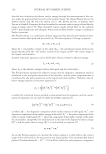
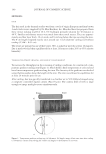
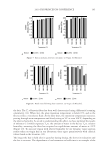
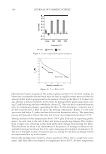
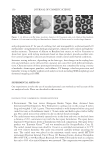
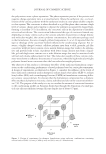
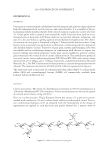
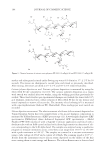
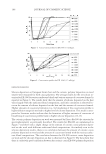
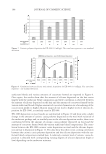
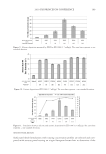
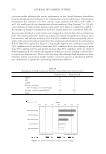
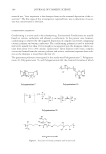
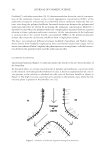
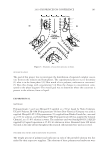
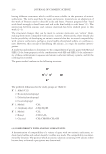
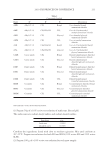
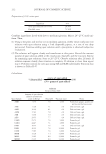
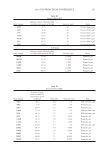
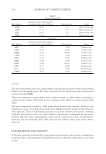
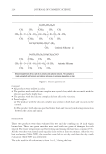
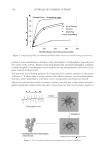
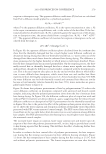
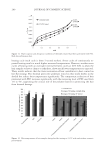
JOURNAL OF COSMETIC SCIENCE 210 having different structures which could be more soluble in the presence of anionic surfactants. The terms used here for quats and anionic materials are an adaptation of the work of Pearson used to describe acids and bases. Pearson proposed that “hard acids bind strongly to hard bases and soft acids bind softly to soft bases” (1). The interaction between anionic and cationic materials has been studied prior to this work (2–4). The structural changes that can be made to cationic molecules can “soften” them, making them more compatible with anionic systems. Alternatively, there should also be the possibility of developing an anionic material that has increased compatibility with cationic surfactants, perhaps a more highly ethoxylated sulfate or a sulfosucci- nate. However, this concept of modifying the anionic, is a topic for another investi- gation. A study was undertaken to determine (1) the compatibility of specifi c quats with SLS and SLES, (2) the foam properties of the combinations with SLS and SLES, (3) the substantiv- ity of these combinations in aqueous and anionic surfactant delivery systems, and (4) the combing force needed. The quats studied conform to the following structure: The preferred defi nitions for the study groups are (Table I): R1 1. Alkyl (C12) 2. Ricinoleylamidopropyl 3. Dilinoleylamidopropyl 4. Cocamidopropyl R2 1. Methyl -CH3 2. 2-hydroxy ethyl -CH2CH2OH R3 1. Methyl -CH3 2. Benzyl -CH2-C6H5 3. Glyceryl -CH2-CH(OH)-CH2-OH (A) COMPATIBILITY WITH ANIONIC SURFACTANTS A determination of compatibility of a variety of quats with two anionic surfactants, so- dium lauryl sulfate and sodium laureth-3-sulfate was made. The compatibility was deter- mined by titration. The point at which an anionic solution containing 10% anionic either became hazy or formed a precipitate was determined.

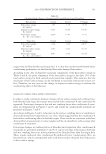
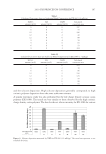
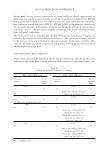
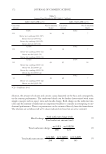
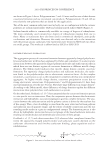
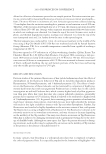
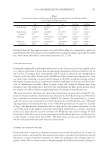
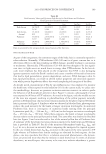
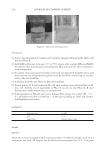
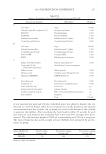
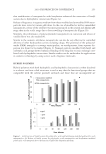
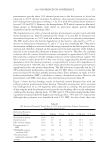
2010 TRI/PRINCETON CONFERENCE 211 PROCEDURE—SOLUTION PREPARATION: (1) Prepare 50g of a 10% active test solution of surfactant. Record pH. The surfactants are sodium lauryl sulfate and sodium laureth sulfate. Ingredient w/w Surfactant 34.00% Distilled water 65.50% Combine the ingredients listed with slow to medium agitation. Mix until uniform at 20°-25°C. Prepare test solutions for both SLS and SLES (10% active SLS and 10% active SLES). (2) Prepare 100 g of a 10% active test solution for each quat sample. Table I Compounds Studied Name R1 R2 R3 Description AMB Alkyl (C 12) CH3 Benzyl Coco dimethyl benzyl ammonium chloride AME Alkyl (C 12) CH2CH2OH CH3 Coco di-2 hydroxyethyl methyl ammonium chloride AMG Alkyl (C 12) CH3 Glyceryl Coco dimethyl glyceryl ammonium chloride AMM Alkyl (C 12) CH3 CH3 Coco tri-methyl ammonium chloride AEB Alkyl (C 12) CH2CH2OH Benzyl Coco di-2 hydroxyethyl benzyl ammonium chloride AEG Alkyl (C 12) CH2CH2OH Glyceryl Coco di-2 hydroxyethyl glyceryl ammonium chloride CaMB Castor amido CH3 Benzyl Ricinoleylamidopropyl dimethyl benzyl ammonium chloride CaMG Castor amido CH3 Glyceryl Ricinoleylamidopropyl dimethyl glyceryl ammonium chloride DMB Dimer amido CH3 Benzyl Dilinoleylamidopropyl dimethyl benzyl ammonium chloride DMG Dimer amido CH3 Glyceryl Dilinoleylamidopropyl dimethyl glyceryl ammonium chloride DMM Dimer amido CH3 CH3 Dilinoleylamidopropyl trimethyl ammonium chloride MMB Cocamido CH3 Benzyl Cocamidopropyl dimethyl benzyl ammonium chloride MMG Cocamido CH3 Glyceryl Cocamidopropyl dimethyl glyceryl ammonium chloride MMM Cocamido CH3 CH3 Cocamidopropyl trimethyl ammonium chloride
Purchased for the exclusive use of nofirst nolast (unknown)
From: SCC Media Library & Resource Center (library.scconline.org)