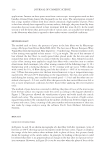
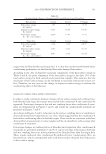
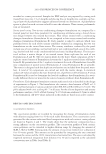
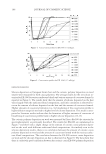
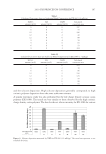
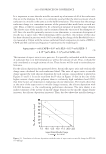
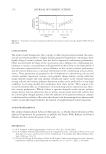
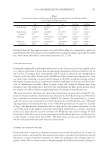
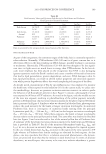
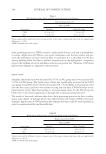
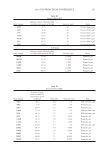
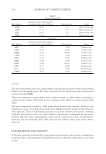
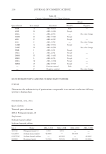
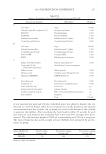
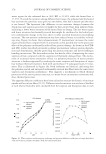
JOURNAL OF COSMETIC SCIENCE 214 Table V Titration Data (SLS) Quat Sample Amount of quat solution added to achieve haze point in SLS (g) Viscosity (cps) Notes AMB 18.67 10 Did not form a gel AMM 17.44 10 Did not form a gel AEB 18.35 10 Did not form a gel DMB 11.09 10 Did not form a gel Soft Quats Quat Sample Amount of quat solution added to achieve haze point in SLS (g) Viscosity (cps) Notes AME 4.47 7,000 Formed a gel DMM 20.00 6,200 Formed a gel MMM 20.23 50,000 Formed a gel CaMB 24.31 1,000 Formed a gel AMG 25.04 1,000 Formed a gel MMB 25.00 9,800 Formed a gel MMG 26.68 40,000 Formed a gel DMG 28.37 6,800 Formed a gel AEG 38.72 1,000 Formed a gel CaMG 46.23 1,000 Formed a gel RESULTS The quats that showed the best compatibility and gellation properties with sodium lauryl sulfate were the amido quats. The only exception was the amido quat that contained an aromatic group (DMB). There was improved compatibility with sodium laureth-3-sulfate when compared to sodium lauryl sulfate. This leads to the conclusion that SLES is a softer anionic than SLES. All quat compounds reached a cloud point when titrated into anionic. However, the amount necessary to reach the haze point were different and the nature of the end point were different. The so-called hard quats have very little tolerance for anionic, forming insoluble precipitates with very little addition. Quaternary compounds having inter- mediate hardness show compatibility with anionic surfactants at near stoichiometric amounts, but do eventually haze. Soft quats do not exhibit a haze, but rather show a clear gel. (B) FOAM HEIGHT AND STABILITY It has been generally assumed that a gel made using an anionic and cationic combination would not foam. An evaluation of the gelled system was therefore undertaken to see if this is true.

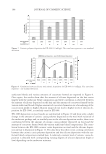
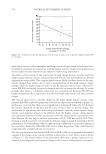
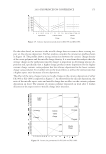
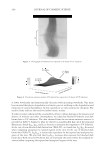
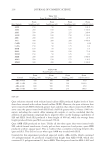
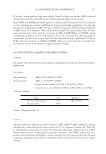
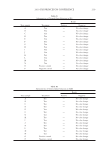
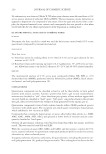
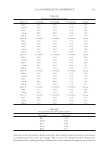
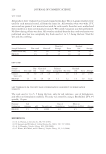
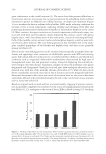
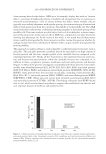
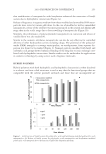
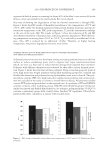
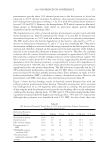
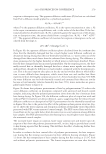
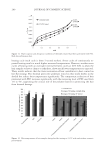
2010 TRI/PRINCETON CONFERENCE 215 PURPOSE Determine the height and stability of foam produced from aqueous solutions of anionic surfactant containing quaternium compounds (Tables VI–VIII). PROCEDURE Quat solutions: Titrated quat solutions Controls: INCI: Polyquaternium-10 Sodium lauryl sulfate Sodium laureth sulfate Name ARL-4-84A ARL-4-84B ARL-4-84C ARL-4-84D Polyquaternium 10 1.00% 1.00% — — Deionized water 91.00% 91.00% 92.00% 92.00% Sodium lauryl sulfate 8.00% — 8.00% — Sodium laureth sulfate — 8.00% 8.00% (1) Prepare ARL-4-84A and B by mixing polyquaternium 10 and deionized water with a prop mixer set on low speed until uniform (1-5 min, 20°-25°C). (2) Add surfactant and mix with medium agitation until uniform (1-2 min 20°–25°C). (3) Prepare ARL-4-84C and D by combining deionized water and surfactant. Mix with medium agitation until uniform (1-2 min 20°-25°C). Table VI Foam Heights of SLS Titrations Quat Sample Foam heightmax (ml) Foam heightinital (ml) Foam heightfi nal (ml) Foam stability (min) AMB — — — Does not foam AME 190 90 140 30.0 AMG 500 400 300 30.0 AMM 600 500 350 15.0 AEB 300 200 200 40.5 AEG 200 100 150 40.0 CaMB 250 150 175 95.0 CaMG 200 100 150 79.0 DMB 400 300 250 14.0 DMG 300 200 200 8.0 DMM 250 150 150 13.0 MMB 400 300 250 29.0 MMG 400 300 250 97.0 MMM 400 300 250 1440.0
Purchased for the exclusive use of nofirst nolast (unknown)
From: SCC Media Library & Resource Center (library.scconline.org)