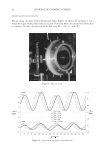
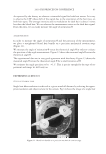
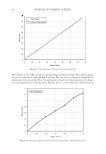
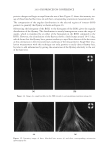
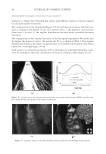
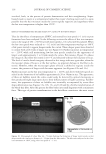
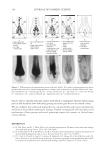
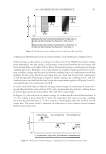
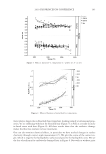
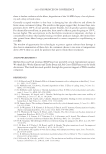
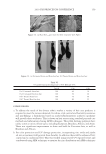
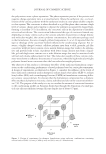
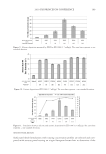
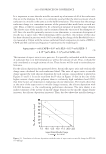
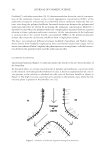
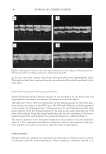
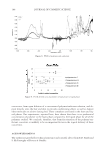
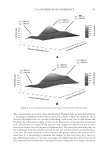
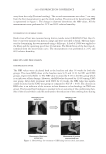
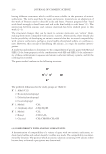
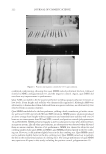
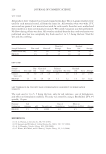
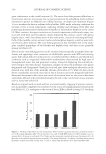
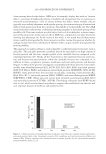
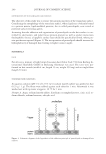
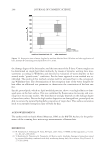
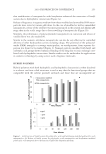
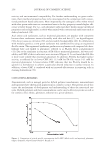
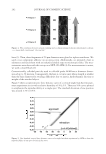
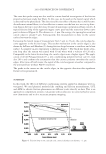
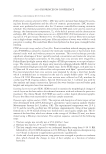
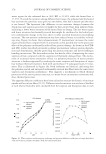
JOURNAL OF COSMETIC SCIENCE 176 CONCLUSIONS The results clearly demonstrate that, contrary to what was previously assumed, the exten- sion of coacervation profi les to a higher dilution range for formulations containing a more highly charged cationic polymer does not lead to improved conditioning performance. Other factors besides the shape of the coacervation curve infl uence the conditioning per- formance of cationic cassia polymers on European brown hair. Even so, the formulation of the surfactant composition has a strong infl uence on the cationic polymer performance and the silicone deposition is a primary determinant of the conditioning sensory perfor- mance. Three parameters are proposed to be of importance in determining silicone and cationic polymer deposition: cationic cassia polymer charge density, average surfactant charge (micelle charge) and total amount of surfactant (aspect ratio). Sensory hair panel testing, silicone and cationic polymer deposition results can be predicted to a very high confi dence level using models that incorporate these three factors. There appear to be several mechanisms that are of importance in determining silicone deposition and, there- fore, sensory performance. Which of these is operative depends on the cationic polymer charge density. Silicone deposition data as well as sensory panel tests both indicate that for a more highly charged polymer, either the adhesion of the polymer-surfactant complex to the hair and/or its ability to fl occulate the silicone is the determining factor, whereas with a lower cationically charged polymer, the amount of complex formed is more important. ACKNOWLEDGMENTS The authors thank Lubrizol Advanced Materials, Inc. (a wholly owned subsidiary of The Lubrizol Corporation) for permission to publish and Denise Wade Rafferty and Daniel Hasman for their useful discussion of this work. REFERENCES (1) R. Y. Lochhead, Conditioning shampoo, Soap Cosmet. Chem. Spec., 42–49 (1992). (2) E. D. Goddard, “Polymer/Surfactant Interactions in Applied Systems,” in Principles of Polymer Science and Technology in Cosmetics and Personal Care, E. D. Goddard and J. V. Grubber, Eds. (Marcel Dekker, New York, 1999), pp. 181–215. (3) P. Hossel, R. Dieing, R. Norenberg, A. Pfau, and R. Sander, Conditioning polymers in today’s shampoo formulations—Effi ciency, mechanisms and tests methods, Int. J. Cosmet. Sci., 22(1), 1–10 (2000). Figure 17. Correlation of cationic deposition with the ratio of aspect ratio to micelle charge for EX-906 and EX-1086.

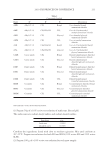
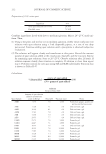
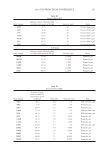
2010 TRI/PRINCETON CONFERENCE 177 (4) P. Dubin and R. Oteri., Association of polyelectrolytes with oppositely charged mixed micelles, J. Colloid Interfacial Sci., 95(2), 453–461 (1983). (5) J. A. Faucher and E. D. Goddard, Infl uence of surfactants on sorption of a cationic polymer by kerati- nous substrate, J. Colloid Interface Sci., 55, 313–319 (1976). (6) W. Li. and S. L. P. Jordan, Cationic cellulosic polymers with multifunctional and outstanding perfor- mances for personal care, Cosmet. Toiletr. Manufac. Worldwide, 1–4 (2003). (7) S. Chiron, Performance and sensory benefi ts of cationic guar in hair care applications, Cosmet. Toiletr., 119(2), 47–51 (2004). (8) M. Gamez-Garcia, Polycation substantivity to hair, IFSCC, 4(2), 99–107, (2001). (9) F. Utz et al., Cationic cassia derivatives and applications therefore, US Patent 7,262,157 B2 (2007). (10) R. J. Crawford and C. R. Robbins, A replacement for Rubine dye for detecting cationics on keratin, J. Soc. Cosmet. Chem., 31, 273–278 (1980). (11) J. V. Gruber, B. R. Lamoureux, N. Joshi, and L. Moral, The use of X-ray fl uorescence spectroscopy to study the infl uences of cationic polymers on silicone oil deposition from shampoo, J. Cosmet. Sci., 52, 131–136 (2001). (12) J. V. Gruber, B. R. Lamoureux, N. Joshi, and L. Moral, Infl uence of cationic polysaccharides on poly- dimethyl siloxane (PDMS) deposition onto keratin surfaces from a surfactant emulsifi ed system, Colloids Surf. B, 19, 127–135 (2000). (13) T. V. Drovetskaya, E. F. Diantonio, R. L. Kreeger, J. L. Amos, and D. P. Frank, Newly high charge density hydrophobically modifi ed cationic HEC polymers for improved co-deposition of benefi t agents and serious conditioning for problem hair, J. Cosmet. Sci., 58(4), 421–434 (2007). (14) C. Lepilleur, E. Schiferl, J. Mullay, P. McCalister, C. Kyer, and T. Clifford, Unpublished Lubrizol inter- nal technical report (2009).
Purchased for the exclusive use of nofirst nolast (unknown)
From: SCC Media Library & Resource Center (library.scconline.org)