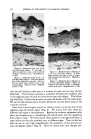
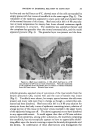
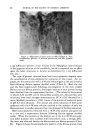
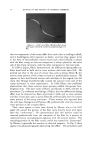
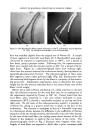
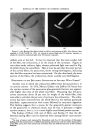
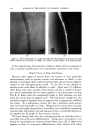
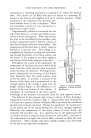
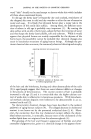
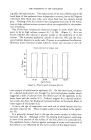
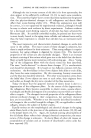
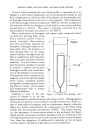
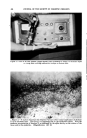
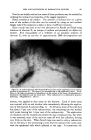
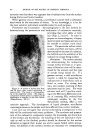
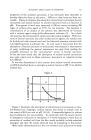
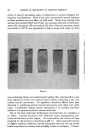
406 JOURNAL OF THE SOCIETY OF COSMETIC CHEMISTS servation was that there was a greater loss of radioactivity from the surface during the hot and humid weather. Where gamma rays are emitted, a scintillation counter with a collimated head would be the instrument of choice. To my knowledge, it is by far the most sensitive instrument available today for such purposes. Penetration and Localization: Autoradiography is the best method for demonstrating the penetration and localization of radioactive materials, providing they emit alpha or beta Figure 4.--A section of human skin biop- sled 48 hours after topical application of mercury 203. The tissue is cut perpendicu- lar to the epidermal surface. The large ac- cumulation of black grains is evidence of the localization of mercury in this hair follicle. (Magnification: 900 X). rays (Figs. 2, 3 and 4). In order to prepare an autoradiogram, a biopsy must be made and tissue sections cut for transfer to nuclear track emul- sions. The particular technic which is used, and there are many, will be determined by the type of radiation, the half-life and the solubility of the radioactive isotope being studied. dbsorption: The technic selected for demonstrating the radioactive isotope within the body or in speci- mens of blood or urine will be deter- mined by the amount and the type of isotope being looked for. If a gamma emitter, a well scintillation counter is ideal for measuring the radioactivity in body fluids, such as blood or urine. For strong beta rays, end window counting of fluid specimens may be done. For weak emitters such as C TM, gas flow count- ing or the Bernstein-Ballentine tech- nic of counting CO2, evolved from cornbusted samples by the Van Slyke-Folch method, offers a very sensitive approach. The development of liquid phosphor scintillation counting promises to be simpler and more efficient than current. methods. I am sure you will agree that anyone undertaking investigations in this field will be confronted with many problems. The synthesis and prepara- tion of the radioactive compounds requires the knowledge and know-how of the chemist and biochemist the handling of the raw radioactive chem- icals as well as the finished product should be directed by the nuclear physicist as regards their proper use and to assure health safety precau- tions the abilities of the cosmetic chemist are necessary for compounding

ACYLATED AMINO ACIDS IN SHAMPOOS 407 appropriate and acceptable vehicles those trained in the use of radioactive isotopes on and in the skin are required to plan and carry out the necessary isotope technics and last, but not least, the dermatologist must be part of the team with his knowledge of the anatomy, histology, physiology, phar- macology and biochemistry and immunology of the skin, all requisites for the proper execution and evaluation of such exacting studies. ACYLATED AMINO ACIDS IN SHAMPOOS* By H. W. ZUSSMAN and W. J. LENNON Geigy Industrial Chemicals, New York 8, N.Y. DESPITE THE TREMENDOUS growth of synthetic detergents, cleansing of the skin is still the special domain of the soaps. Even where synthetics have made inroads, as in shampoos, the straight chain hydrocarbon struc- ture characteristic of the soap has been retained. The carboxylflte ion, however, has been replaced by other water-solubilizing groups in the in- terest of improved hard water performance. One can hardly avoid reflect- ing that for cosmetic use it might be desirable to preserve as much as pos- sible of the soap molecule structure on the supposition that it possesses fea- tures specially suitable to the human epidermis. Soaps may of course be fortified with sequestering agents and dispersants, but another approach to this problem is chemical modification of the soap molecule short of disturbing its most important characteristics. Surface active carboxylate ions other than soap are by no means un- known. Most familiar to the cosmetic chemists are the Lamepons, pre- pared from fatty acid chlorides and polypeptides amphoteric carboxylic acids such as the N-alkyl-alanines have also received some attention in recent years. Another group of products of interest in this connection are N-acyl amino acids of which the simplest representatives are the deriva- tives of glycine (RCONHCH2COOH). Chemically these differ from the fatty acids only to the extent that the hydrocarbon chain is interrupted by a single amide group. This modifica- tion, however, increases the melting point considerably and decreases the solubility of the alkali salts. If a methyl group is now attached to the nitrogen, these effects of the amide group are cancelled out and the result- ant products have at least a superficial resemblance to the fatty acids. These materials--the N-acyl safcosines, RCON(CH•)CH2COOH--were first described by Hentrich (1) in Germany about twenty years ago and * Presented at the December 9, 1954, Meeting, New York City.
Purchased for the exclusive use of nofirst nolast (unknown)
From: SCC Media Library & Resource Center (library.scconline.org)