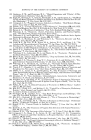
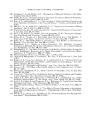
TOPICAL USES OF SEVERAl, ANTIBIOTICS 313 (18) (19) (20) (21) (22) (23) (24) (25) (26) (27) (28) (29) (30) McCreight, C. E., "Experimental Studies on Some Cell Types in the Epidermis of the Mouse," .4nat. Record, 121, 338 (1955). Ma, C. K., and Cowdry, E. V., "Aging of Elastic Tissue in Human Skin," y. Geront., 5, 203 (1950). Pease, D.C., "Electron Microscopy of Human Skin," .rim. •..4nat., 89, 469 (1951). Percival, C. H., "The Skin in Old Age," Practitioner, 172, 510 (1954). Strauss, J., and Necheles, H., "Variation, in Dermal Absorption with Age," 5'. Lab. and Clin. Med., $$, 612 (1948). Strobel, H., "Die Gewebsveranderungen der Haut im Verlauf des Lebens," glrch. Der- matol. u Syphilis, 186, 636 (1948). Thompson, R. C., "Dermatologic Problems of Geriatric Patients," 7. Tenn. Med..4ssoc., 46, 316 (1953). Thuringer, J. M., and Cooper, Z. K., "The Mitotic Index of the Human Epidermis, the Site of Maximum Cell Proliferation, and the Development of the Epidermal Pattern," .4nat. Record, 106, 255 (1950). Traub, E. F., and Spoor, H. J., "Aging Skin with Particular Reference to Small Growths Appearing Late in Life," 7..4m. Geriat. Soc., 1, 805 (1953). Tunbridge, R. E., Tattersall, R. N., Astbury, D. A., and Reed, W. T., Royal Clinical Society, 11, 315 (1952). Cited from "Annotations"--Lancet, 5, 283 (1953). Unna, P. G., "The Histopathology of the Diseases of the Skin," New York, Macmillan and Company (1896), pp. 976-984. Wells, G. C., "Senile Changes in the Skin of Man," •..4m. Geriat. Soc., 2, 535 (1954). Zahon, S. J., Goldberg, A. L., and Forman, J., "Geriatric Dermatoses'. A Survey of the Skin of the Aged," Illinois Med. 5:., 101, 37 (1952). TOPICAL USES OF SEVERAL ANTIBIOTICS: VEHICLES EMPLOYED* By WM. BURDELL BAKER /lntibiotic Division, S. B. Penick & Co., New York 8, N.Y. ANTIBIOTICS such as bacitracin, neomycin and tyrothricin are used mainly for topical and other local applications and are also used orally. The major objective of this particular study is to review salient features of these antibiotics and to present the status of some of the vehicles or bases that have been employed with them. Also, some vehicle formulas similar to those which have been employed for other chemical agents and drugs, such as sulfonamides, are suggested as being adaptable for use with these antibiotics. Various literature reports dealing generally with the above antibiotics have included the subject of bases. Some investigators have given logical reasons for preferring grease bases for topical application of medicaments, while others have favored aqueous bases where possible. Still others ap- parently do not think the nature of the base important because, in discuss- ing applications and results, they mention the vehicle used, but do not state the formula. * Presented at the May 13, 1955, Meeting, New York City.

314 JOURNAL OF THE SOCIETY OF COSMETIC CHEMISTS In the cosmetic and allied fields, there is presently no important litera- ture pertaining to the use of antibiotics. This is not surprising because many of the antibiotics such as penicillin, streptomycin, and certain broad spectrum antibiotics, etc., have rather high incidences of sensitivity and development of drug resistance. However, not all antibiotics have high incidences of sensitivity and drug resistance. Whether there are implications for the use of the several anti- biotics in this category, in the cosmetic and allied fields, and the extent to which these implications exist, would seem to depend on the quantity and quality of researches carried out in this direction. Bacitracin, neomycin and tyrothricin are virtually nontoxic and have documented records of extremely low incidences of sensitivity and resistance development when employed topically and orally. In the pharmaceutical field, these drugs are permissible for use in products sold over-the-counter in drug stores. Neomycin and tyrothricin in products must adhere to the provisions of the Food, Drug and Cosmetic Act, and a "new drug applica- tion" must be submitted to the Food and Drug Administration before marketing is permitted. Bacitracin is a "certifiable" antibiotic, and prod- ucts containing this drug require certification with the Division of Anti- biotics, Food and Drug Administration but for use as a pharmaceutical product the plain ointment of bacitracin has now been de-certified, al- though such ointment is still subject to Food and Drug Administration approval. Where it is desirable to study this interesting trio of antibiotics, and to limit the study to their topical possibilities in other than medical and phar- maceutical fields, it is first desirable to review such data as the properties, stabilities, compatibilities and applications which make these agents useful and important. Such fundamental material, which would naturally make the study more valuable, is available elsewhere in the literature (12, 18-23, 26-28, 54-59, 68). Any possible implications for topical usage of these antibiotics in the cosmetic and allied fields would be determined primarily t•om established findings in the dermatological field. Consequently, it would be of value to review herein, very briefly, documented data from clinical sources. BACITRACIN Uses: Bacitracin has a wide antibiotic spectrum effective against Gram- positive organisms (1, 2). Its antibacterial spectrum is quite similar to penicillin (3-5). Numerous investigators have been in agreement on the efficacy of baci- tracin in the treatment of various local skin conditions (4-9), etc. In the treatment of superficial pyodermas, response to bacitracin is very rapid, often within forty-eight hours and the drug has been called the most effi- cient topical application against pyodermas (7, 10).
Purchased for the exclusive use of nofirst nolast (unknown)
From: SCC Media Library & Resource Center (library.scconline.org)