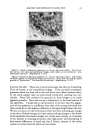
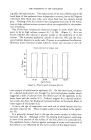
300 JOURNAL OF THE SOCIETY OF COSMETIC CHEMISTS the stratum germinativum, or "germinative" layer, because it is here that the cells are definitely living and dividing to form new cells. The second layer is known as the stratum granulosum. Here the cells are entering upon a moribund condition and there are large granules present which stain deeply with basic dyes. The third layer, above the stratum granulosum, is usually called the stratum corneum. It is composed of dead cells which contain a very large amount of a horny or hard substance known as keratin. It is this outermost layer which is continually "scuffing off" and being lost to the body. The dermis, besides containing the roots of the hairs, the ducts of the glands and portions of the glands themselves, has in it the rich blood supply and the lymphatics of the skin as well as many nerves and end organs for the reception of sensations of pain, pressure, touch and of temperature. EARLIER WORK ON Aoz CH.•NOv. S IN THE SKIN As early as 1896 Unna described changes in the fibers in the dermis. These fibers are of two main types, white or collagenous and yellow or elastic. Unna found changes in both types. The collagenous fibers under- went a change toward the basophilic type rather than the eosinophilic type of staining and the elastic fibers often became swollen and fragmented. The elastic fibers seem to undergo a modification into a material which Unna called "elacin." Unna believed that the collagenous and elastic fibers even merge together in some cases in old age. Writers have differed on what happens to the fibers in the dermis in senility. Strobel (23), for example, found that the principal age change was in the white fibers and that from the time of the middle thirties on these fibers showed an atrophy and a rarefaction. He does not believe that the elastic fibers show any truly degenerative change with age but only a cer- tain extension in length, probably the effect of overstretching. His study represents an extensive series of cases as he had specimens of unexposed skin taken from the umbilical region, from the internal aspect of the thigh and from the upper arm of two hundred and forty individuals belonging to all age groups. Hill and Montgomery (14) studied human skin from 20 autopsies, includ- ing four senile subjects ranging from sixty-one to seventy-eight years of age. They studied the pubis, the axilla, the chest, the scalp and the web of the toes. They say that the changes both in the collagenous and the elastic fibers are not very marked. They state that while the collagenous fibers seem to be atrophic in some of the very old persons the presence of clumped masses of elastic tissue does not seem particularly related to age and that the elastic connective tissue about the hair follicles and their sheaths and just beneath the epidermis seem to be well preserved even in old people. They believe that findings by others concerning the changes in the elastic

ANATOMY AND HISTOLOGY OF AGING SKIN 301 tissue are due to the fact that this was being studied in regions of the body which were exposed. Ejiri (8, 9, 10) made an extensive study of the human skin using 718 speci- mens from 50 autopsy subjects. He found degeneration of connective tis.- sue, particularly of the elastic connective tissue. Dick (6) studied the skin from many regions of the body including the sole and the dotsurn of the foot, the leg, the thigh, the forearm, the arm, the abdomen and chest in each of 32 autopsy subjects. Of these subjects eight were over sixty-five years old. He prevented shrinkage of these specimens by inserting a number of needles in a circular conformation and then cutting the specimen with an outline one centimeter from the edge of these needles. Beginning with the thirty- to forty-year age group he found in the deeper layers of the dermis a slight irregularity in size of the elastic fibers. Of the subjects over sixty- five years of age he says (page 204) "in the elastic fibers degenerative changes are prominent." The changes consist of rough thickenings of fibers, of variability in their length and of irregular fragmentation of their ends. There seems also to be a tendency for condensation and aggregation of the fibers into irregular masses. In the fibers immediately beneath the epidermis he finds usually a thickening, but occasionally no change, in older people. Ma and Cowdry (19) described the elastic tissue of biopsy specimens from a group of 19 adult males, 11 young, ranging from nineteen to thirty- two years of age, and eight senile, ranging from seventy-eight to ninety- four years of age. In the older group a decrease in the elastic tissue was evident. This change was even more apparent in the plexus just beneath the epidermis than it was in the deep fiber layer. In this plexus the split- ting of the elastic fibers into their component fibrils was observed in senile skin. These workers however, did not find in their specimens the hyaline degeneration, or clumping, observed by Ejiri, and even transverse fragmen- tation seemed to be rare. They do not mention particularly the collagen fibers. They note a definite decrease in elastic tissue in old age which may account for the loss of elasticity. On the other hand, it should be noted that Ceresa (3) found an increase both in the number and thickness of elas- tic fibers occurring up to an advanced age. He attributes frank degenera- tive changes of fibers seen by other authors not to physiological aging but rather to extrinsic factors. The whole question of"elasticity" of the skin is a complicated one. Tun- bridge and his associates (27) indeed believe that this property is dependent not so much upon the presence of the relatively scanty number of elastic fibers as on the netlike arrangement of the collagenous fibers. They find in senile skin from exposed areas a degeneration of some of the collagen fibers whereby they acquire a capacity for taking up the elastic connective tissue .stain and a susceptibility to action of trypsin.
Purchased for the exclusive use of nofirst nolast (unknown)
From: SCC Media Library & Resource Center (library.scconline.org)