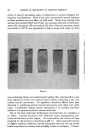
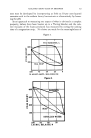
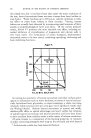
302 JOURNAL OF THE SOCIETY OF COSMETIC CHEMISTS As we can see from the above descriptions a number of authors have noted changes in the fibers of the dermis with old age but there is consider- able disagreement still in relation to the details of the changes which occur and also as to whether or not they are due to actual aging or to other factors that operate from outside of the body. There may be differences in the rather mysterious ground substance or "background" material which lies between the fibers and which determines certain important physiological characteristics such as the permeability of the skin. This is suggested by Ma and Cowdry (19). They say that in the sections of skin from older individuals there was a sort of a cloudiness or lack of clarity apparent as compared with the same material in the skin of young individuals. Their material was from living subjects and promptly and uniformly fixed, and one must give considerable credence to the evidence of a difference in this material at different ages. A great field lies open at the present time in work with 'the electron microscope on the changes in fibers of this connec- tive tissue layer of the skin. In the epidermis we have a tissue which is growing old and "dying" con- stantly in order to serve the function of providing a cellular layer or cover- ing of dead cells for the entire organism and thus to protect it from its environment. Ejiri (9) studied the epidermis in his extensive series of 718 specimens of human skin from 50 autopsies. He describes a decrease in the thickness of one of the layers, namely, the spinous layer of the epidermis over the face and head but an increase with age in this same layer on the upper arm, the hand and the back of the foot. He does not seem to have noticed any changes other than these in thickness, for he says that the basal cell layer shows no change and that there is not a senile atrophy of the granular layer. Ejiri noted no special changes in the cornified layer, the layer of dead cells. Ceresa (3) did not find any definite change in the thickness of the epider- mis in old age. He says that the individual variations in thickness are so great that it is impossible to make conclusions concerning any general tendencies. On the other hand, Evans, Cowdry and Neilson (11) did find differences in the appearance of the epidermis of young and senile human skin in their biopsy material. In the young adult subjects the epidermis had an average thickness of 33.8 micra while in the senile ones the average thickness was 27.3 micra. They believe, however, that a good deal of the difference in the appearance of the epidermis at different ages is due to the much greater tendency of the young skin with its marked elastic quality to shrink on being removed from the body and that this tends to make the epidermis appear thicker than it probably is. In separating away the epidermis from the dermis by special methods they found much less difference in the epi-

ANATOMY AND HISTOLOGY OF AGING SKIN 303 dermis of young and old individuals than when it was not so separated. Of course, it must be remarked that this process itself is one which may make a difference in the appearance of the epidermis, that is, the separation of it from the dermis. Thuringer and Cooper (25) reported on the study of abdominal skin removed at surgical operations from 34 persons ranging from youth up to very advanced age. They studied both serial sections and total mounts. They• found that there was an atrophy and loss of the fete pegs in old age. They also made studies on the number of cells which were dividing in the skin of people of different ages. They found that there were actually more cells dividing in old age than in the younger persons. Hill and Montgom- ery (14) also had described such atrophy of the fete pegs. There is often an increase in number of pigment spots in the epidermis in senile individuals. Two of the studies which we have mentioned ear- lier may throw some light on this subject in that the findings of Hill and Montgomery (14) on skin which generally is protected by clothing indi- cated that there was no increase in pigmentation in such skin while the finding of Ejiri (9) on skin which is generally exposed did show an increase in pigmentation. Again, we may be dealing with extrinsic factors entirely or with extrinsic factors imposed upon the inner physiological change in the body. We come now to the appendages of the skin. Graying of hair due to loss of pigment is definitely associated with advancing age but also the color of hair which has not lost its pigment changes with age. Thus the hair of young individuals is lighter in color than that of older ones and the incidence of darker tones is greater with advancing age. In white hair we find an absence of pigment in and around the cells of the cortex but we do not understand yet what causes this loss of pigment. White hairs may or may not be greater in diameter than their pigmented neighbors. In regard to the glands of the skin there are some statements in the litera- ture that both the oil or sebaceous glands and the sudoriferous glands become atrophic and actually decreased in number in senile skin but there is very little experimental work to show this to be the case in fact, in some cases sebaceous glands seem to be larger in old age, as on the forehead. Actually, we have no clear-cut information on age changes of the sweat glands. Some workers have tried to correlate functional changes of the skin, such as the amount of secretion appearing on its surface, with the gross appearance of the skin. Thus, Kvorning and Kirk (17) tried to make a correlation between the clinical estimation of the condition of the skin and certain skin secretion tests. They found actually a good correlation between the quantity of lipid secreted on the forehead and the appearance of the skin. In the female subjects a correlation was also found between the lipid secretion and the greasiness, thickness and turgot of the skin.
Purchased for the exclusive use of nofirst nolast (unknown)
From: SCC Media Library & Resource Center (library.scconline.org)