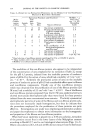
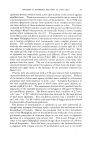
TOPICAL USES OF SEVERAL ANTIBIOTICS 317 at the site of application (1, 17, 29, 35, 39, 49). For instance, one of the dermatologists noted only one case of localized moniliasis in 125 cases, an incidence of 0.8 per cent (35, 49). One of the other groups (29) noted localized cutaneous moniliasis in seven patients out of 264 (2.6 per cent) 3 after prolonged local application. They stated that experiments conducted do not indicate that neomycin enhances the growth of fungi, nevertheless the drug should be omitted for local use if a cutaneous moniliasis is suspected. One report (49) suggested that an antimonilial agent be incorporated in the neomycin formula, and in this case methyl and butyl parahydroxybenzoate were employed in a lotion formula. Therefore, moniliasis is not a serious complication of neomycin usage, and the incidence is very low when•"the antibiotic is used dermatologically. ?•" TYROTHRICIN Tyrothricin is not one of the "newer" antibiotics on the contrary, it is one of the oldest. Nevertheless, it is fitting to include tyrothricin in this commentary of relatively newer antibiotics because: (a) it continues to enjoy wide-scale usage for its action against Gram-positive organisms (b) it is an antibiotic strictly for local use, and not systemic, this property being similar to neomycin (c) it bears further similarity in certain properties to bacitracin and neomycin, such as freedom from toxicity and a very low in- cidence of sensitivity when employed for local use (d) it is synergistic with certain other antibiotics and chemicals and (e) the main active antibiotic extracted from tyrothricin, gramicidin, is gaining in usage, at least in the pharmaceutical field. Uses: Tyrothricin is widely active against most Gram-positive organ- isms, and this action is almost wholly due to its gramicidin content (12, 59). In fact, there are early instances in literature where, apparently, the nam• gramicidin was mistakenly used synonymously with tyrothricin (60, 61). The tyrocidine in tyrothricin shows activity against certain Gram-ne'er'- rive organisms (62), but also it has much less antibacterial ability that •n gramicidin. In fact, the bactericidal ability of tyrocidine is pract•callj negligible. However, tyrocidine has the ability to lower the surface ten-' sion of aqueous solutions (63). As stated before, the use of tyrothricin is restricted to local application. It must make a direct contact in order to be of maximum effectiveness be- cause, being insoluble in water, it does not penetrate the tissues when ap- plied locally (59, 64). It is nontoxic when used, for example, in throat lozenges and mouth washes or where indicated for internal use when ingested orally. It is also non-toxic and virtually free from sensitizing action when employed in the usual dosages in topical pharmaceutical products, for dermatological therapy, for infected wounds and similar conditions.

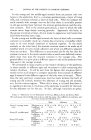
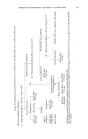
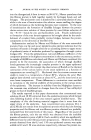
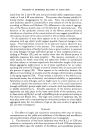
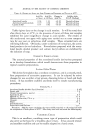
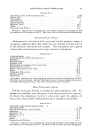
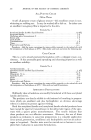
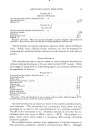
318 JOURNAL OF THE SOCIETY OF COSMETIC CHEMISTS VEHICLES OR BASES Various bases have been used to incorporate bacitracin, neomycin and tyroehricin. In the drug field, manufacturers usually employ bases of their own development, or those which they have found satisfactory in their experience. There are many sources which deal with the subject of such bases (1, 3-5, 9, 10, 12, 15, 18, 29, 35, 49, 65-67, 69). A comprehensive review of pertinent literature has been given elsewhere (28). In addition to the bases specifically mentioned above, it was felt that some of the useful ointment and ointment-like bases employed for sulfa drugs in the past would be adaptable for use with antibiotics. For baci- tracin, bases of the non-aqueous type (with moisture content not ore, 1 per cent) should be suitable. It should be possible to employ many of these bases with neomycin, even the aqueous type, since neomycin is water- soluble and usually water-resistant. Tyrothricin, while water-insoluble, is unusually stable in both aqueous and non-aqueous environments. Very recently certain of the sulfa drug bases were investigated for possible adaptation as bases for these antibiotics. A number of formulas were com- pounded* by substituting individual antibiotics for the sulfa drugs formerly used. Allowances were made for the differences in physical properties of the antibiotics compared to the sulfa drugs and, for the most part, it was found that the changes required concerned the compounding procedures, rather than the nature or amounts of the components of the vehicles. The adapted formulas were found to be physically satisfactory after compounded. However, time did not permit any actual studies pertaining to such information as stability and release of antibiotic action. In other words, in order to completely evaluate the adapted formulas, it would be necessary to complete the studies before usage. Furthermore, the formu- las represent the initial steps of formulation, on a small scale of experimen- tation, and thus can be considered "guide formulas." If they were to be used for pilot or production runs, amendments, especially concerning the procedures of manufacture, would surely be indicated to fit the facilities available and so forth. "Washable" Oil-in-Water Bases Neomycin sulfate ....... 0.5 gm. Triethanolamine ........ 2.0 gm. Water ................. 24.0 ml. Beeswax ............... 5.0 gm. Liquid petrolatum ...... 68.5 gm .................... 68.95 gm. Tyrothricin ........... 0.05 gm. * By Mr. William L. Weingold, Instructor in Pharmacy, College of Pharmacy, Columbia University, New York. More than two dozen satisfactory formulas were compounded. Because of space limitatiori, a limited number of examples are tabulated herein.
Purchased for the exclusive use of nofirst nolast (unknown)
From: SCC Media Library & Resource Center (library.scconline.org)