TOPICAl, USES OI/ SEVERAL ANTIBIOTICS 323 (48) Livingood, C. S., and Mullins, J. F., "Management of Bacterial Infections of the Skin," Postgrad. Med., 12, 15 (1952). (49) Forbes, M. A., Jr., "Neomycin Lotion in Treatment of Cutaneous Bacterial Infections," ?irch. Dermatol. and Syphilol., 68, 631 (1953). (50) Busis, S. N., and Friedman, L. I.., "An Evaluation of Topical Antibiotic Therapy in the Local Treatment of Infections of the Nose and Sinuses," ?intibiot. and Chemoth., 3, 299 (1953). (51) McVay, L. V., Jr., Laird, R. L., and Stern, T. N., "Neomycin in Treatment of Human Amebiasis," ?ira. •7. Med. Sci., 22:3, 20 (1952). (52) Waksman, S. A., Katz, E., and l.echevalier, H., "Antimicrobial Properties of Neomycin," y. Lab. Clin. Med., 36, 93 (1950). (53) Davis, J. H., Kuhn, L. R., Shaffer, J. R., and Amspacher, W. H., "Preoperative Prepara- tion of the Bowel with Neomycin," Surgery, 35, 434 (1954). (54) Dubos, R. J., "Studies on a Bactericidal Agent Extracted from a Soil Bacillus. I. Preparation of the Agent. Its Activity In Iaztro," 7. Exp. Med., 70, 1 (1939). (55) Dubos, R. J., "Bactericidal Effect of an Extract of a Soil Bacillus on Gram-Positive Bacteria," Proc. Soc. Exp. Biol. Med. 40, 311 (1939). (56) Hoogerheide, J. C., "Studies on Capsule Formation. III. Inhibition of Capsule Formation of Klebsiella Pneumoniae (Friedl•inder's Bacterium) by an Agent Produced ' by a Soil Bacillus," 7. Bact., 40, 415 (1940). (57) Hoogerheide, J. C., "An Agent, Isolated from a Soil Bacillus, Which Inhibits Encapsula- tion of Friedl•inder's Bacterium and is Highly Bactericidal for Gram-Positive Micro- Organisms," 7- Franklin Inst., 229, 677 (1940). (58) Pharmacopoeia of the U.S. A., 14th Rev., Nov. 1, 1950, p. 649. (59) "Annotated Bibliography of Tyrothricin," Res. Div., S. B. Penick & Co., New York (1947). (60) Bordley, J. E., Crowe, S. J., Dolowitz, D. A., and Picktell, K. L., "The Local Use of the Sulfonamides, Gramicidin (Tyrothricin), and Penicillin in Otolaryngology," ?Inn. Otol. Rhinol. LaryngoL, 51, 936 (1942). (61) Herrell, W. E., "Gramicidin and Penicillin," Surg. Clin. North ?Irn., 23, 1163 (1943). (62) Downs, C. M., "The Effect of Bactericidal Agents on Gram-Negative Cocci," 5 t. Bact., 45, 137 (1943). (63) Heilman, D., and Herrell, W. E., "Mode of Action ofGramicidin," Proc. Soc. Exp. Biol. Med., 47, 480 (1941). 64) Crowe, S. J., "The Local Use of Sulfadiazine Solution, Radon, Tyrothricin, and Penicillin in Otolaryngology," ?Inn. Otol. Rhinol. Laryngol., 53, 227 (1944). (65) Jeffries, S. F., Nash, H. A., Harmon, R. L., Reynolds, D.C., and Bunde, C. A., "A New Antibiotic Ointment Base," 7. ?Ira. Pharm. ?Issoc., Pract. Pharm. Ed., 13, 337 (1954). (66) Coyle, J. E., Collins, K., and Nungester, W. J., "Bacitracin Its Topical Use in Aural and Pharyngeal Infections," ?Irch. Otolaryngol., 50, 284 (1949). (67) Editorials and Comments, "Misuse of Antibiotic Troches," 7. ?Ira. Med. ?Issoc., 152, 533 (1953). (68) Plaxco, J. M., Jr., and Husa, W. J., "The Effect of Various Substances on the Antibac- terial Activity of Bacitracin in Ointments," 102nd Meeting, A.Ph.A., May, 1955, Miami Beach, Fla. (69) Hill, W. T., Jr., Bester, J. F., and Miller, O. H., "Neomycin Release from Selected Oint- ment Bases," Drug Standards, 2:3, 80 (1955).

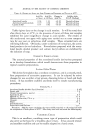
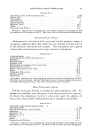
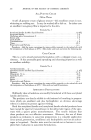
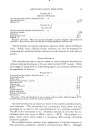
THE STRUCTURAL PROTEINS OF EPIDERMIS AND THEIR POSSIBLE RELATION TO AGING SKIN* By C. C^aaVT•IEaS, D. L. WOEa•rLE¾, A. B^VMLEa, and H. SHORTS Departments of Biochemistry and Biophysics, Roswell Park Memorial Institute, Buffalo 3, N.Y. EPIDERMIS OFFERS some unusual and interesting aspects of bio- chemical interest because this tissue is so different from any other tissue in the body. To quote Cowdry (1) "Epidermis is Nature's most effective frontier tissue. In it, life and death are more closely joined than anywhere else. The cells composing the tissue--all probably of one type, ecto- dermal-are well organized. They stand closely together. The inner cells, next to the underlying blood vessels of the dermis, have adequate supplies. Some of their descendents take up positions nearer and nearer to the external environment. The farther they move in this direction, the more unfavorable their living conditions become, not only as to supply, but also in respect to removal of waste. They gradually die, still more closely clasped together, and in such a condition that in death they serve as a protective shield of exceeding thinness, conditioned by the oily secretion of sebaceous glands." The primary function of epidermis, then, is to limit the organism and to protect other tissues from harmful changes in their environment. The structure of epidermis is such that the direct entry of water or its loss through this tissue is practically nil. Epidermis is repaired rapidly by cell multiplication and quick drying, and the necessity of this function is ap- parent from the fact that this tissue is subjected to such hazards as mechan- ical injury, extremes of heat and cold, radiation from the sun, micro6rgan- isms and ectodermal viruses. Perhaps the many external sources of irrita- tion to epidermis are responsible for the ease with which this tissue becomes hyperplastic and is thus highly susceptible to the induction of cancer. Epidermis offers to the biochemist an opportunity to study various phases of cellular growth (differentiation) concomitant with the biosyn- thesis of the complex fibrous protein, keratin. The wear and tear which * Presented at the May 13, 1955, Meeting, New York City. 324
Purchased for the exclusive use of nofirst nolast (unknown)
From: SCC Media Library & Resource Center (library.scconline.org)