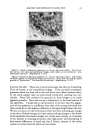
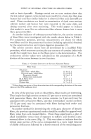
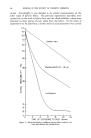
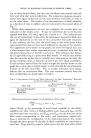
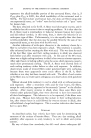
PROTEINS OF EPIDERMIS, RELATION TO AGING SKIN 325 epidermis withstands during the day appear to be remedied in part by the increased production of new cells at night since at this time the rate of mitosis is almost twice that found during the day (2, 3). The rate of cell multiplication is slow in the basal cells, is accelerated in the spinous layer and is practically nil near the surface of the skin (4, 5). Changes in the morphology of a tissue may be correlated with some meas- urable biochemical alterations. It is common knowledge that young skin is rosy, smooth and elastic, while old skin is generally pale, wrinkled and flaccid. Epidermis becomes atrophic or thinner due to a decrease in cell size with advancing age according to Cooper (6). Evans, Cowdry and Neilson found that the epidermis (antecubital region) of old individuals (89-94 years) was 27.3 microns thick, whereas that from young adults (19-30 years) was 33.8 microns thick (7). They considered that part of the difference in the thickness of the epidermis was due to a greater shrink- age in the old skin following biopsy and fixation than occurred in young skin. Ejiri counted the number of layers of epidermal cells in young and old cadaver skins and he found that the epidermis of the head and face be- came atrophic with advancing age, but no such changes were found in the epidermis of the extremities (8). On the other hand, Hill and Montgomery were not able to demonstrate any change in the stratum corneum of epi- dermis covered by clothing in individuals from birth to 78 years of age (9). Their studies suggested that the granular layers increased in thickness with age, but no apparent alteration in epidermal thickness was found in the prickle cell layer. A moderate atrophy of the rete ridges occurred in old age in both exposed and unexposed skin. Although some of the evidence indicates that a thinning of the epidermis takes place with advancing age, an increase in mitotic rate appears to com- pensate for this phenomenon, for Thuringer and Cooper demonstrated that an increase in the epidermal mitotic rate (abdominal skin) occurred in in- dividuals from 1 month to 77 years of age (10). The suggestion was made that the increase in epidermal mitotic rate might be associated with a higher incidence of benign hyperplasia and cancer in senile skin. Estrogenic hormones appear to be related to the atrophy of epidermis in old people. For example, Goldzieher (11, 12) and Eller and Eller (13) have shown that the application of these hormones to the skin of elderly women past the menopause brought about an increase in the thickness of their epidermis, development of the rete pegs and less fragmentation of the collagen fibers in the dermis. In general the principal effect of age on the epidermis is atrophy of this tissue. However, two diseases, seborrheic and senile dermatoses, which are more common in older individuals, show pronounced pathological changes in the epidermis (6). In seborrheic dermatoses the epidermis is thick and has numerous cysts filled with laminated keratin and islands of connective

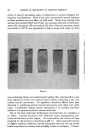
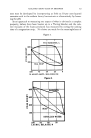
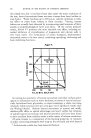
326 JOURNAL OF THE SOCIETY OF COSMETIC CHEMISTS tissue. Senile keratoses occurs most often in exposed areas of the skin and in this disease the epidermis is elevated, irregular in outline, grayish in color and covered with much keratin. Senile keratoses is considered to be pre- cancerous as squamous-cell carcinomas arise in 20 to 25 per cent of the cases. Since the primary function of epidermis is the biosynthesis of the protec- tive coat of keratin, and since the prekeratin proteins of this tissue are closely related to, or are the structural proteins (14), investigations of the properties and synthesis of the latter are essential for a better understand- ing of normal, aging and pathological epidermis. The basis for our present understanding of the structural proteins of epidermis is dependent upon the x-ray diffraction investigations of Astbury and his co-workers (15). The polypeptide molecular chains of the crystalline or fibrillar portions of many fibers (fibrous proteins) exist in three principal stages of contraction or extension, each characterized by a distinctive x-ray diffraction pattern (16). In such structures as mammalian hairs, the chains are in the con- tracted or a-form. Under conditions of elevated temperature in aqueous environments the application of longitudinal tension results in an elonga- tion (70 to 100 per cent) with transformation of the polypeptide chains to the extended or 3-form. With the help of reducing and/or hydrogen-bond relaxing agents, complete release of tension ensues and the fiber or hair con- tracts to considerably less than the original length (a-form) to give the cross 3-configuration. This type of contraction, according to Rudall (17), is the result of a superfolding of the polypeptide chains. In Astbury's classification of the native fibrous proteins, the structural proteins of epidermis belong to the keratin-myosin-fibrinogen group (18). This group comprises in part the hard and soft keratinous products of mammals, amphibians, fishes, birds and reptiles and muscle fibers of all kinds. The soft epidermal layer of all the animal classes mentioned above normally exhibit the a-type diffraction pattern which is also given by the hard keratins (hairs, quills, nails, claws, horns, whalebones) of mammals. The hard keratins (feathers, scales, scutes, beaks, and claws) of reptiles and birds show a structure resembling the 3-type x-ray diffraction pattern. For mammalian epidermis (cow snout) Derksen, Heringa and Weidinger showed that the a-keratin pattern was present in the Malpighian and soft keratinized layers of this tissue (19). Furthermore, stretching of these layers of the epidermis to 100 per cent of their original size in warm, moist conditions produced the 3-form diffraction pattern. An examination of the epidermis of a number of species by Rudall revealed that the character- istic fibrous protein of this tissue and its cellular products in vertebrates is the a-type (20). He also demonstrated that the absence of the a-type or the presence of another type-is apparently-rare in cyclostomes, teleosts, amphibia and-mammals. Another..fibrous• protein, feather- ke•atin, is
Purchased for the exclusive use of nofirst nolast (unknown)
From: SCC Media Library & Resource Center (library.scconline.org)