PROTEINS OF EPIDERMIS, REI.ATION TO AGING SKIN 343 (11) Goldzieher, M. A., "The Effects of Estrogens on the Senile Skin," •. Gerontol., 1, 196 (1946). (12) Goldzieher, J. W., "The Direct Effect of Steroids on the Senile Human Skin," Ibid., 4, 104 (1949). (13) Eller, J. J., and Eller, W. D., "Cutaneous Effects of Topical Applications of Natural Estrogens with Report of Three Hundred and Twenty-one Biopsies," /irch. Dermatol. and Syphilol., 59, 449 (1949). (14) Mercer, E. H., "Some Experiments on the Orientation and Hardening of Keratin in the Hair Follicle," Blochim. et Biophys./icta, 3, 161 (1949). (15) Astbury, W. T., "Adventures in Molecular Biology." The Harvard Lectures. Series XLVI, 3, (1950-51), Springfield, Illinois, Charles C Thomas, Publisher (1952). (16) Astbury, W. T., and Bell, F. O., "X-ray Data on the Structure of Natural Fibers and Other Bodies of High Molecular Weight," Tabulae Biologicae, 17, 90 (1939). (17) Rudall, K. M., "The Proteins of the Mammalian Epidermis,"/idvances in Protein Chem., 7, 253 (1952). (18) Astbury, W. T., "X-ray and Electron Microscopic Studies and Their Cytological Sig- nificance of the Recently Discovered Muscle Proteins, Tropomyosin and Actin," Proc. Sixth Internat. Cong. Exptl. Cytology, Exptl. Cell Research, Supplement, 1,234 (1947). (19) Derksen, J. C., Heringa, G. C., and Weidinger, A., "On Keratin and Cornification," /icta Neetland. Morphol., 1, 31 (1937). (20) Rudall, K. M., "X-ray Studies of the Distribution of Protein Chain Types in the Verte- brate Epidermis," Blochim. et Biophys./icta, 1,549 (1947). (21) Giroud, A., and Champetier, G., "Researches sur les roentgenogrammes des keratines," Bull. soc. chim. biol., 18, 656 (1936). (22) Leblond, C. P., "Histological Structure of Hair, with a Brief Comparison to Other Epi- dermal Appendages and Epidermis Itself," ,,Inn. N.Y. ,'Icad. Sci., $3, 464 (1951). (23) Mercer, E. H., and Olofsson, B., "Sedimentation Analysis of an Extract of the Perkerat- inous Layers of Skin," •. Polymer $ci., 6, 261 (1951). (24) Carruthers, C., Woernley, D. L., Baumler, A., and Kress, B., "Proteins of Mammalian Epidermis." J. Investigative Dermatol., 25, 89 (1955). (25) Baumberger, J.P., Suntzeff, V., and Cowdry, E. V., "Methods for the Separation of Epi- dermis from Dermis and Some Physiologic and Chemical Properties of Isolated Epider- mis," •7. Nat. CancerInst., 2, 413 (1942). (26) Giroud, A., and Leblond, C. P., "The Keratinization of Epidermis and Its Derivatives, Especially the Hair, as Shown by X-ray Diffraction and Histochemical Studies,"/inn. N.Y./Icad. $ci., 53, 613 (1951). (27) Moore, D. H., and White, J. U., "A New Compact Tiselius Electrophoresis Apparatus," Rev. Sci. Instruments, 19, 700 (1948). (28) Moore, D. H., Roberts, J. B., Costello, M., and Schonberger, T. W., "Factors Influencing the Electrophoretic Analysis of Human Serum," •. Biol. Chem., 180, 1147 (1949). (29) Woodin, A.M., "Molecular Size, Shape and Aggregation of Soluble Feather Keratin," Blochem. •7., $7, 99 (1954). (30) Bjorksten, J., "Cross Linkages in Protein Chemistry," /Idvances in Protein Chem., 6, 343 (1951). (31) Van Scott, E. J., and Flesch, P., "Sulfhydryl Groups and Disulphide Linkages in Normal and Pathological Keratinization,"/Itch. Dermatol. and Syphilol., 70, 141 (1954). (32) Carruthers, C., and Suntzeff, V., "Biochemistry and Physiology of Epidermis," Physiol. Rev., $3, 229 (1953). (33) Roberts, E., and Frankel, S., "Arginase Activity and Nitrogen Content in Epidermal Carcinogenesis in Mice," Cancer Research, 9, 23l (19495.

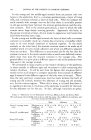
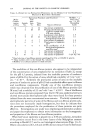
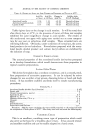
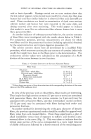
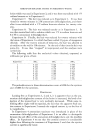
ACETYLATED LANOLIN DERIVATIVES* By L•sx•.P, I. Co•P,^r) and K^LMEN MOTIUK almerican Cholesterol Products, Inc., Milltown, N. •. S•.VERAL R•cEs•r publications (1-4) have shed light on the nature of lanolin. This has given active workers in the field an opportunity to synthesize new derivatives based upon sound information and revised con- cepts of composition. Derivatives of lanolin have been produced both in the United States and abroad for many years. A review of the published literature (5, 6) reveals that the chemical reactions employed in manufacturing these products in- volve chiefly unsaturated bonds and ester linkages. L^NOLIN EST•.•S Lanolin is essentially a mixture of esters formed from many types of alcohols and a great variety of fatty acids. A small percentage of free alcohols is also present (1, 4). Table 1 contains analytical data for lanolin U.S.P. TABLE 1--ANALYTICAL DATA FOR VARIOUS U.S.P. LANOLINS Ester No. Iodine No. Hydroxyl No. Sample A 89.4 29.8 29.9 Sample B 97.0 28.1 31.9 Sample C 95.2 27.4 36.7 Sample D 98.8 25.0 33.8 Note that the ester number ranges from approximately 89 to 98 the iodine number from 25 to 30 the hydroxyl number from 30 to 37. This data discloses the presence of the reactive groups which can be uti- lized to form derivatives. Lanolin can be split into acid and alcohol com- ponents by saponification of its esters. Although the complete saponifica- tion of lanolin is difficult to achieve, this has been accomplished (7). Lano- lin alcohols, and extracts and fractions thereof, are now widely used as surface active topical emollients. Displacement reactions, also based on ester linkages, have resulted in water soluble derivatives of lanolin. Other products may be looked for in the future based on this approach. * P•desented at the May 13, 1955, Meeting, New York City. 344
Purchased for the exclusive use of nofirst nolast (unknown)
From: SCC Media Library & Resource Center (library.scconline.org)