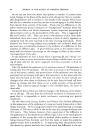
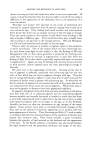
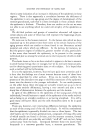
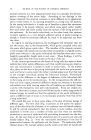
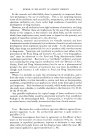
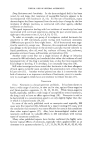
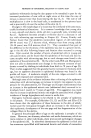
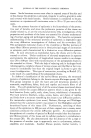
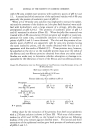
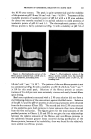
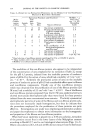
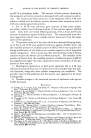
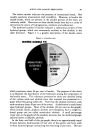
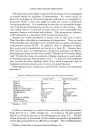
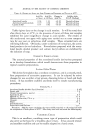
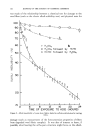
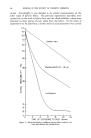
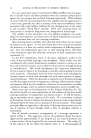
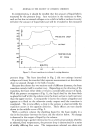
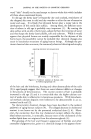
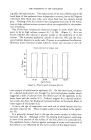
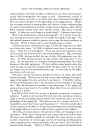
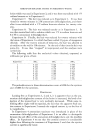
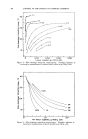
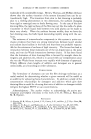
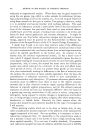
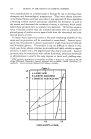
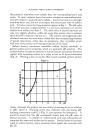
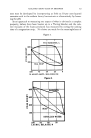
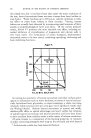
362 JOURNAL OF THE SOCIETY OF COSMETIC CHEMISTS was made of the relationship between a chemical test for damage to the wool fiber (such as the classic alkali-solubility test) and physical tests for 6O 5O 4O 50 20 15 ',% o H•SO 4 • [] H2S04 followed by HCHO A HCHO followed by H2SO 4 I • I • I I I I I • I 4 8 12 16 20 24 TIME OF EXPOSURE TO AOID (HOURS) Figure $.--Alkali insolubility of yarns from fabrics boiled in sulfuric acid solution for varying times. damage (such as measurement of the force-extension properties of fibers from degraded wool fabric samples). It was also of interest to learn, if possible, what bearing the ortho-para structure might have on the alkali-

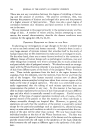
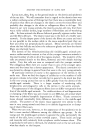
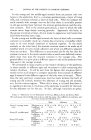
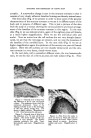
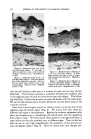
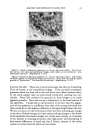
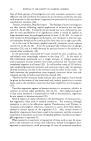
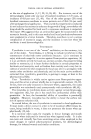
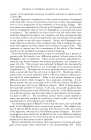
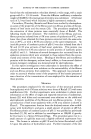
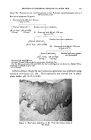
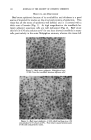
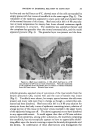
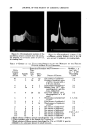
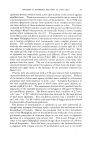
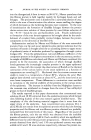
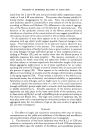
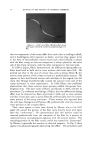
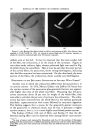
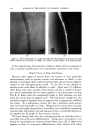
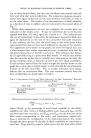
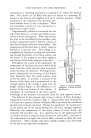
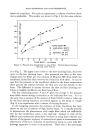
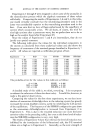
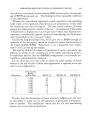
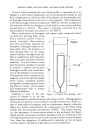
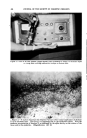
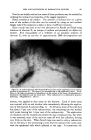
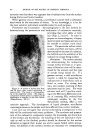
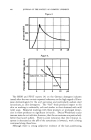
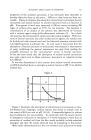
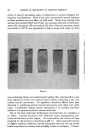
EFFECT OF BILATERAL STRUCTURE ON KERATIN FIBERS 363 solubility test. Without going into the details, it may be stated that the alkali-solubility test is a reliable indicator of damage, when the fiber has been exposed only to a sulfuric acid treatment. If, however, the wool has been given a formaldehyde treatment preceding or following acid exposure, the alkali solubility of the wool is markedly decreased. This is shown in Fig. 5, where, for reasons that will be shortly apparent, the logarithm of alkali insolubility is plotted as ordinate versus time of exposure to sulfuric acid as abscissa. The acid concentration used was similar to one which would be used in commercial practice to apply an acid dyestuff to wool. All the acid treatments discussed here, are done at the boil. It is apparent from looking at the curves that a formaldehyde treatment, at least so far as alkali solubility is concerned, appears to prevent or repair damage, depending on whether the formaldehyde treatment precedes or follows acid exposure. Unfortunately, the effect is a spurious one, because the prevention or repair of damage is not borne out by the results of physical property measurements. That is, the flex-abrasion resistance of the treated fabrics and the properties of single fibers taken from the fabrics are not improved by formaldehyde treatment. The line drawn through the "H2SO4" points shown in Fig. 5 is a calculated one, obtained by a modified least-means-squares analysis of the experi- mental data, and represents an equation which is the sum of two exponential terms. The fitting of such an equation to the experimental data implies that the reaction process--the removal of protein from wool by alkali after a prior "sensitizing" by sulfuric acid--is a first-order one with respect to each of the halves of the cortex. The extrapolation of the latter, straight- line portion of the curve intercepts the ordinate axis at a value near 50 per cent, implying an approximately 50-50 split of the cortex between the ortho- and paracortex portions. The "rate constants" appearing in the equation that fits this curve are in the ratio of about 6 to 1, implying that the orthocortex is "sensitized" by the acid for subsequent removal by alkali at a rate about six times greater than that for the paracortex. This is verified by the photomicrographs shown in Fig. 6, which shows a 64's wool fiber (U.S. Rambouillet) after the fiber had been in acid for six hours and was subsequently exposed to alkali for twenty minutes under the conditions of the alkali-solubility test. A six hour exposure, it will be remembered, leads to an alkali solubility of about 50 per cent. From the photomicrograph of the fiber taken with ordinary light (Fig. 6a), it will be seen that approximately one half of the fiber has been removed by the alkali. This represents loss of orthocortex. The remaining paracortex is shown crossing from one side of the fiber to the other. The photomicro- graph of the same fiber taken with polarized light (Fig. 6b) confirms this observation and shows how the birefringence still exhibited by the fiber is a property only of the remaining paracortex.
Purchased for the exclusive use of nofirst nolast (unknown)
From: SCC Media Library & Resource Center (library.scconline.org)