FOAM TRANSITIONS AND FOAM PERSISTENCE 371 There has been a certain divergence between the classes of materials in common use for cosmetic purposes and those finding wide outlet as house- hold detergents. Those surface-active materials which at the present time comprise by far the greatest portion of the cosmetic market include soaps, fatty alcohol sulfates, sulfated monoglycerides, sarcosinates and certain other materials of more restricted use such as the fatty acid derivatives of taurine and isethionic acid. Among household detergents there has been a diminishing importance of soaps, which have given way to the alkyl- benzene sulfonates. These in turn are being supplanted to some extent by various nonionic detergents, principally the condensation products of ethylene oxide and some hydrophobic or water-insoluble group. It is striking that the alkylbenzene sulfonates of present manufacture have found limited use in shampoos and this must be attributed at least in part to their characteristic lacy, dry foams. For many cosmetic purposes, in addition to persistent foams, there have also been the requirements of body, feel or gross viscosity, sometimes referred to as creaminess, which are best met by fine bubbled and high density (wet) foams. Such foams are characteristic of soaps, fatty alcohol sulfates and related materials. In the description of a foam its persistence or its lifetime is perhaps its most important characteristic. When gas is passed through a liquid, the volume of foam formed must be equal to the volume of gas that is passed through the solution plus the volume of liquid in the films. After formation, all foams undergo a period of continuing drainage and of decay. Foams vary all the way from those which collapse immediately to those which last indefinitely, until ended by some outside destructive force. A pure liquid, when shaken violently, forms a foam that collapses the moment the shaking stops. At the other extreme is whipped cream, which loses liquid through drainage very slowly and lasts a long time. The carefully shielded bubbles of Dewar survived for years. It is the relative persistence which distinguishes one group of foams and their stabilizing agents from another. There are materials which are associated with a low order of persistence. Ginger ale and solutions of sodium octyl sulfate give foams which drain rapidly and then sponta- neously collapse. They appear to have no means whereby the individual films overcome the forces producing drainage. In contrast solutions of the common alkylbenzene sulfonates or highly purified sodium lauryl sulfate give foams which drain rapidly without spontaneous collapse. The drainage can proceed until the films are astonishingly thin, of the order of a few tens of Angsttoms, but nevertheless can last indefinitely if properly protected from air currents, heat gradients, mechanical shock or outside destructive forces. Among these foams it appears that forces come into play between the opposing surfaces of the films which resist further drainage and spontaneous collapse.

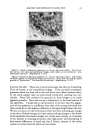
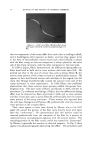
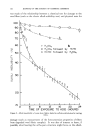
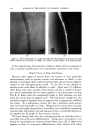
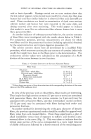
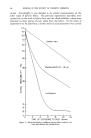
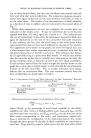
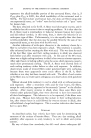
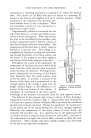
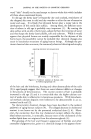
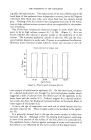
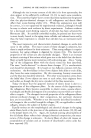
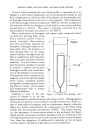
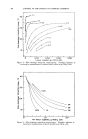
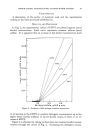
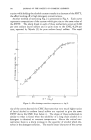
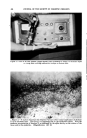
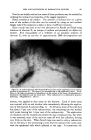
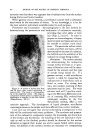
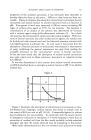
372 JOURNAL OF THE SOCIETY OF COSMETIC CHEMISTS It is now some years since it was found by Miles and Ross that it is possi- ble to classify foams and films produced with the common surface-active agents into two groups, fast and slow draining respectively. When allowed to drain freely the fast draining foams thin rapidly with the appearance in a short time, generally less than a minute, of the typical interference colors associated with soap bubbles, followed by the disappearance of the colors as the so-called "black films" develop. With slow draining foams the same process is relatively long drawn out, being several times longer. The validity of this separation into two definite categories was estab- lished by the prediction and observation of sharp temperature transitions in films between slow and fast draining conditions. Slow draining foams and films were observed with certain narrow classes of surface-active agents. It was also found that their occurrence required the presence of at least two surface-active components of differing proper- ties. Not all combinations gave rise to slow draining foams and fairly strict limitations upon the molecular structures of both components were postulated (1). In the first experiments, many of the basic techniques, useful in the study of foam and film drainage, were developed. These studies were also coordinated with certain fundamental problems related to minima in sur- face and interfacial tension and to selective fractionation through foaming or emulsification. This whole development has important implications for the cosmetic industry by providing a scientific understanding of certain of its materials. Subsequent work has been concerned with extending the systems known to show slow drainage and with improvements in experi- mental technique. There has also been an appreciation of the foam drainage (or film drainage) transition temperature as being a definite physico-chemi- cal property which may be studied as a function of concentration variables and phase changes, much as ordinary melting points may be studied (2). Some years ago at the laboratories of the Colgate Palmolive Co. (3), the writer carried out some experiments on tall columns of wet foam under varying conditions of temperature and liquid content. It will be interest- ing to reconsider certain aspects of this work. If a manometer is placed at the bottom of such a column, the measured pressure is due to the amount of liquid held in the foam and is a measure of the foam density. This simple principle offers an approach to the study of drainage characteristics by the use of columns of foam through which a flow of detergent solution is maintained. One of several convenient arrangements of a drainage apparatus is shown in Fig. 1. This apparatus consists of a jacketed column having an upper section approximately 15 cm. long by 2.2. cm. internal diameter and a lower section 34 cm. long by 0.9 cm. internal diameter. The outlet, D, of the column is 64 cm. below the solution inlet, z/. A thermocouple, B,
Purchased for the exclusive use of nofirst nolast (unknown)
From: SCC Media Library & Resource Center (library.scconline.org)