SOCIAl. AND ECONOMIC ASPECTS OF SKIN GERIATRICS 383 ternal medicine, but these excellent workers have not been concerned pri- marily with investigations into aging as such. Contrarywise, studies of specific diseases and what to do about them have distracted investigators from the central problem of the physiology of the aging process. Doubt- less as people succeed in growing older and there is a better understanding of cancer, arteriosclerosis and other cardiovascular diseases, there will be fewer untimely deaths from these specific causes. But what is timely death? Is there any such thing as a timely death? I daresay there is not! What is the fundamental nature of growing old ? Is it correct to say of a man nearing the century mark that he might die simply of old age? No, the medical examiner would not permit you to sign the death certificate in that way. Death is always due to some specific cause or.causes. A little more than a hundred years ago, in 1850, life expectancy at birth was thirty-nine years. In 1950, a hundred years later, it was sixty-nine years. These are in round figures. Thus you see we have gained a total of thirty years of life from birth in this one hundred years. But, now mark this--in 1850--having reached the age of sixty, life expectancy was 16.3 years. In 1950, having reached the age of sixty, life expectancy is 17.3 years. So you see there is a very great misunderstanding about this whole business of the older age group. We have millions more people today who reach the age of sixty, but having reached the age of sixty we do not live any longer than we did one hundred years ago--or very little so the differ- ence here is only one year. This points up the tremendous problem of what to do about this whole business of aging. We have not yet had a clear understanding of the physi- ology of the aging of the skin and what to do about it. I think Dr. Andrew will say something about that in his discussion on the histology of the aging skin. But the fundamental problem is the physiology of the aging cell, and you have to get down 'to the cellular phase before you can understand the body as a whole. Last fall in New York City we gave a graduate symposium on geriatric medicine. I asked an old and dear friend of mine who is professor of physi- ology at one of our leading medical schools if he would not talk to us on the physiology of the aging cell. He looked at me for a minute and said, "I would like to, but I don't know anything about it." So little has been done in basic science in the effort to understand something about the physiology of the aging cell that we were not able to have a paper on that subject. All of this, of course, leads to the question of what are we going to do in the future. Well, much is being done and a great deal more will be done. We have very carefully studied, for example, the tissue sections at post- mortem of patients of various ages, and we are learning something about what is going on but, more particularly, what we want to do is be able to measure these changes. There is, I think, a pretty general misunderstand-

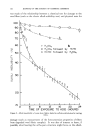
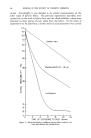
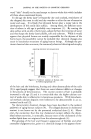
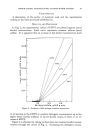
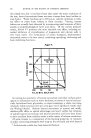
384 JOURNAL OF THE SOCIETY OF COSMETIC CHEMISTS ing as to when the aging process begins. What is aging, and when shall we say that a person is beginning to get old? There are many different opin- ions on this subject too, but as far as we are concerned in our measurements, we think it begins rather early. One of the things we are able to measure are the excretory products of some of the glands of internal secretlot{, particularly the adrenal gland which is the--I won't say most important--but an extremely important secretory gland of the human body. Without a properly functioning ad- renal cortex, life is incompatible. Many of the other glands can be out of order and nothing very serious will happen, but if the adrenal ceases to per- form its normal function you are certainly in trouble. The pituitary, through the secretion of its hormones, called the trophic hormones, has a direct effect on the testes and on the adrenal cortex. In the female, for example, a measurement of the 17-keto-steroids in the urine is, we feel, an indication of the functioning capacity of the adrenal. Until about the age of puberty, the excretion of these steroids in the urine is the same for both boys and girls, but when the testes begin to develop and the boys begin to put out testosterone there is a sudden increase in the male, until about age twenty-five and then they fall off sharply. The dif- ference between the male and female is because of the contribution of the testes, but at about age sixty these lines begin to converge, and we feel that indicates not only some failure of the adrenal gland but also of the testes. The question of aging and when does it begin is one that we cannot answer specifically, but in so far as it is possible for us to measure function and physiology of the human body we feel that it begins rather early--perhaps between age twenty-five and thirty-five. This does not apply, however, to the mind or its capacity to function. Examining the histories of some 400 career men and women, the most notable and outstanding statesmen, painters, warriors, poets, and writers of their time indicates that the decade of years between sixty and seventy produced 35 per cent of the world's greatest achievements between seventy and eighty years of age, 23 per cent of all the world's outstanding achieve- ments after eighty years, 8 per cent. Or, in other words, 66 per cent of all great achievements and accomplishments by man were developed and given posterity after he had reached or passed the age of sixty. During the past half century, the population of the United States has doubled, but the number of persons past the age of sixty-five has quadrupled. In 1900 the proportion of men and women sixty-five years of age and over, in our total population, was one in twenty-five today it is around one in twelve and is steadily increasing. There are, in the United States today, 141/•. million men and women sixty-five years of age and over. This num- ber is increasing at the rate of about 400,000 a year. By 1965 there will be approximately 20,000,000 men and women over the age of sixty-five.
Purchased for the exclusive use of nofirst nolast (unknown)
From: SCC Media Library & Resource Center (library.scconline.org)