SOCIAL AND ECONOMIC ASPECTS OF SKIN GERIATRICS 385 Women outnumber men in this class by about 10 to 9. More than half of the women in this age group are widows whereas the majority of men sixty- five and over are still married and have not lost their wives. About 85 per cent of all men over age fifty-five are still at work and 50 per cent of all men over sixty-five are still at work in spite of a somewhat patronizing air on the part of many corporations to retire men at age sixty-five. A great many of them go out and find jobs elsewhere, and more power to them be- cause maturity of judgment is a very important thing in our life today, and maturity of judgment only comes with maturity. Over 25 per cent of women age fifty-five are in the labor force today and at age sixty-five this percentage has been reduced by about half so that only 121/2 per cent of these women are still working. It must be perfectly obvious that both men and women who are still engaged in business activi-. ties and active social life, are conscious of their hair and face and general appearance. A question asked of me recently is, "At what age does a woman become a geriatric problem?" I cannot answer that because there is such a tremen- dous difference between individual women. I might say that the physiology of the change is different in the woman than that of the man because we do know that generally between the ages of forty and fifty, the woman ceases to have ovarian function. She enters that phase of life called the meno- pause and after which she is no longer able to have children. As a rule, men do not have that type of physiologic change. We do not feel that men go through the same type of change although there are very definite changes that take place, and there is even an entity known as the male climacteric. I have never been able to find a single man in the world who admitted that he was in the menopause, but it can happen, so watch your step. It certainly must be very well understood by members of your group that special problems are involved in maintaining the hair and skin of older people, and that cosmetic research should be directed along the lines of special preparations for the older age group. You have a tremendous mar- ket already, some 141/2 million people and that market is increasing every year. Without being a cosmetic chemist, I know that a woman does not use or perhaps should not use the same type of makeup at age sixty-five that she found quite satisfactory at age twenty-five, or more particularly at age fifteen. These little girls dip into mother's rouge pot and they have the time of their lives and, more power to them, because the earlier they learn how to use these wonderful weapons, defense weapons--and offensive, too, the better off they will be. Actually, it seems a little strange that the general products on the market today specifically for older people are limited to the hair coloring materials and perhaps the estrogenic creams. There are all kinds of wrinkle-proof creams, and this-that-and-the-other, and cleansing creams, but I do not

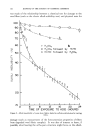
386 JOURNAL OF THE SOCIETY OF COSMETIC CHEMISTS think they are particularly designed for the type of people we are talking about here. Now what are some of the specific effects of estrogen--and the physio!ogic effects. Well, it is one of the most interesting studies we have ever encountered, and we are learning more about it every day. There are scientific papers available showing that estrogenic creams actually will do a good job. They will actually make the skin look better and younger, add to its appearance, and perhaps mark off some of the years that have invaded the skin. Now this, however, is much more important and that is, what effect, if any, does estrogen, when administered systemically or estrogen as elaborated by the female ovary, have on the physiology of man-- and I mean both men and women because it is a fact that a healthy young man will secrete estrogen as well as androgen and a healthy young woman will secrete both the male and the female hormones. The ratio, the pre- ponderance, between the two, of course, is reversed in the sexes. But a perfectly normal, child-bearing young woman will secrete androgen as well as estrogen. Now to go back to about the time when estrogen first became available in crystalline form for use in medicine and later for use in cosmetics, at about 1920, the deaths per 100,000 of population from cardiovascular dis- ease was almost the same in men as in women. It was something about 500 per 100,000. The rate of cardiovascular deaths in females has gone steadily downward since 1920 until in 1950 it was only about 350 instead of around 500. Whereas the male has remained about the same, perhaps it is a little higher today. Now that means this--we know in clinical medi- cine, for example, that women in child-bearing ages do not die of heart dis- ease. It is a rare thing--they do not have it--you do not find one collaps- ing-hear of a sudden death--and so forth. I would say "never," but there is no such thing in medicine as "always," or "never." As a general rule, though, women do not have heart disease until they are past meno- pause when the secretion of estrogen in the body has been lowered. Now you cannot just take two facts like that and put them together and say you have the answer. There has been an increase in the consumption of cigar- ettes in this country during the past twenty years and there has been an increase in the incidence of lung cancer, but you cannot put tho'se two to- gether and say that smoking causes lung cancer. Research today is pointed along the lines of finding out what is going to happen to the cardiovascular system in a great many of these people if we use estrogen after the body has ceased to secrete it. We are beginning to learn that it does have some effect on blood lipids, for example, blood cholesterol. There is a very big field here for continuing research over a number of years, and we hope some day to find the answer, but the fact is that man dies suddenly of heart disease hut the woman generally does not until she passes the menopause. There is one thing that I would like to say about the aging population and that is
Purchased for the exclusive use of nofirst nolast (unknown)
From: SCC Media Library & Resource Center (library.scconline.org)