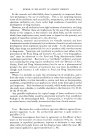
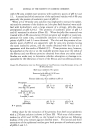
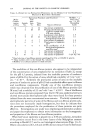
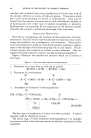
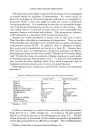
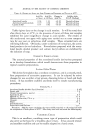
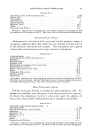
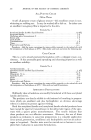
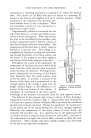
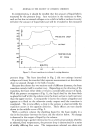
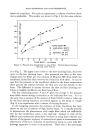
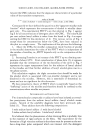
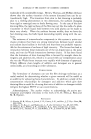
388 JOURNAL OF THE SOCIETY OF COSMETIC CHEMISTS tions, which show the frequency of the occurrence of the three possible patterns, were developed. D (6) SH-- HS = B D + C D (7) SH-- RSS = E•+C C (8) SSR -- RSS = E{2 +• B+E This introductory matter was subsequently published in the Proceedings of the Scientific Section of the Toilet Goods dssociation, 22, 23-29 (1954). Herein is published only the latter part of Whitman's report in which he described experiments that were conducted in the Rayette laboratories and commented on the data that were developed using the equations set forth above. Now, let us run some simple experiments, carry out the analyses which I have described and see what meaning the calculated concentrations of the various components of the equilibrium can have for us. EXPERIMENTAL A large shock of virgin hair was divided into twenty-eight 2-gram tresses. One tress was analyzed for cystine content (to give us "(Cystine)O"). The remaining twenty-seven tresses were divided into groups of three and the following experimental processes were carried out in triplicate. Experiment 1: The hair was wound on rods and reduced with a con- ventional thioglycolate lotion for twenty minutes under a nitrogen atmos- phere. The lotion was 0.85 N in ammonium thioglycolate and 0.72 N in ammonia. At the end of twenty minutes' exposure to this lotion, the reac- tion was "stopped" in absolute isopropanol and the requisite analyses were carried out. Experiment 2: Triplicate samples of hair were treated as in Experiment 1 with a lotion analyzing 0.85 N in ammonium thioglycolate, 0.72 N in am- monia and 0.5 M dithiodiglycolate. Experiment 3: The experiment was repeated with a lotion analyzing 0.85 N ammonium thioglycolate, 0.72 N ammonia and 2.3 M ammonium dithiodiglycolate. Experiment 4: In this experiment the lotion was 0.85 N ammonium thioglycolate, 0.72 N ammonia and 2.3 M ammonium succinate. Experiment 5: Here the hair was reduced with the same lotion that was used in Experiment 1. After twenty minutes' reduction the hair was thor- oughly washed (for about thirty minutes) with oxygen-free water, and thereafter it was rinsed repeatedly with a 1 N solution of sodium bromate. Experiment 6: In this experiment the hair was reduced with the same

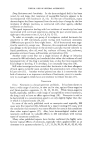
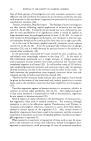
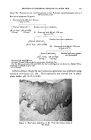
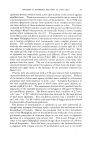
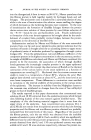
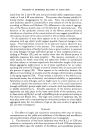
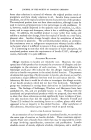
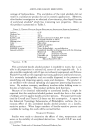
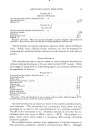
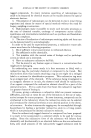
MERCAPTAN-DISULFIDE SYSTEM IN PERMANENT WAVING 389 lotion which was used in Experiment 3, and it was then neutralized with I N sodium bromate as in Experiment 5. Experiment 7: The hair was reduced as in Experiment 1. It was then rinsed for twenty minutes in 2 M ammonium dithiodiglycolate, and there- after it was oxidized with a I N sodium bromate solution for twenty min- utes. Experiment 8: The hair was reduced exactly as in Experiment 1. It was then neutralized with a solution which was 1 N in sodium bromate and 0.2 M in ammonium dithiodiglycolate. Experiment 9: Finally, the hair was reduced for twenty minutes with the lotion of Experiment 1 to which had been added 35 p.p.m. of manganese chloride. After the twenty minutes of reduction, the hair was allowed to air oxidize on the rod for 150 minutes. At the end of that time the hair was quite dry. It was then "stopped" in isopropanol, and the analyses were carried out. The following table lists the analytical values obtained, expressed as millimoles per gram of hair. Experiment (SS)o (SS)^ (SH) x 1 0.715 0.535 0.444 2 0.715 0 678 0.243 3 0.715 0.726 0.074 4 0.715 0.669 0.155 5 0.715 0.692 0.04q 6 0.715 0.744 0 022 7 0.715 0.773 0 032 8 0.715 0 71q 0.04• 9 0.715 0.797 0 020 The probable errors in these determinations were q-0.006 for the cystines and 4-0.003 for the cysteines. DISCUSSION Looking first at Experiments 1, 2 and 3, it is apparent that as the am- monium dithiodiglycolate content of the lotion is increased, the level of re-' duction of the treated hair is very markedly decreased. While some in- hibiting effect might well be expected, the fact that the apparent final cys- tine content in Experiment 3 exceeds the original content is, on the face of it, inexplicable. In Experiment 4 ammonium succinate was introduced in place of the ammonium dithiodiglycolate of Experiment 3 in an effort to distinguish between the salt effect of the ammonium dithiodiglycolate and the disulfide effect. In Experiment 4 we see that the cysteine content is considerably higher than following the treatment of Experiment 3 and that the cystine content is significantly lower.
Purchased for the exclusive use of nofirst nolast (unknown)
From: SCC Media Library & Resource Center (library.scconline.org)