360 JOURNAL OF THE SOCIETY OF COSMETIC CHEMISTS reason, the field of dyes has always been of great interest to the organic chemist. It was here that aromatic synthesis chemistry and the early theories of structure were expressed and delineated. Although thou- sands of dyes have been synthesized over the years, no letup of effort is in sight for there are still many problems to be solved and new ideas to be tested. (Received October 11, 1967) REFERENCES (1) Kamlet, M. J., ed., Organic Electronic Spectral Data, Vol. 1, Interscience Publishers, New York, N.Y., 1960. (2) Turner, D. W., Spectrophotometry in the far-ultraviolet region. Part II. Absorption spectra of steroids and triterpenoids, J. Chem. Soc., 1959, 30. (3) Pickett, L. W., and Sheffield, E., The ultraviolet absorption spectra of dioxadiene and dioxene, J. Am. Chem. Soc., 68, 216-20 (1946). (4) Hirayama, K., Handbook of Ultraviolet and Visible Absorption Spectra of Organic Com- pounds, Plenum Press, N.Y., 1967. (5) Coates, E., Colour and constitution, J. Soc. Dyers Colourists, 83, 95-111 (March 1967). (6) Grammaticakis, P., Structure and medium ultraviolet absorption of the aminobenzene- sulfonic acids and their derivatives, Cornpt. Rend., 236, 610-2 (1953). (7) Kiprianov, A. I., and Ushenko, I. K., Color and planarity of molecules of organic dyes, Izv. Akad. Nauk SSSR, Otd. Khim. Nauk, 1960, 492-500.

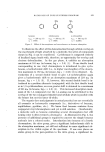
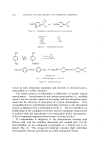
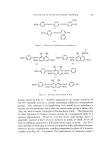
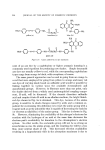
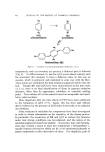
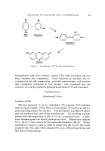
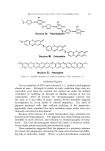
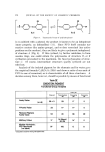
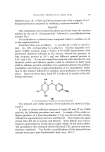
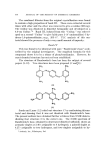
J. Soc. Cosmetic Chemists, 19,361-379 (May 27, 1968) Studies Concerning the Reactions of Oxidation Dye Intermediates FREDERICK BRODY, Ph.D., and MARGARET SUE BURNS, M.S.* Presented September 2[-22, 7967, Seminar, Chicago Synopsis--Reactions of oxidation dye intermediates were investigated in aqueous systems designed to simulate hair-dyeing conditions. The reaction mixtures were examined for the presence of Bandrowski's base (BB) by chromatographic and spectral methods. BB was found only when p-phenylenediamine (PPD) alone was oxidized, and not when PPD was co-oxidized with other dye intermediates. Quinonediimine (QDI) was sought by its charac- teristic hydrolysis to ammonia and by a spectral method. Though formed during the oxida- tion of PPD alone, QDI could not be detected when resorcinol was co-oxidized, either be- cause it was not formed, or because it immediately reacted with resorcinol. A simple oxida- tion pigment (from PPD and resorcinol, 1:1) was examined by functional group analysis (acetylation, methylation, hydrolysis), and found to be a polymeric indophenol. No evi- dence of cyclization to azines was found. INTRODUCTION For many years there has been speculation on the chemistry of the oxidation of dyeing of hair. The current thinking is still that of Cox of 1940 (1), based on earlier suggestions of Erdmann (2) and Austin (3). In this view (Fig. 1), p-phenylenediamine (PPD), the principal component of hair dye formulations, is oxidized by peroxide first to quinonediimine (QDI). If no other dye component is present, the QDI reacts with more PPD, to form Bandrowski's base (BB) outside the hair and polymeric azines within the hair fiber. If, however, other dye * Clairol Research Laboratories, 90 Commerce Rd., Stamford, Conn. 06904. 861
Purchased for the exclusive use of nofirst nolast (unknown)
From: SCC Media Library & Resource Center (library.scconline.org)