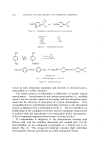
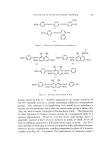
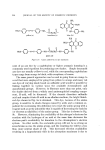
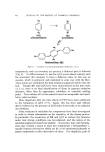
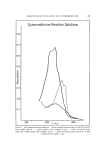
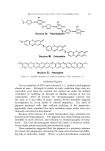
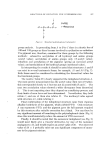
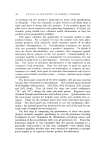
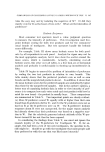
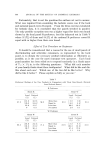
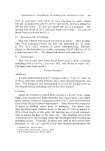
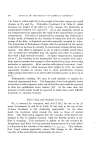
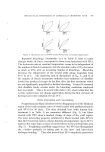
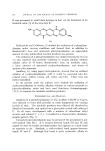
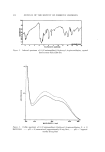
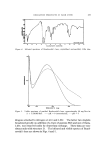
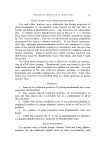
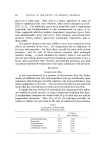
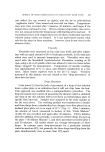
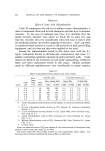
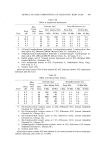
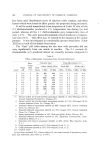
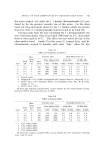
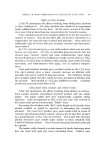
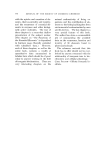
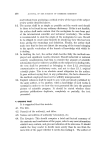
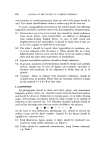
356 JOURNAL OF THE SOCIETY OF COSMETIC CHEMISTS H03S N•N , II CH0 (a) • (b) C! (d) (c) .0CH• CH:• Figure 7. Yellow to orange monoazo dyes the number and position of the sulfonic acid groups. The latter point, however, generally has only a minor effect on the color of azo dyes. The starting point of the proposed family of dyes, sulfanilic acid, is colorless and absorbs in the ultraviolet at 248 mt• (7). Knowing that simple monoazo dyes containing only benzene rings with no additional chromophores are yellow, the chemist might couple the colorless sul- fanilic acid with aniline and obtain the reddish-yellow dye shown in Fig. 7a. If a greener shade of yellow is also desired, two possibilities can be exploited. One is to use a coupling component other than aniline (e.g., a pyrazolone) to obtain a hypsochromic shift, and the other is to in- troduce an appropriate group into the aniline coupler. These products are shown in Fig. 7b and c. The large-sized chlorine group in a position ortho to the azo linkage prevents the chromophoric system from achiev- ing maximum planarity and thereby decreases the effect of orbital over- lap. This is an example of an auxochrome group causing a hypso- chromic effect instead of the usually expected bathochromic one. The next logical shade in the sequence is an orange and several ap- proaches are possible. If an auxochrome stronger than the original amino group, viz., a dimethylamino group, is introduced into the parent yellow dye, a bathochromic shift will be obtained and a yellowish-orange dye will result (Fig. 7d). A redder shade of orange could be obtained by using additional auxochromes such as the methyl and methoxyl

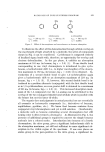
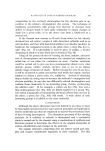
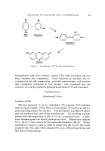
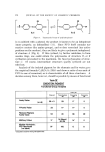
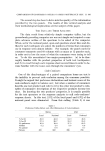
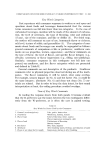
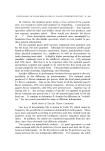
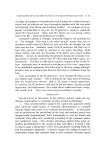
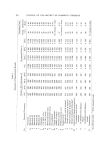
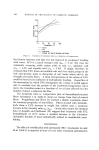
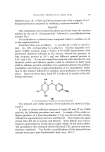
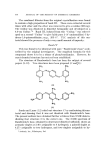
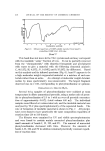
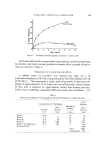
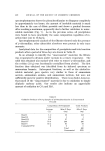
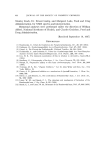
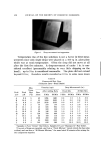
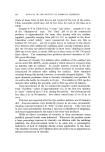
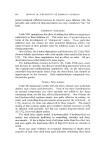
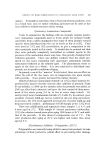
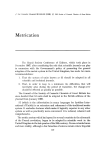
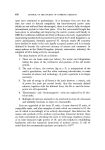
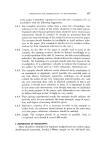
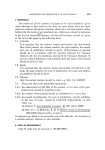
RATIONALE OF DYES SYNTHESIS PROGRAM 357 (a) (b) Figure 8. Disazo and naphthylazo chromophores H0 i•IH2 H038 (a) o HO HNCCHa • H0•S •--•3•_J•S0•H (b) H2N OH • H0•S •--4•k,,•__.•S0•H• (c) H•N OH (d) Figure 9. Azo dyes derived from H-acid groups shown in Fig. 7e. Another approach to an orange would be to use the sulfanilic acid in a system containing additional chromophore groups. One manner of accomplishing this would be to introduce a second azo chromophore along with an auxochrome giving a disazo dye (Fig. 8a) with a longer conjugated chromophore chain. This deepening of color obtained by linking arylazo groups in a conjugated chain is a general phenomenon. However, beyond three such groups there is generally reached a limit wherein increase in depth of shade levels off and, in addition, preparative difficulties may begin to occur. An alter- nate method of achieving increased conjugation with additional chromo- phores is to use a naphthalene coupling component in place of a benzene coupler as in Fig. 8b. In general, the replacement of a benzene compo-
Purchased for the exclusive use of nofirst nolast (unknown)
From: SCC Media Library & Resource Center (library.scconline.org)