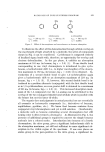
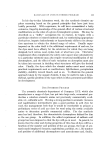
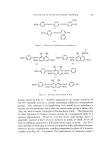
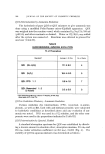
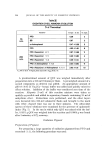
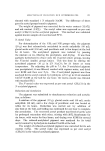
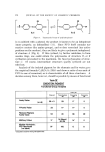
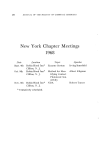
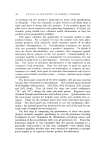
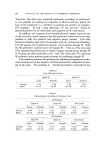
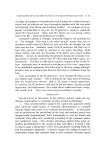
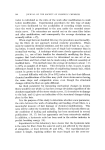
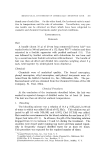
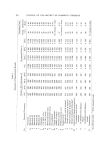
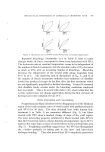
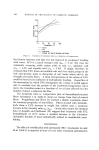
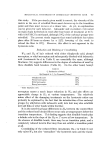
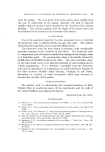
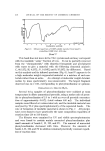
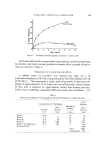
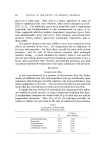
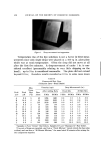
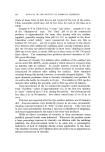
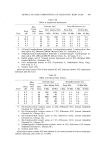
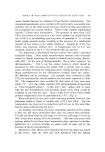
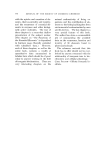
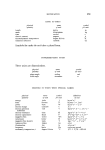
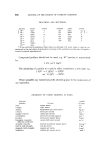
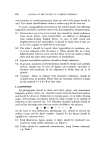
EFFECT OF BASE COMPONENTS ON OXIDATION HAIR DYES 420 BASIC FORMULATIONS Except for the measurements of the 12 black hair dyes sold commer- cially by leading cosmetic houses, all tests were performed on standard- ized ammonium oleate hair dye bases containing 2% of a fusion of oxida- tion dyes. This reduces to 1% "on the head" after dilution with an equal amount of 20 vol hydrogen peroxide. The composition of the fusion of oxidation dyes is shown in Table I. The composition of the various ammonium oleate "base solutions" used in the ten test series is shown in Table III. It should be noted that these compositions do not total 100%. They are shown as actually prepared, totalling from 70 to 90 parts, since the balance (q. s. to 100%) consisted of the various dye base additives being tested. The 12 commercial products all showed good stability to aging, insofar as the physical properties which were measured (pH, temperature rise, viscosity, and drop-movements). There were no significant dif- ferences in these characteristics for the 12 commercial products after aging 1000 hours at 2øC and 48øC. The color yield on white human hair did show some changes after such aging, however. Three of the 12 products gave deeper dyeings after aging at 2 øC none showed any change after "hot aging" at 48 øC. This is the reverse of what would perhaps be expected. This behavior pattern was repeated many times in subsequent tests on experimental dye bases. In addition to this change in depth of dyeing, two of the commercial products (C and G) Table III Test "Base Solutions" #1 #2 #3 Ammonium hydroxide (28%) 10.0 10.0 10.0 ... Sodium sulfite 0.2 0.2 0.2 0.2 Propylene glycol 10.0 10.0 10.0 10.0 Dye mixture (Fusion #4245) • 2.0 2.0 2.0 2.0 Oleic acid 20.0 20.0 20.0 20.0 Isopropyl alcohol 10.0 10.0 ... 15.0 Hydroxyethyl stearyl amide b ... 15.0 ...... Oleyl alcohol ......... 15.0 De-ionized water 17.8 17.8 32.8 22.8 Totals c 70.0 85.0 75.0 85.0 • Dye Fusion #4245 (Table I). b Hydroxyethyl stearyl amide (Cerasynt 303, Van Dyk, Belleville, N.J.). c The above Base Solutions were used, in the concentrations indicated ("Totals"), with various modifying additives, to make up the final "Dye Bases" (Tables IV through X in- clusive).

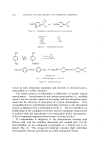
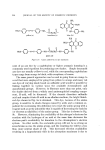
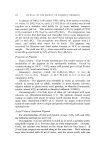
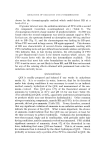
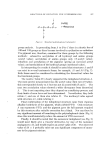
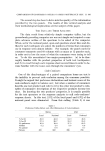
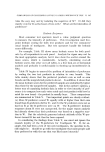
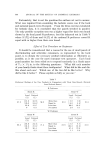
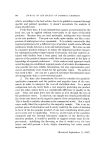
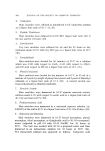
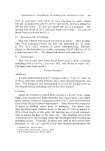
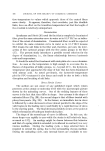
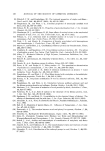
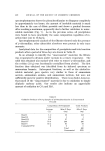
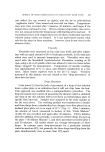
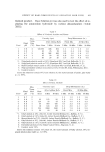
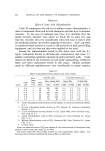
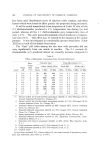
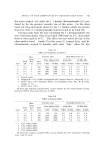
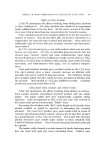
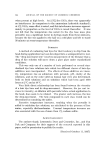
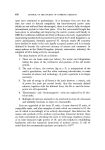
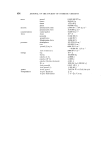
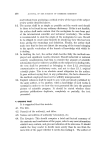
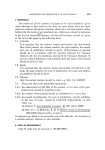
430 JOURNAL OF THE SOCIETY OF COSMETIC CHEMISTS showed a definite tendency towards reddening of dyed hair swatches which were stored (in the dark) for several months preparatory to photographing. Ten different classes of dye base additives were checked for their effects on the various physical properties. In order to make all the tests comparable, wherever possible the same (or very similar) dye bases were used. The four "Base Solutions" shown in Table III were used for this purpose. Base Solutions #1 and #3 were used to compare the effects of adding alkanolamides (Table IV), nonionic amides and esters (Table V), fatty alcohols (Table VI), ethoxylated fatty alcohols and amine oxides (Table VII), amphoteric surfactants (Table VIII), surfactant tertiary amines (Table IX), and quaternary ammonium-type surfactants (Table X). Base Solution #2 was used to test the effect of adding polypeptides and EDTA (Table XI). Base Solution #4 was used to test the effect of varying concentration of sodium sulfite (Table XII), which was included in all other experi- ments at 0.2% as an antioxidant to ensure prolonged shelf-life of the Table IV Effect of Fatty Acid Alkanolamides Max. Viscosity (cps) Drop-Movements (in.) Temp. After adding H2Os Fresh Mix 30 Min Mix Final Rise Base Test a pH (øC) Alone 5 Min 30 Min 5 Min 30 Min 5 Min 30 Min 97 94 95 97 98 97 98 97 4 50 53 55 4.3 4.9 4.5 6.1 2 55 222 274 3.2 4.3 2.2 3.2 3 63 496 396 4.5 4.7 2.5 2.6 4 70 259 235 2.7 4.9 2.1 3.5 1 (}8 822 828 3.2 3.8 2.6 2.8 4 56 488 420 1.7 3.8 2.0 3.8 4 70 160 112 2.2 2.3 2.8 2.8 I 30 20 20 5.0 5.0 4.6 4.6 a 1. Coconut diethanolamide, 2:1 (Foamole AR, Van Dyk, Belleville, N.J.). 2. Coconut diethanolamide, 1:1 (Super Amide GR, Onyx Chemical Co., Jersey City, N.J.). 3. Coconut monoethanolamide, 1:1 (Foamole M, Van Dyk, Belleville, N.J.). 4. Linoleic diethanolamide, 2:1 (Foamole L, Van Dyk, Belleville, N.J.). 5. Linoleic diethanolamide, 1:1 (Foamole A, Van Dyk, Belleville, N.J.). 6. Lauric polyamides, 2:1 (Foamole AS, Van Dyk, Belleville, N.J.). 7. Mixed fatty acids diethanolamide, 2:1 (Foamole 2APD, Van Dyk, Belleville, N.J.). 8. Control, 15% water. All above dye solutions contain 15% alkanolamide, 15•. water, 70% base solution #1 (Table III).
Purchased for the exclusive use of nofirst nolast (unknown)
From: SCC Media Library & Resource Center (library.scconline.org)