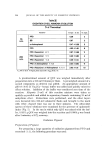
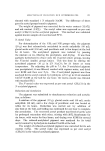
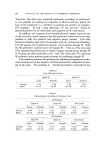
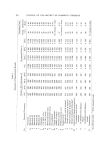
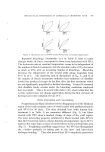
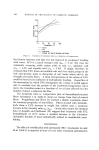
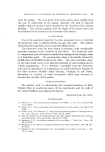
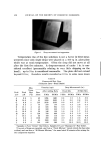
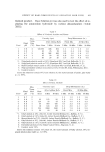
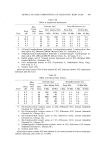
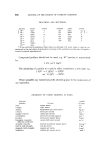
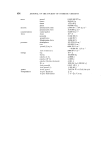
EFFECT OF BASE COMPONENTS ON OXIDATION HAIR DYES 431 finished product. Base Solution #4 was also used to test the effect of re- placing the ammonium hydroxide by various alkanolamines (Table Xm). Table V Effect of Nonionic Amides and Esters Test a Max. Viscosity (cps) Drop-Movements (in.) Temp. After Adding H202 Fresh Mix 30 Min Mix Final Rise pH (øC) Base Alone 5 Min 30 rain 5 Min 30 Min 5 Min 30 Min 1 9.8 2 720,000 558 874 1.1 1.1 1.0 1.0 2 9.9 1 30 25 22 3.4 3.4 2.5 2,8 3 9.7 3 60 362 425 O. 9 1.0 1.6 1.7 4 9.3 i 45 30 35 4.8 5.0 3.4 3.5 5 9.7 I 30 20 20 5.0 5.0 4.6 4.6 a 1. Polyglycol palmitic amide at 15% (Emulsynt 505, Van Dyk, Belleville, N.J.). 2. Polyglycol palmitic amide at 7.5% (Emulsynt 505, Van Dyk, Belleville, N.J.). 3. Hydroxyethyl stearyl amide at 15% (Cerasynt 303, Van Dyk, Belleville, N.J.). 4. Polyoxyethylene sorbitan monooleate at 15% (Tween 80, Atlas, Wilmington, Del.). 5. Control (water). Above dye solutions contain 70% base solution #1, the stated amount of amide, plus water q.s. to 100%. Table VI Effect of Fatty Alcohols Max. Viscosity (cps) Temp. After Adding H202 Final Rise Base Test a pH (øC) Alone 5 Min 30 Min Drop-Movements (in.) Fresh Mix 30 Min Mix 5Min 30Min 5Min 30Min 1 9.7 2 ......... 1.1 1.2 1.1 1.8 2 9.8 1 22 125 90 1.6 2.3 1.0 1.6 3 9.8 1 120 35 35 4.5 4.0 4.0 4.3 4 9.8 i 40 840 950 O. 7 5.5 O. 6 2.6 5 9.9 I 18 145 165 4.1 5.6 4.1 4.7 6 9.5 2 204 2280 2540 1.9 7.9 O. 6 2.9 7 9.7 i 30 20 20 5.0 5.0 4.6 4.6 a 1. Cetyl alcohol at 15% (Adol 52, Archer Daniels Midland Co., Buffalo, N.Y.). 2. Cetyl alcohol at 7.5% (Aldol 52, Archer Daniels Midland Co., Buffalo, N.Y.). 3. Stearyl alcohol at 7.5% (Adol 62, Archer Daniels Midland Co., Buffalo, N.Y.). 4. Oleyl alcohol at 15% (Adol 90, Archer Daniels Midland Co., Buffalo, N.Y.). 5. Oleyl alcohol at 7.5% (Adol 90, Archer Daniels Midland Co., Buffalo, N.Y.). 6. Ricinoleyl alcohol at 15% (Baker Castor Oil Co., Bayonne, N.J.). 7. Control, water 15%. Above dye solutions contain 75% Base #3, the stated amount of fatty alcohol, 10% iso- propyl alcohol, plus water q.s. to 100%.

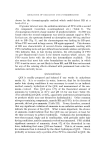
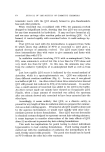
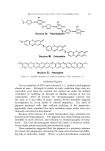
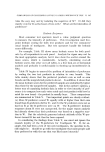
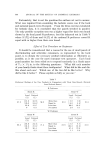
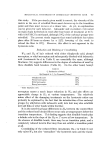
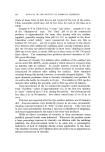
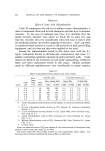
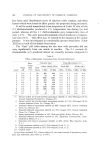
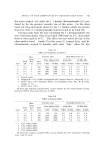
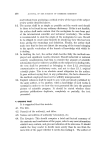
432 JOURNAL OF THE SOCIETY OF COSMETIC CHEMISTS RESULTS Effect of Fatty Acid A lkanolamides Table IV summarizes the effects of adding various alkanolamides, a class of compound often used in both shampoos and hair dyes to increase viscosity. In the case of oxidation hair dyes, it is desirable that the initial viscosity (labeled "base alone" in Table IV) be quite low, and that the viscosity then rise considerably when this base is mixed with the oxidizing solution (just before applying to the hair). Such a product is considered ideal because it is easy to fill precisely on high-speed filling equipment, and yet does not drip when applied to the head. Among the alkanolamides tested in this series were both the 2:1 types (commonly known as Kritchevsky condensates) and some 1:1 amides (containing equimolar amounts of amine and fatty acid). Trade names are listed in the footnotes of each table summarizing results for these and other surfactants tested in this paper. Similar products made by different manufacturers vary considerably in amine content, Table VII Effect of Ethoxylated Fatty Alcohols and Amine Oxides Max. Viscosity (cps) Drop-Movements (in.) Temp. After Adding H202 Fresh Mix 30 Min Mix Final Rise Base Test s pH (øC) Alone 5 Min 30 Min 5 Min 30 Min 5 Min 30 Min 1 9.8 1 64 330 393 2.5 2.7 1.9 2.0 2 9.6 2 48 25 25 6.2 6.3 5.2 5.4 3 9.6 2 54 284 320 2.5 2.9 2.7 4.0 4 9.9 i 55 80 112 2.4 2.6 3.7 4.7 5 9.8 1 60 120 284 1.6 5.0 1.9 5.0 6 9.7 i 30 20 20 5.0 5.0 4.6 4.6 • 1. 5 mole ethoxylated lanolin alcohols at 15% (Solulan 5, American Cholesterol, Edison, N.J.). 2. 25 mole ethoxylated lanolin alcohols at 15% (Solulan 25, American Cholesterol, Edison, N.J.). 3. 4 mole ethoxylated myristyl alcohol at 15% (Lipal 4MA, Drew Chemical Corp., New York, N.Y.). 4. Lauryl dimethylamine oxide at 30% (Ammonyx LO, Onyx Chemical Co., Jersey City, N. J.). 5. Myristyl dimethylamine oxide at 30% (Ammonyx MO, Onyx Chemical Co., Jersey City, N.J.). 6. Control, water. Above dye solutions contain 70% base solution #1, the stated amount of ethoxylated fatty alcohol or amine oxide, plus water q.s. to 100%. The amine oxides were used at 30% as they are sold commercially (30% solids). The dye bases above therefore contained 9% amine oxide on a solids basis.
Purchased for the exclusive use of nofirst nolast (unknown)
From: SCC Media Library & Resource Center (library.scconline.org)