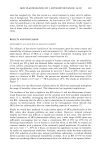
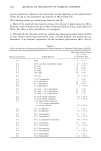
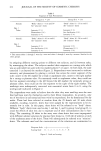
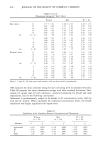
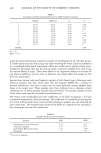
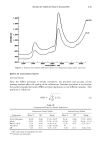
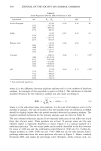
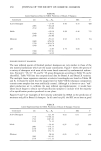
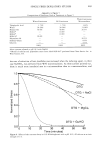
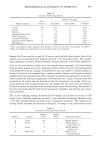
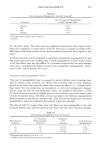
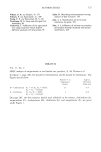
HUMAN BODY ODOR 413 Table II. The solvent in all cases was 96% ethanol. The solutions were placed on the shirts 30 minutes before the beginning of the sniffing sessions. The "solution" shirts used on day 2 were clean shirts freshly treated with odorant solutions, as on day 1. The concentrations of the odorant solutions had been chosen so that they represented a range of intensity levels comparable to the range shown by the shirts actually worn. The appropriate concentrations were determined in a pre-test in which 16 male and 16 female respondents participated these belonged to the same student body as the partici- pants of the main test, but they were different individuals. In the pre-test, the subjects were screened for anosmia to the odorants tested. They were provided with yellow cotton T-shirts and asked to wear them on five consecutive nights, using the same precautions as described for the main test. Reference arrays of the four odorants were prepared. Each array consisted of eight cotton swabs on which three drops of alcoholic odorant solution had been placed, using eight different odorant concentrations. Each subject was instructed to compare 16 shirts (eight female, eight male) with each of the four reference arrays, and to indicate, for each shirt and each odorant, with which swab it corresponded most closely in odor intensity. The concentration represented by the swab indicated was noted by the experimenter. For each odorant, the reference concen- tration ratings were grouped across all respondents and all shirts. The 12.5% highest and the 12.5% lowest concentrations were eliminated. The remaining concentration range was divided logarithmically into four equal steps, giving the five concentration levels which were then used in the main part of the test. Table II Concentration of the Odorant Solutions Solution Concentration Dilution Odorant No. (g/l) Factor* "Androstenol" (I) 1 10.000 1:1 2 1.429 1:7 3 0.204 1:49 4 0.029 1:343 5 0.004 1:2401 III 1 5.000 1:2 2 1.250 1:8 3 0.313 1:32 4 0.078 1:128 5 0.020 1:512 II 1 1.250 1:8 2 0.313 1:32 3 0.078 1:128 4 0.020 1:512 5 0.005 1:2048 Cyclopentadecanolide 1 10.000 1:1 "CPD" (IV) 2 1.429 1:7 3 0.204 1:49 4 0.029 1:343 5 0.004 1:2401 * Starting from a 1.00% solution.

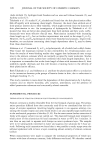
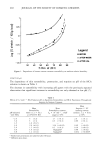
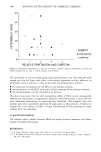
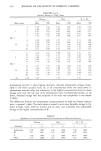
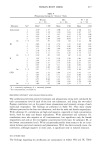
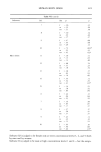
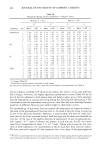
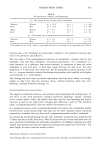
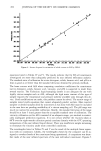
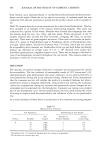
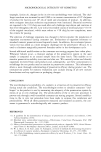
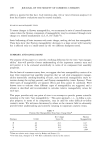
4 14 JOURNAL OF THE SOCIETY OF COSMETIC CHEMISTS RESULTS CONCENTRATION AND PERCEIVED INTENSITY In the course of the experiment, each respondent rated the intensity of each "solution" shirt four times and of each "body" shirt twice. Since an analysis of variance showed no systematic difference betweent the four (or two, resp.) ratings, they were combined in the calculations for Table III. The correlation between concentration and intensity was examined using the non-parametric test for group trend of Jonckheere and Bower (7). This test combines the rank correlation coefficient T between concentration and indi- vidual ratings to an overall standard normal deviate. The z-scores (one-tail test) were highly significant for all test substances, both for female and male respondents (Table IV). As Table III indicates, the T-shirts worn by females were, on the average, rated lower for odor intensity than were those worn by males. Table Ilia Intensity Ratings of "Solution" Shirts Intensity I Women Men W + M Substance (n = 29) (n = 30) (n = 59) Sol. 2 Mean 3 + SD Mean + SD Mean + SD Androstenol 1 4.00 1.57 3.66 1.52 3.83 1.53 2 3.32 1.40 3.37 1.59 3.35 1.48 3 2.78 1.29 2.89 1.25 2.84 1.26 4 2.21 0.82 2.52 0.84 2.37 .83 5 2.44 1.06 2.71 1.02 2.58 1.04 Av. 1-5 2.98 .93 3.05 1.06 3.02 .99 III 1 3.27 1.44 3.41 1.45 3.34 1.43 2 2.82 1.11 3.00 1.16 2.91 1.13 3 2.83 1.11 2.98 1.22 2.91 1.16 4 2.41 1.05 2.38 0.88 2.40 .96 5 2.41 0.89 2.71 1.20 2.56 1.06 Av. 1-5 2.77 .85 2.92 .98 2.84 .91 II 1 4.92 1.83 5.03 1.91 4.98 1.85 2 4.31 1.54 4.17 1.58 4.24 1.62 3 3.70 1.60 3.43 1.65 3.57 1.61 4 3.28 1.29 3.18 1.24 3.23 1.25 5 2.93 1.37 3.18 1.18 3.06 1.26 Av. 1-5 3.85 1.30 3.84 1.36 3.84 1.31 CPD 1 3.13 1.15 3.31 1.24 3.22 1.18 2 2.66 0.93 3.02 1.17 2.84 1.07 3 2.28 0.93 2.64 0.98 2.46 1.00 4 2.64 0.87 2.92 1.17 2.79 1.02 5 2.28 1.06 2.57 1.05 2.43 1.05 Av. 1-5 2.62 .76 2.92 .95 2.77 .87 0 = extremely weak 8 = extremely strong. For concentrations, see Table II. Four replicadons from each respondent enter into the calculation of these means.
Purchased for the exclusive use of nofirst nolast (unknown)
From: SCC Media Library & Resource Center (library.scconline.org)