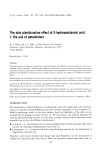
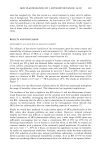
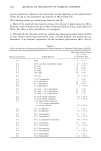
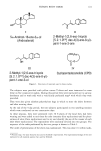
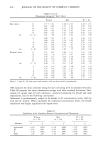
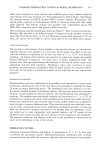
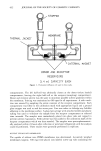
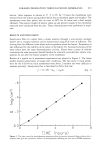
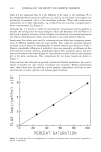
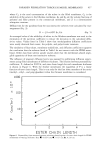
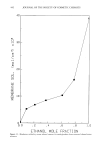
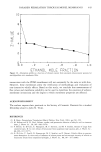
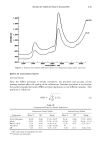
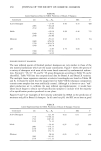
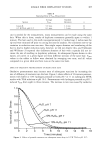
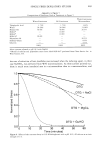
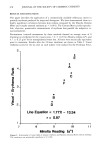
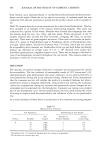
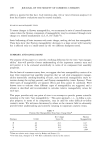
HUMAN BODY ODOR 411 5o•-An d rost- 16-e n e-3o•-o I (Androstenol) II 2- M ethyl- 1 (2,6-exo-tri cyclo [5.2.1.0 2,•] dec-4(3)-ene-8-yl)- pent-l-ene-3-one Oh • -0"'/ ' 0 III IV 2-Methyl-1 (2,6-exo-tricyclo Cyclopentadecanolide (CPD) [5.2.1.0 2,6] dec-4(3)-ene-8-yl)- pent-1 -ene-3-ol Figure 1. Structures of materials used in these studies. The subjects were provided with yellow cotton T-shirts and were instructed to wear these on five consecutive nights. During this period they were instructed not to use any deodorant and to wash only with a very faintly perfumed soap* with which they were provided. They were also given odorless polyethylene bags in which to store the shirts between and after wearing them. At the end of the 5-day period, the test subjects participated in two smelling sessions which were conducted on two consecutive days. In these sessions, they were presented with 30 T-shirts of the kind they had been wearing and were asked to rate these for odor intensity (four replications) and for pleas- antness of odor (three replications) and to try and identify the sex of the wearer of each shirt (three replications). The respondents were randomly divided into two groups. The sequence of the tasks performed by the two groups is shown in Table I. The order of presentation of the shirts was randomized. This was done (1) within tasks, * Penaten soap, the same brand as was used in Schleidt's experiments. The experimental design of this test replicated in all essential aspects that used by Schleidt.

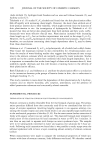
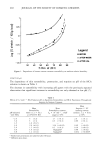
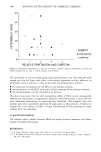
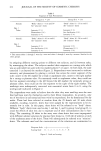
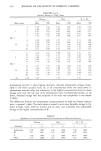
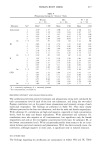
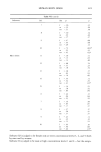
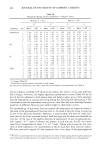
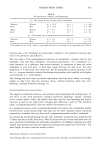
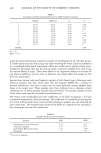
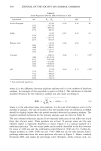
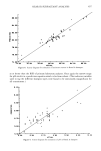
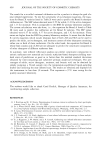
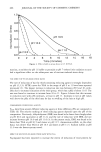
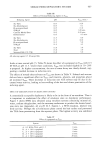
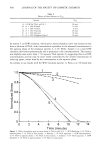
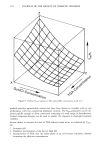
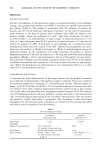
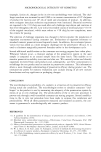
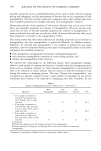
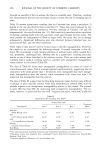
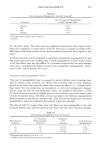
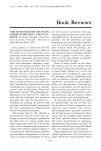
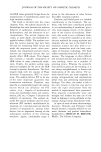
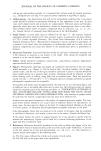
412 JOURNAL OF THE SOCIETY OF COSMETIC CHEMISTS Table I Sequence of Task Presentation Group I (n = 29) Group II (n = 30) Stimuli: Day 1 Tasks: "Body" shirts 1-5 (m and f)* All "solution" shirts Intensity (1 X ) Pleasantness (3 X Intensity (1 X ) "Body" shirts 11-15 (m and f) All "solution" shirts Intensity (1 X ) Sex Attribution (3 X ) Intensity (1 X ) Stimuli: Day 2 Tasks: "Body" shirts 6-10 (m and f) All "solution" shirts Intensity (1 X ) Sex Attribution (3 X ) Intensity (1 X ) "Body" shirts 16-20 (m and f) All "solution" shirts Intensity (1 X ) Pleasantness (3 X) Intensity (1 X ) * This means shirts 1 through 5 worn by a man and shirts 1 through 5 worn by a woman. Similar for the other groups. by assigning different starting points to different test subjects, and (2) between tasks, by rearranging the shirts. The subjects marked their responses on a rating scale which was an undivided line scale with two markers placed 7 cm apart. At both ends, the scale extended 1 cm beyond the markers (Figure 2). Respondents were instructed to indicate intensity and pleasantness by placing a vertical line across the center segment of the scale: nearer to the left marker for a weak or unpleasant odor, nearer to the right marker for a strong or pleasant odor. For extremely weak or unpleasant odors, they could use the line segment extending to the left beyond the left marker for extremely strong or pleasant odors, they could use the line segment to the right of the right marker. The markings were subsequently converted into numerical scores from 0 to 8, using the scoring scale indicated in Figure 2. The respondents were made to believe that the shirt they were smelling were the ones that had been worn by themselves and by their fellow respondents. In actuality, only ten of the shirts in each array had been worn by respondents, five by females and five by males. These had been selected at random from the 29 female and 30 male shirts available, avoiding, however, shirts that were judged by the experimenters to be ex- tremely low in odor. In this paper, these shirts will be referred to as "body" shirts. Different "body" shirts were used on day 1 and day 2, and by group I and group II, to avoid the effects of odor loss due to exposure and of odor contamination due to han- dling. The remaining 20 shirts in the array were clean shirts that were impregnated with different odorant solutions by placing three drops (ca. 0.06 ml) of solution at each of the underarm areas of the shirts. These will subsequently be referred to as "solution" shirts. The odorants used and the concentrations of the solutions are summarized in Response Scale [ [ Scoring Scale 0. 1 . 2 . 3 ß 4. 5 . 6. 7 . 8 Figure 2. Scale and scoring
Purchased for the exclusive use of nofirst nolast (unknown)
From: SCC Media Library & Resource Center (library.scconline.org)