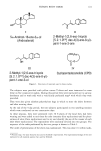
398 JOURNAL OF THE SOCIETY OF COSMETIC CHEMISTS clude alcohols (5), hydrogen-bond breakers such as urea and lithium bromide (5), and hydroxy acids (6,7). Takahashi eta/. (5) studied C•-C 5 alcohols and found that the skin plasticisation effect falls off rapidly with increasing chain length. However, the short chain alcohols are of little product interest due to their volatility, which might severely limit the duration of skin plasticisation i, vivo. An investigation of hydroxyacids by Takahashi eta/. (6) showed that they are better skin plasticisers than both alcohols and fatty acids. (x-Hy- droxyacids were more effective than [3 ones. Plasticisation increased with increasing chain length up to C4, but no further improvement was noted in the range C 6 to C 8. However, the C 6 and C 8 hydroxyacids tested were branched and aromatic, respectively therefore, no conclusions concerning chain length dependence above C4 may be drawn from these observations. Alderson eta/. (7) examined C 3 to C•o (x-hydroxyacids, all of which had n-alkyl chains. They found the maximum increase in skin extensibility for 2-hydroxyoctanoic acid. From the results of water-binding studies they suggest that hydroxyacids may occupy sites in the stratum corneum which are normally occupied by water molecules. Studies carried out by the current authors have confirmed this chain length dependence, but it is important to remember that as the chain length of these acids increases above 8, their solubility rapidly decreases and this will become a limiting factor in the delivery of their plasticisation efficacy. Both Takahashi eta/. and Alderson eta/. attribute the plasticisation effect to a reduction in the interaction between polar groups of keratin chains in skin, due to reductions in hydrogen bonding (5-7). This study considers in more detail the dependence of skin plasticisation by 2-hydroxy- octanoic acid on relative humidity, pH, sorption, penetration, and the presence of added penetration enhancers and structurally related materials. EXPERIMENTAL PROCEDURE PREPARATION OF STRATUM CORNEUM FOR EXTENSIBILITY MEASUREMENTS Stratum corneum is readily obtainable from the rear footpads of guinea pigs. The prepa- ration procedure differed from that commonly used (8) as we considered that the tech- nique of enzyme separation (involving lengthy exposure to an aqueous solution con- taining the enzyme trypsin and urea) would result in an unacceptably large modification to the mechanical properties of the skin (9, 10). For the same reason further extraction of lipids with organic solvent was not carried out. The dissected footpads were wrapped in small pieces of thin aluminium foil and immersed in water at 60øC for 3 minutes. It was then an easy task to separate with forceps an intact epidermis layer. The samples were to be subsequently immersed in water and aqueous test solutions for 3-hour pe- riods. Following such immersion we found that it was possible to easily scrape away the softened epidermal cells to leave a layer consisting almost entirely of stratum corneum (callus). When measurements were made to compare the mechanical properties of whole epi- dermis with those of stratum corneum, little difference was found. We therefore carried

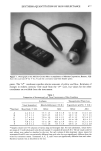
SKIN PLASTICISATION BY 2-HYDROX¾OCTANOIC ACID 399 out all our measurements on whole epidermis with the exception of one experiment where we studied the dependence of human stratum corneum extensibility on environ- mental relative humidity (see below for preparation technique). PREPARATION OF HUMAN STRATUM CORNEUM FOR PENETRATION AND SORPT1ON MEASUREMENT In contrast to the separation procedure described above t•br guinea pig footpads used in mechanical studies, it was necessary to completely isolate stratum corneum layers for penetration and sorption measurements. Substantial sorption of HCA would be expected to any dermis and epidermis present because of their high mass relative to stratum corneum. Thus accurate measurement of sorption to and penetration through stratum corneum would be impossible. Strips of skin obtained with a Davies Simplex electrodermatome from amputated limbs were subjected to the above-described heat separation technique. The resultant epidermal layers were exposed to an established enzyme separation process (11), the remaining layers of stratum corneum being spread onto filter paper and stored in a dessicator. Immediately prior to use, the stratum corneum was rehydrated in water, carefully lifted from the filter paper, and cut to the size required for penetration or sorption. RADIOLABELLED HYDROXYCAPRYLIC ACID 2-Hydroxyoctanoic acid, known as hydroxycaprylic acid (HCA) was synthesised with a •4C atom in the 1-position. Briefly, the synthesis begins with a Grignard reaction involving heptyl bromide and barium carbonate as the radioactive precursor. Dry bro- mine treatment yields the bromo compound which is converted to the hydroxy form by treatment with barium hydroxide. The hydroxy fatty acid is recovered using hydro- chloric acid. After recrystallisation from hexane, its purity measured by thin layer chro- matography was 98%. Solutions of non-labelled HCA were tagged by the addition of small quantities of •4C HCA. EXTENSIBILITY MEASUREMENTS An instrument was designed and made to measure the extensibility of strips of guinea pig footpad epidermis cut to a size of approximately 2 mm in width and 15 to 20 mm in length. These strips were clamped vertically, the upper end to a load cell, the lower end to a motor-driven attachment. The linear rate of stretching was normally 0.01 mm s-1. A chart recorder monitored the output from the load cell against time with a minor correction necessary for creep in the load cell. The whole apparatus together with equilibrating skin samples was enclosed in a sealed chamber in which the temperature and relative humidity were controlled and normally held constant at 20øC and 65%. Six strips of guinea pig footpad epidermis were each immersed in water for 3 hours 20øC, blotted dry, and allowed to equilibrate overnight in the chamber. The following day the extensibility of each piece was measured and expressed as % extension (of the original length at the controlled relative humidity) per 100 g load from the most linear section of the load-deformation graph. The strips were then immersed in an aqueous solution of the test material for 3 hours (o: 20øC, blotted, and re-equilibrated overnight in the chamber. After extensibility measurement the following day, the efficacy of the
Purchased for the exclusive use of nofirst nolast (unknown)
From: SCC Media Library & Resource Center (library.scconline.org)