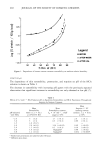
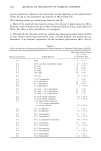
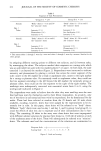
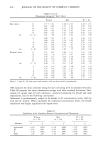
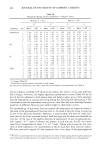
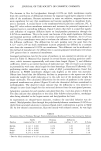
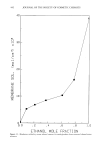
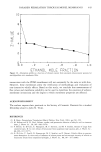
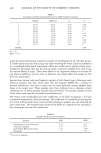
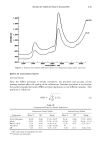
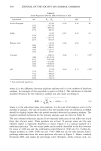
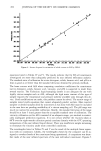
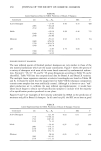
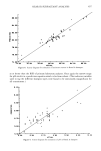
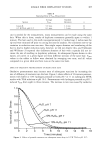
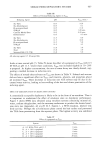
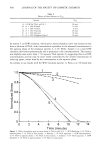
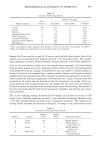
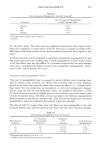
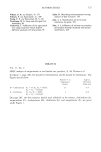
468 JOURNAL OF THE SOCIETY OF COSMETIC CHEMISTS Table V Effects of Other Solvents on T95 % System T95 % A. 0.5 M Na TGA, pH 10.5 B. A + 20% Ethanol C. A + 20% Acetone D. A + 20% Triacetin E. A + 20% Glycerin F. A + 20% Propylene Glycol 10 min. 11 min. 9 min. 20 min. 18 min. 14 min. by system 5, an O/W emulsion, which gave a stress relaxation curve very similar to that from a solution of TGA, with concentration equivalent to the assumed concentration in the aqueous phase of the emulsion (system 4, 4.3% TGA). System 3 is a clear O/W emulsion that forms spontaneously and is presumed to be a microemulsion. This system was slightly more active than 1.7% aqueous TGA (system 2), suggesting that in a O/W microemulsion activity may be more nearly controlled by the overall concentration of reducing agent, rather than by the concentration in the aqueous phase. In contrast to our results with the W/O emulsion (system 1), Parra eta/. (9) found that 0.8 0.6 E0.4 0.2 0 2 4 6 8 14 Time (minute) Figure 5. Effect of emulsion type on stress decay in TGA at pH 10.5. 1. W/O Emulsion: 4.3% TGA in aqueous phase 1.7% TGA in total system. 2. Solution: 1.7% TGA (aqueous). 3. O/W Microemulsion: 4.3% TGA in aqueous phase 1.4% TGA in total system. 4. Solution: 4.3% TGA (aqueous). 5. O/W Emulsion: 4.3% TGA in aqueous phase 1.7% TGA in total system.

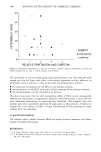
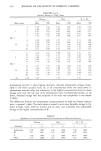
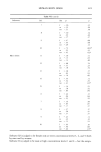
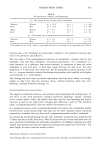
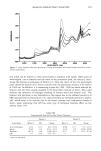
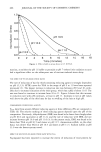
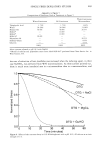
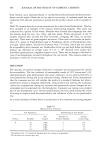
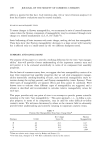
SINGLE FIBER DEPILATORY STUDIES 469 Appendix to Figure 5 Compositions of Emulsions Used as Treatments in Figure 5 Water-Continuous Oil Continuous Water-Continuous Microemulsion Thioglycolic Acid Water Mineral Oil HLB-2* HLB-6* HLB- 14' Polysorbate 60 Sorbitan Oleate Glycerin 1.72% 38.28% 40.0% 20.0% 1.72% 38.28% 40.0% 10.0% 10.0% __ 1.42% 31.68% 26.5% __ 26.5% 8.6% 5.3% 100% 100% 100% Above systems adjusted to pH 10.5 with NaOH. * Blends of sorbitan and polysorbate esters from Atlab HLB kit © purchased from Chem Service inc. in West Chester, PA. the rate of reduction of hair disulfides was increased when the reducing agent, in their case NaHSO 3, was delivered from W/O microemulsions. As these authors pointed out, there is much more interfacial area in a microemulsion than in a macroemulsion, and 1.0 0.8 0.4 0.2 \ ''-x.•x., x DTG • xx•'•.•DTG + NaCI _ % DTG + MgCI2 '"-. DTG + GuHCI 0.0 I I ....... t ................. • ................. I ................ -] 0 10 20 30 40 50 60 Time (minutes) Figure 6. Effects of salts on stress decay in 0.05 M dithioglutaric acid at pH 10.0. All salts are at an ionic strength of 1.0.
Purchased for the exclusive use of nofirst nolast (unknown)
From: SCC Media Library & Resource Center (library.scconline.org)