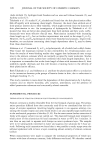
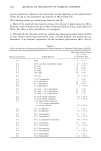
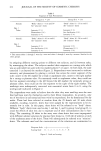
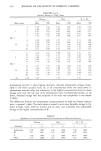
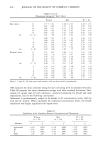
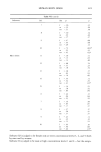
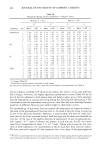
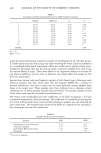
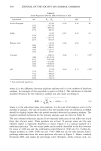
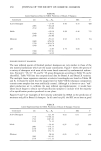
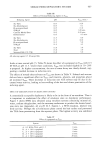
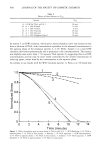
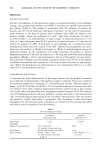
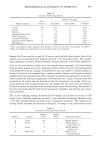
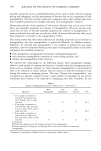
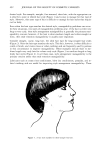
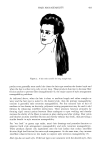
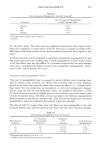
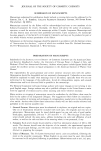
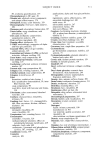
404 JOURNAL OF THE SOCIETY OF COSMETIC CHEMISTS known penetration enhancers and structurally similar materials on skin plasticisation (Table II) and on the penetration and sorption of HCA (Table !II). The following points are evident from Tables II and III: a. Many of the materials tested greatly increase the delivery of plasticisation by HCA. However, none of them has any great effect on the extensibility of skin in the absence of HCA. The effect is thus potentiation, not synergism. b. Although all the materials tested that enhance the plasticisation effectiveness of HCA do also increase steady-state penetration rates, it seems unlikely that penetration en- hancement is an adequate explanation for the increased plasticisation effect. For ex- Table II Effects of Penetration Enhancers and Structurally Related Materials on Epidermis Plasticisation by HCA HCA Concentration Added Material Mean Extensibility Ratio (-+2 X S.E.) at 20øC/65% RH 0.2 0.2 0.2 0.2 0.2 0.2 0.0 0.2 0.2 0.2 0.0 0.2 0.2 0.2 0.2 0.0 0.2 0.2 0.0 0.2 0.0 0.2 0.2 0.0 0.2 0.0 0.2 0.0 None 0.5 % n-methyl-2-pyrrolidone (nmp) 1% nmp 2% nmp 5% nmp 10% nmp 5 % nmp 1.2% 2-pyrrolidone 2% 2-pyrrolidone 5% 2-pyrrolidone 5% 2-pyrrolidone 1% nmp + 1% 2-pyrrolidone 2% nmp + 2% 2-pyrrolidone 5% nmp + 5% 2-pyrrolidone 5% decyl methyl sulphoxide 5% decyl methyl sulphoxide 3.3% decyl methyl sulphoxide q- 3.3% sucrose monostearate in 33% aq. ethanol 5 % 1,2-ethanediol 5 % 1,2-ethanediol 5 % 1,2-propanediol 5 % 1,2-propanedio] 5 % 1,2,3-propanetriol (glycerol) 5 % 1,3-butanediol 5 % 1,3-butanediol 5% 2,4-pentanediol 5% 2,4-pentanediol 5 % 2,5-hexanediol 5 % 2,5-hexanediol 5 6.7 9 22 24 25 1.0 7 14 28 1.1 17 23 47 5.9 1.0 2.2 5 1.0 13 1.0 5.0 13 1.3 17 1.2 37 2.0 (-+2) (-+0.5) (+_2) (-+5) -+7) -+8) -+0.2) -+2) -+2) ( -+ 12) -+0.2) -+2) -+4) -+7) -+0.7) -+0.2) -+0.3) -+2) -+ o. 1) -+2) -+ o. 1) -+0.7) -+4) -+ 0.4) -+2) -+0.2) -+4) -+0.2)

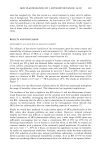
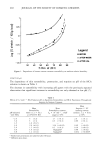
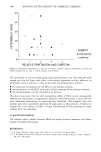
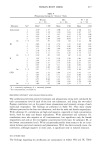
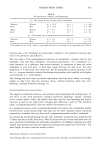
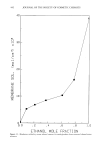
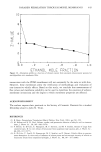
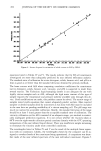
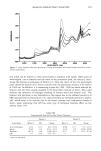
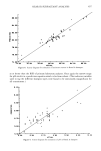
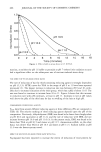
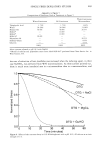
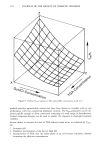
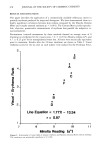
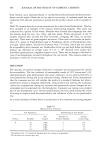
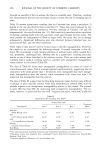
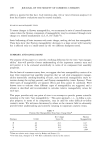
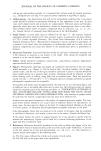
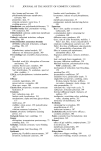
SKIN PLASTICISATION BY 2-HYDROXYOCTANOIC ACID 405 Table III Effect of Penetration Enhancers and Structurally Related Materials on HCA Penetration and Sorption by Stratum Corneum From 0.2 tool 1-1 HCA solution Added Material Relative* Permeability Constant ( _+ half range) at 30øC Relative* Sorption (-+2 X S.E.)at 30øC None 1 1 2% nmp 1.4 (-+0.9) 2 6%nmp 1.6 (ñ0.5) 5 10% nmp 2.0 (+0.6) 0.6 10% 2-pyrrolidone 3 (-+ 1) 0.77 5% nmp + 5% 2-pyrrolidone 2 (+2) 1.2 0. 125% decyl methyl sulphoxide 0.4 (_+0.2) 0.28 + 0. 125% sucrose monostearate in 33% aq. ethanol 5% 1,2-ethanediol 3.1 (-+0.3) 2.3 5% 1,2-propanediol 3 ( + 2) 1.7 5% 1,2,3-propanetriol 1.4 (-+0.4) 1.7 (glycerol) 5% 1,3-butanediol 1.2 (---0.5) 2.1 5% 2,4-pentanediol 2 (-+2) 4 -+ 1) -+2) -+0.3) +0.05) -+0.2) -+0.3) _+ 1.0) -+0.5) -+0.7) -+ 0.4) -+2) * Relative to HCA alone. ample, adding 2% nmp increases plasticisation by a factor of 4 while penetration is increased by only -40%. The influence of ethanediol is to increase penetration (-- X 3) whilst not influencing extensibility at all. The lack of any simple relationship be- tween penetration enhancement and extensibility is shown clearly in Figure 3. In any case, the effect on extensibility (a steady-state measurement) would be expected to depend more on steady-state sorption (i.e., the amount of HCA associated with the skin) rather than on the rate at which HCA passes through the skin. c. If we look at the relative steady-state sorption figures, however, we can see that the ability of a material to act as a plasticisation potentiator is not related to its effect on sorption (as shown also in Figure 3). For example, 10% nmp increases the plasticisation effect of HCA by a factor of 5 but actually decreases sorption by about 20%. It is worthy of note that this is not in conflict with the use of Fick's first law of diffusion to explain the relation between penetration and sorption in the pH dependence section above. The adjustment of pH merely changes the quantity of the unionised species interacting with given penetration routes in the skin. Thus the diffusion coefficient D remains unchanged and kp is proportional to K (the partition coefficient, see above). The presence of a penetration enhancer will alter the behaviour of the solute during penetration and therefore change D. Then kp is no longer proportional to K (12). For the foregoing reasons, we have chosen to call materials that enhance plasticisation by HCA plasticisation potentiators. d. The degree to which plasticisation potentiators enhance plasticisation generally in- creases with increasing concentration. e. The ability of the diols to enhance plasticisation increases with increasing chain length.
Purchased for the exclusive use of nofirst nolast (unknown)
From: SCC Media Library & Resource Center (library.scconline.org)