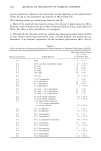
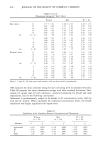
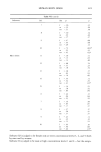
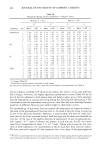
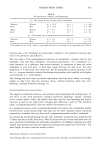
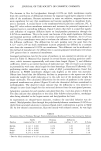
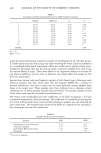
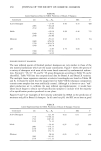
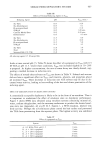
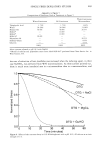
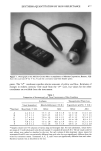
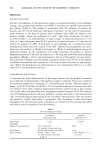
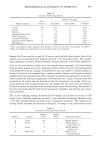
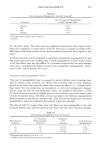
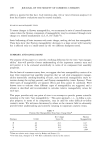
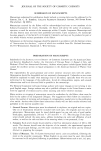
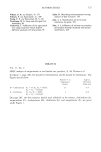
486 JOURNAL OF THE SOCIETY OF COSMETIC CHEMISTS from benzoic acid, phenoxyethanol to methychloroisothiazolinone/methylisothiazo- linone was the result of both the in vitro and in vivo testing. A consumer panel test was conducted with the new preservative system and the product shown to be acceptable in use. Table •I contains data on an in-use mascara test for a water-based formulation. This has been included as an example of the mascara panel-testing program. This study was conducted for a period of four weeks. Panelists were divided into subgroups that used the mascara daily for one, two, three, and four weeks. Thirty-six percent of the 79 samples returned after use had low level recoveries, averaging 106 cfu/g, on nutrient agar only. There were no gram-negative recoveries. There were no recoveries on enrich- ment of S. aureus on Vogel-Johnson agar or Pseudomonas species on Pseudomonas isola- tion agar. Upon replate, all positive recoveries were 10 cfu/g, which met our criteria for acceptability after consumer use. Swabs taken of the eye area both before and during product use indicated an average count of 1.27 x 10⁴ cfu/swab (cm 3) surface skin microflora (gram-positive coagulase negative cocci). There was no change in the level or type of microorganisms recovered throughout the test period. This mascara passed our acceptance criteria for in-use testing. DISCUSSION The majority of cosmetic samples subjected to consumer-use testing passed the criteria for acceptability. The low incidence of unacceptable results (0.22% lotions and 1.6% shampoos/shower gels) demonstrates that good correlation can be achieved between in vitro preservation testing and in-use consumer testing. Shower Gel D also demonstrates that the consumer use test will validate the results of a standard challenge test when a preservative system is marginal. Essentially, those products not meeting the acceptance criteria for consumer-use testing are reviewed and preservative system changes are rec- ommended and incorporated into the formulation. Consumer-use testing is an integral part of the development cycle. Several modifications have been made during the course of testing to improve both the predictability and validation of the in vitro preservation test. As a result of product failures which occurred early in the consumer-use testing program Table VI Mascara In-Use Evaluation Test Parameters Microbiological Test Results Test Number of Average Product Panelists Length Positive Samples 2 Count (cfu/g) 2O 1 Wk 9 176 18 2 Wk 7 154 17 3 Wk 7 27 24 4 Wk 6 70 All replates were 10 cfu/g and therefore met the criteria of acceptability. All recoveries on nutrient agar only.

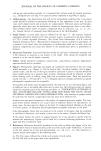
MICROBIOLOGICAL INTEGRITY OF COSMETICS 487 (example, Lotion A), changes in the in vitro test methodology were initiated. The chal- lenge inoculum was increased in mid-1980 to its current concentration of 106 cfu/gram of product for bacteria and 105 cfu of mold and yeast/gram of product. In addition, more stringent inoculum reduction requirements were instituted. Bacterial recoveries are required to be 10 cfu/g one week after each challenge inoculation and continue at that level throughout the test. Low initial recoverable counts of mold and yeast (0.1% of the original inoculum), which must reduce to 10 cfu/g by test completion, meet the criteria for passing. The selection of challenge organisms was changed to better simulate the population of organisms encountered during consumer use. Evaluations of organism resistance to standard cosmetic preservatives are frequently made. In addition, the accelerated preser- vation test was added as a more stringent challenge test for preservative efficacy. It is used to eliminate marginally preserved formulas earlier in the development cycle. Several additional modifications to the consumer-use testing program have taken place. Whenever failures occur, a chemical analysis of the preservative system in the used sample is compared to an unused sample from the same batch. This enables us to monitor preservative stability over time and after use. We currently isolate and identify organisms recovered from used products and, subsequently, use these contaminants to rechallenge the test product and to monitor its preservative resistance. This information allows a more thorough understanding of preservative efficacy during product use. The consumer-use panels for mascara evaluations now include testing of all new mascara formulations and any applicator or packaging changes. CONCLUSION The microbiological acceptability of a cosmetic is a function of its preservative efficacy during actual use conditions. The microbiologist strives to simulate consumer "chal- lenges" to the product in use by measuring the adequacy of the preservation system by means of an in vitro challenge test. The predictability of the in vitro test procedure is proven only through a well-controlled consumer-use testing program. Several modifica- tions to the in vitro test procedure have been made to increase this correlation and predictability. With all these parameters measured and validated accurately, the con- sumer is guaranteed a microbiologically safe cosmetic product. REFERENCES (1) A guideline for the determination of adequacy of preservation of cosmetics and toiletries, CTFA Technical Guidelines (1970). (2) Microbial tests, antimicrobial preservatives--Effectiveness, United States Pharmacopeia XXI, USP Pharmacopial Convention, Inc., 1151 (1984). (3) Efficacy of antimicrobial preservatives in pharmaceutical products, Appendix XVIC, British Pharma- copeia Volume II, Her Majesty's Stationery Office, London, A192-A194 (1980). (4) W. L. Bryon, E. R. Fizer, and J. K. Fartington, A review of methods for determining the preserva- tive efficacy of cosmetic products, Developments in Industrial Microbiology, 21, 273-276 (1980). (5) D. S. Orth, Establishing cosmetic preservative efficacy by use of D-values, J. Soc. Cosmet. Chem., 31, 165-172 (1980).
Purchased for the exclusive use of nofirst nolast (unknown)
From: SCC Media Library & Resource Center (library.scconline.org)