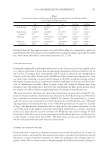
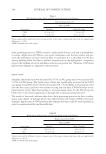
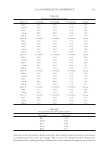
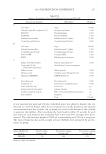
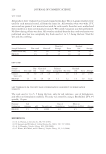
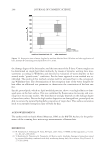
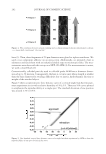
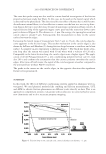
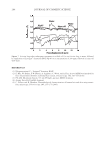
JOURNAL OF COSMETIC SCIENCE 202 behavior of hair when subjected to physical and chemical stresses. For example, bleaching of both hair types resulted in an increase in the fl uorescence signal of Trp, which could be attributed to its greater absorption and subsequent emission in the absence of other chromophores. Hair straightening was found to damage Trp and, ultimately, the kynure- nines. Thermal exposure of hair results in a dark yellow discoloration, evident in Pied- mont hair, which correlates with an increase in the fl uorescence intensity of the kynurenine bands. On the other hand, upon extended photo-irradiation, Piedmont hair was found to lose its natural yellow pigmentation—concurrent with a decrease in the intensity of kynurenine fl uorescence. REFERENCES (1) T. Inoue, M. Ito, and K. Kizawa, Labile proteins accumulated in damaged hair upon permanent waving and bleaching treatments, J. Cosmet. Sci., 53, 337–344 (2002). (2) M. Wong, G. Wis-Surel, and J. Epps, Mechanism of hair straightening, J. Soc. Cosmet. Chem., 45, 347–352 (1994). (3) H. Zahn, S. Hilterhaus, and A. Strüβmann, Bleaching and permanent waving aspects of hair research, J. Soc. Cosmet. Chem., 37, 159–175 (1986). (4) Y. Masukawa, H. Tsujimura, H. Tanamachi, H. Narita, and G. Imokawa, Damage to human hair caused by repeated bleaching combined with daily weathering during daily life activities, Exog. Dermatol., 3, 273–281 (2004). (5) V. Signori, Review of the current understanding of the effect of ultraviolet and visible radiation on hair structure and options for photoprotection, J. Cosmet. Sci., 55, 95–113 (2004). (6) A. C. S. Nogueira, L. E. Dicelio, and I. Joekes, About photo-damage of human hair, Photochem. Photobiol. Sci., 5, 165–169 (2006). (7) R. McMullen and J. Jachowicz, Thermal degradation of hair. I. Effect of curling irons, J. Cosmet. Sci., 49, 223–244 (1998). (8) M. Gamez-Garcia, The cracking of human hair cuticles by cyclical thermal stresses, J. Cosmet. Sci., 49, 141–153 (1998). (9) S. B. Ruetsch and Y. K. Kamath, Effects of thermal treatments with a curling iron on hair fi ber, J. Cosmet. Sci., 55, 13–27 (2004). (10) C. M. Pande and J. Jachowicz, Hair photodamage—Measurement and prevention, J. Soc. Cosmet. Chem., 44, 109–122 (1993). (11) S. Daly, R. Bianchini, T. Polefka, L. Jumbelic, and J. Jachowicz, Fluorescence and coloration of grey hair, Int. J. Cosmet. Sci., 31, 347–359 (2009). (12) J. Jachowicz and R. McMullen, Factors affecting tryptophan fl uorescence in hair, J. Cosmet. Sci., (submit- ted) (2011). (13) J. J. Prompers, C. W. Hilbers, and H. A. M. Pepermans, Tryptophan mediated photoreduction of disulphide bond causes unusual fl uorescence behavior of Fusarium Solani pisi cutinase, FEBS Lett., 45, 409–416 (1999). (14) K. R. Millington, Photoyellowing of wool. Part 1: Factors affecting photoyellowing and experimental techniques, Color. Technol., 122, 169–186 (2006). Table VI Peak Intensity Value Differences Between Unexposed and Exposed (unexposed - exposed) Region of the Tress ITrp IKyn I509 Dark brown 5,350 ± 1,061 30,500 ± 1,697 10,700 ± 566 Piedmont 8,650 ± 6,010 385,000 ± 134,350 640,500 ± 61,518 Dark Brown-bleached 8,600 ± 849 73,500 ± 4,950 30,850 ± 1,626 Piedmont-bleached 30,800 ± 2,970 905,000 ± 106,066 480,500 ± 43,134

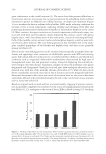
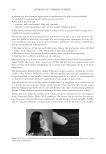
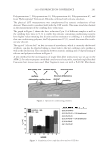
J. Cosmet. Sci., 62, 203–207 (March/April 2011) 203 Hair breakage index: An alternative tool for damage assessment of human hair SUDHAKAR MHASKAR, BHARGAVI KALGHATGI, MADHAVI CHAVAN, SURYAMANI ROUT, and VAISHALI GODE, Marico R & D Centre, Bombay College of Pharmacy, CST Road, Kalina, Santacruz (E), Mumbai, India 400098. Synopsis Improper hair care, mechanical abrasion, sun damage and chemical treatment changes the physical and mor- phological characteristics of hair. Several methods involving microscopic techniques, protein loss and assess- ment of tensile properties of the hair are generally used to evaluate the extent of damage caused. These are also used to determine the protective effect of hair care products. In the present investigation, the hair break- age index (HBI) was used as an alternative tool to determine the change in the properties of hair on weather- ing. HBI is a measure of the diameter of hair in a given cross sectional area of a marked region of hair on the scalp. The hair diameter changes as we progress towards the tip of the hair due to breakage. The ratio of the diameter of hair bundle in the distal region to the diameter of hair bundle in the proximal region from the scalp is used as an indicator of hair breakage. Higher HBI value is an indicator of hair damage. A study was conducted for duration of 16 weeks to assess the effect of weathering due to grooming practices on HBI values. The HBI and break stress for a group of 30 subjects were measured at baseline and at the end of 16 weeks (NU). Since Coconut oil (CNO) is known to have a positive benefi t on tensile properties of hair, another matched group of 30 subjects who oiled their hair daily with CNO was used as a positive control (CNO). The HBI and break stress for this group were also measured at the baseline and after 16 weeks. It was observed that the HBI signifi cantly increased in the NU group versus the CNO user group. The break stress also signifi cantly decreased in the NU group suggesting its correlation with the HBI data. This study dem- onstrates the usefulness of HBI as a simple and effective tool for determining hair damage and its protection by different hair care products. INTRODUCTION Human hair is a keratin containing appendage that grows from the hair follicle. It pre- dominantly contains 65-95% of proteins, the remaining constituent being water, lipids (sterol, free fatty acids and polar lipids), sugars, pigments and nucleic acids (1,2). The human hair is a reactive substrate, whose structure and physio-chemical properties are of great interest in relation to environmental factors and cosmetics applied to it. Several factors like improper hair care, mechanical abrasion, solar radiation and chemical treat- ments, change the physical and morphological characteristics of hair. A variety of methods have been used for the assessment of hair damage, including mea- surement of tensile property and chemical changes like protein loss (3). Most of the methods
Purchased for the exclusive use of nofirst nolast (unknown)
From: SCC Media Library & Resource Center (library.scconline.org)